Christmas-Style Multiple Exposures — Creating Magic With Lights, Snow and Sparkle
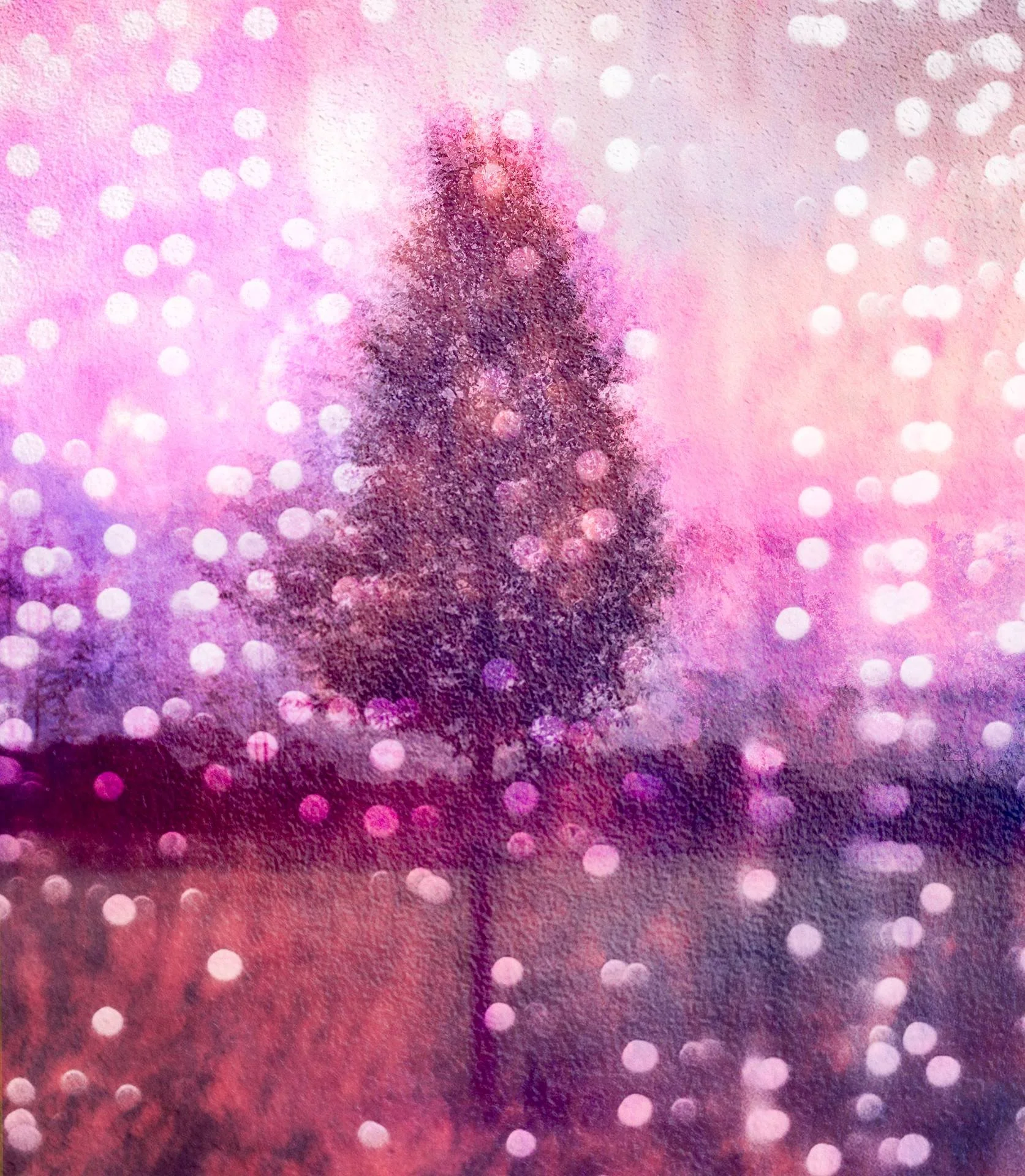
A Multiple Exposure Photography Image of a tree in a sparkly Christmas style.
Introduction
If you caught my recent blog on Multiple Exposures After Dark, you’ll know how much joy I get from leaning into the night and playing with layered creative techniques. This post is very much a seasonal continuation of that theme — a cosy, glitter-dusted exploration of Christmas-style multiple exposures and how to make the most of this wonderfully festive time of year.
When I think of December, two things immediately float into my mind: sparkly Christmas lights and snow. One is everywhere; the other… well, not so much. And as I write this with a very British drizzle streaking the window, I’m feeling especially grateful for the magic of Photoshop. With the right creative approach, we can build snowy atmospheres, glowing streets, and festive enchantment even when the weather gives us nothing but puddles. This season is pure gold for creative photography, multiple exposures, and festive photo editing, and there are so many ways to use common Christmas imagery to elevate the mood and artistry of your work.
Below are several ideas and behind-the-scenes stories from recent images — all designed to help you experiment with Christmas multiple exposure techniques, boost your creativity, and gather lots of inspiration for your own seasonal projects.

A Multiple Exposure Photography Image of the Parliament Building in Budapest with ‘snow’
A Snow Effect (Without the Snow!)
I adore a snowy scene, but as we all know, it’s not exactly guaranteed here. So one of my favourite little tricks is to create an artistic snow effect using Christmas lights — particularly those warm, sparkly lights you often find strung outside restaurants.
In one recent image (yes… it’s the Budapest Parliament again. I simply cannot leave that building alone!) I used a photograph of exterior restaurant lights as the “snow layer.” The lights already had that soft, circular glow we associate with falling flakes. I first converted the lights to black and white so the circles became crisp white instead of warm yellow. Then, using Free Transform, I stretched and elongated the “snow” so it felt like it was drifting across the scene rather than simply hovering.
To enhance the painterly atmosphere - and you’ll recognise this if you’ve taken any of my courses - I added my signature layer of digital white paint. It softens the transitions, adds a slightly whimsical feeling, and helps the multiple exposure blend into a cohesive, winter landscape.
And by the way… if that Budapest Parliament repeatedly calling to me has planted a seed for you as well, have you thought about the four-night workshop next year? If you’re still wavering, just CLICK here and peek at the details again!
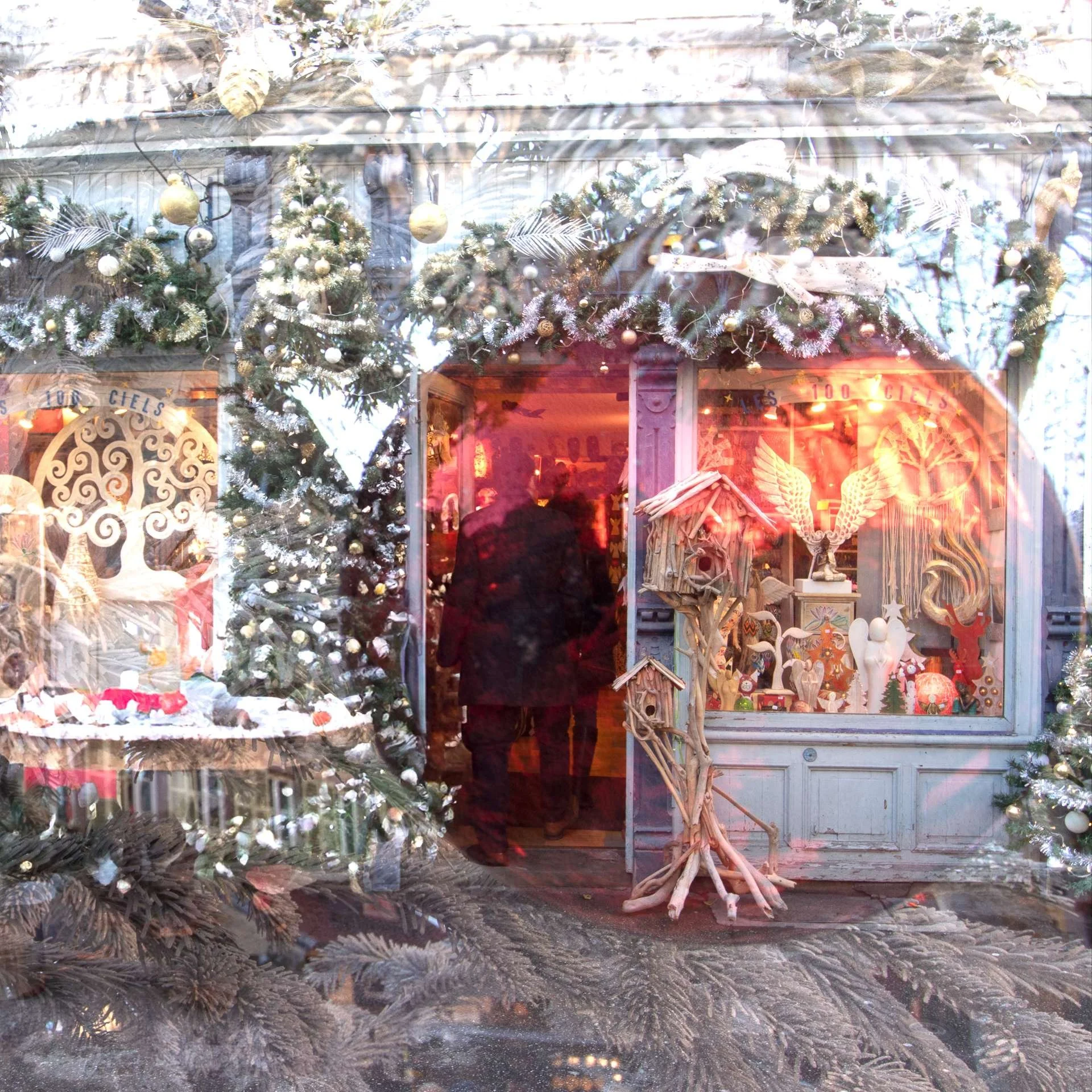
A Multiple Exposure Photography Image using a bauble to highlight part of a Christmas scene
Using Baubles
Baubles are everywhere right now, so why not make use of them in your festive multiple exposures? Yes, you can defocus them and go full-on bokeh, but one of my favourite techniques is to put something inside them. They make wonderful little frames for storytelling.
In this example, I placed a whole Christmas street scene inside a bauble to create an extra magical, slightly nostalgic feeling. For context, this was taken in Colmar, France, which has some of the most atmospheric Christmas markets you’ll ever experience. If you ever get the chance to go for a weekend, it’s absolutely FAB — proper storybook stuff.
Photoshop makes this technique beautifully simple. You position your festive image within the shape, and adjust blend modes or opacity until it slips neatly into the reflective surface. It’s a playful, charming way to mix real-world detail with a layered creative twist.

A Multiple Exposure Photography Image of stars
Using Stars
Stars are another quintessential symbol of the season. You’ll find them on trees, hanging above high streets, and decorating homes — and they make brilliant shapes for interlocking multiple exposures.
The stars in one of my images came from a market stall at the Lyon Christmas Market, where colourful cardboard stars were displayed in rows. But you absolutely don’t need to travel that far — any Christmas display will do!
With multiple exposures, stars work wonderfully because their angles, points and patterns overlap into dynamic, geometric visuals. After photographing them individually, I combined them in Photoshop using one of the more experimental blend modes (you know the ones — the funky ones we cycle through until something magical appears!). The result was vibrant, layered, and full of movement, like a swirling constellation of colour.
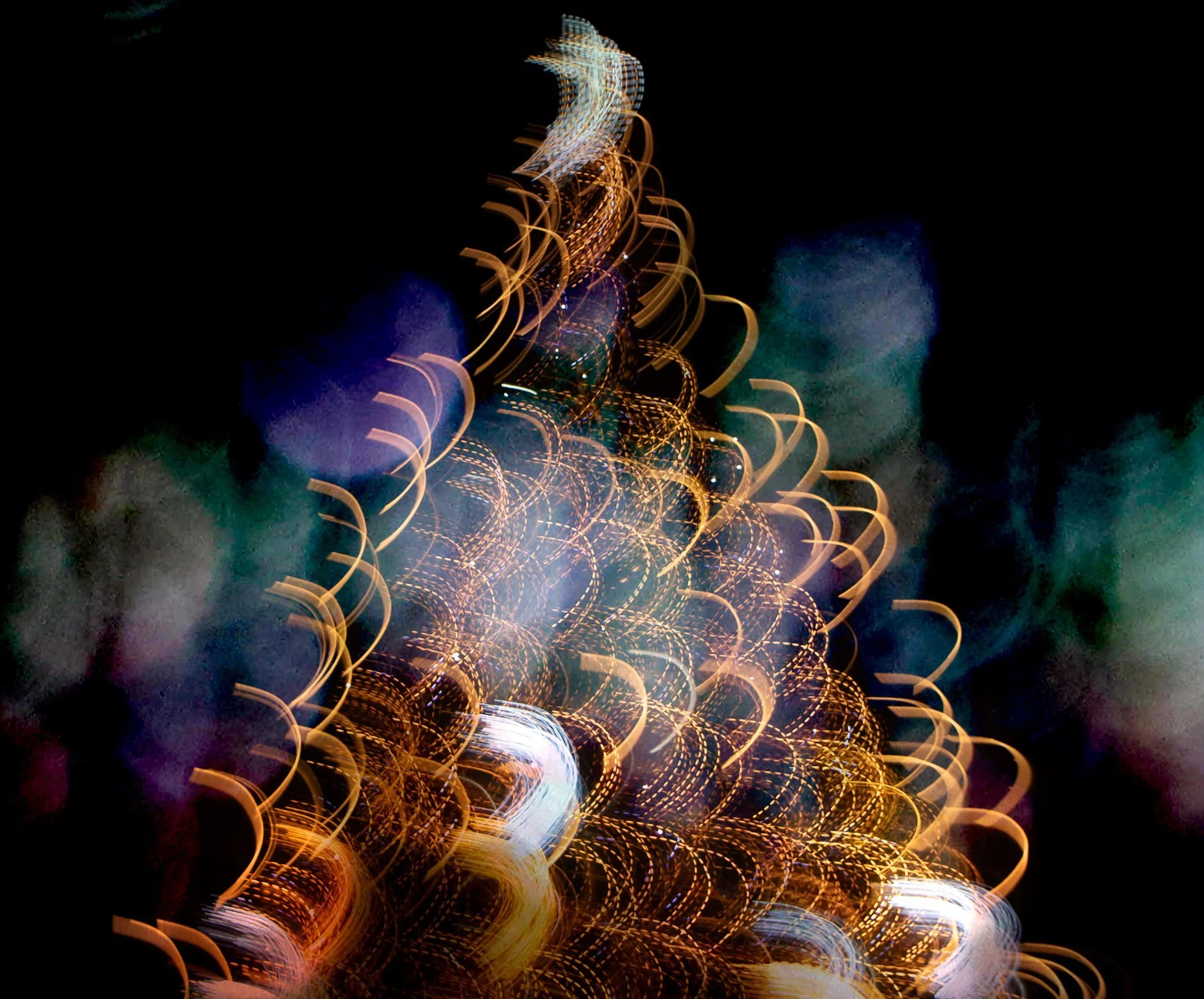
A Multiple Exposure Photography Image of an abstract Christmas tree with added sparkle
Christmas Trees
And of course… Christmas trees. They’re everywhere at this time of year and offer endless potential for creative photography and light-based multiple exposures.
If you find an outdoor tree, especially in low light, you’re already halfway to a striking image because the background distractions fall away. You can go in so many directions with trees:
Create an “in the round” image (see my How to: create Multiple Exposure images ‘In the Round’ style blog for how I build those circular, kaleidoscope-like effects).
Try a focused/unfocused combination for dreamy layered depth.
Or go completely abstract with Intentional Camera Movement (ICM).
In one of my examples, I photographed the lights of a Christmas tree in Brasov, Romania using ICM to capture that expressive, dancing motion. Then I layered some London Christmas light bokeh on top to give it even more life and a sense of blended festive culture. It felt wonderfully energetic — a true celebration of Christmas lights from two cities at once.

A Multiple Exposure Photography Image showing sparkle at Christmas
Adding Sparkle to Christmas Scenes
Sometimes an image is good… but just needs a touch more atmosphere. In this scene from Bucharest, I liked the composition and colours, but I felt it needed a little extra magic — a sprinkle of Christmas sparkle.
So I added a soft border and brought back those trusty restaurant lights from the first example. This time, rather than turning them black and white, I left them in their warm yellow tone. That golden glow instantly lifted the mood. It’s astonishing how a simple overlay can change the emotional tone of a scene — and this is what I adore about multiple exposures and festive overlays. They let you paint with mood, not just with light.
Final Thoughts
I hope this has given you lots of ideas to try with your own Christmas photography - do please comment if you have been inspired by this. If this happens to be the first blog of mine you’ve read, do have a browse through the others — and if you love learning creative techniques, you might enjoy joining the newsletter or exploring some of the courses and workshops that Wilde Photography Academy offers. There’s something for every level, whether you’re just starting with multiple exposures or ready to dive deeper into more advanced work.
And please, share your images! If you’re on Instagram, feel free to tag me. If you’re on Facebook, come join us at the Multiple Exposure Hub, where we celebrate experimentation, colour, movement, and creativity all year round.
By the way, after writing this I’ve realised just how many of these examples came from European Christmas markets… so tell me — who fancies a Multiple Exposure Christmas Market Trip for 2026??