How to change the Mood in Multiple Exposure Photography
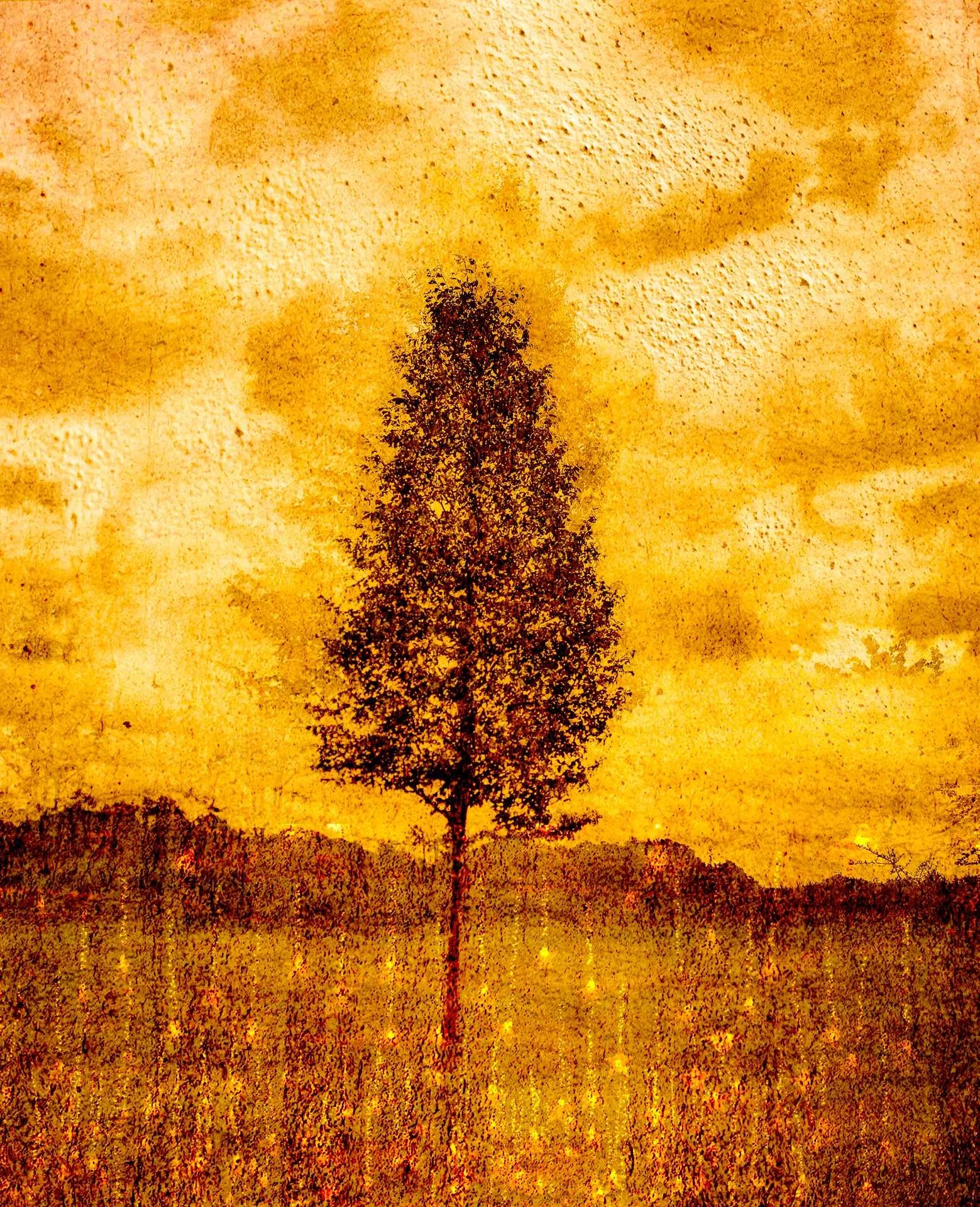
A Multiple Exposure Image of A Golden Tree
By now you know how much I love multiple exposure photography in all of its forms, but I wanted to write a blog post on how you can change the look of the same subject simply by adding different layers to it.
Now, this may sound like common sense - and it is - but the amount of moods you can create with the same subject is fantastic. I would never advocate not going out and taking more images, as therein lies the fun, however if you don’t have time to go out or you simply need some quiet time playing with the endless possibilities contained within post-processing multiple exposures, then you can use not just the same subject, but the exact same image, to produce something your mood demands.
This type of layering is incredibly mindful because it can take you wherever you want to go on that particular day. How do you feel today? Joyful, sad, anxious, smiley, irritable, excited, impatient, angry or peaceful - or something totally different? You can use that mood to process the image. This makes the work not only unique, but also an image of self-reflection.
Now, just because you are sad, it doesn’t mean you have to create a dark image, or if you are happy, create a yellow one. Sometimes when we are sad all we want is to create something beautiful to lift us a little higher out of ourselves. Likewise, if you are in a curious mood, creating different looks for the same subject can be a wonderful way of exploring all the possibilities that exist within a single picture.
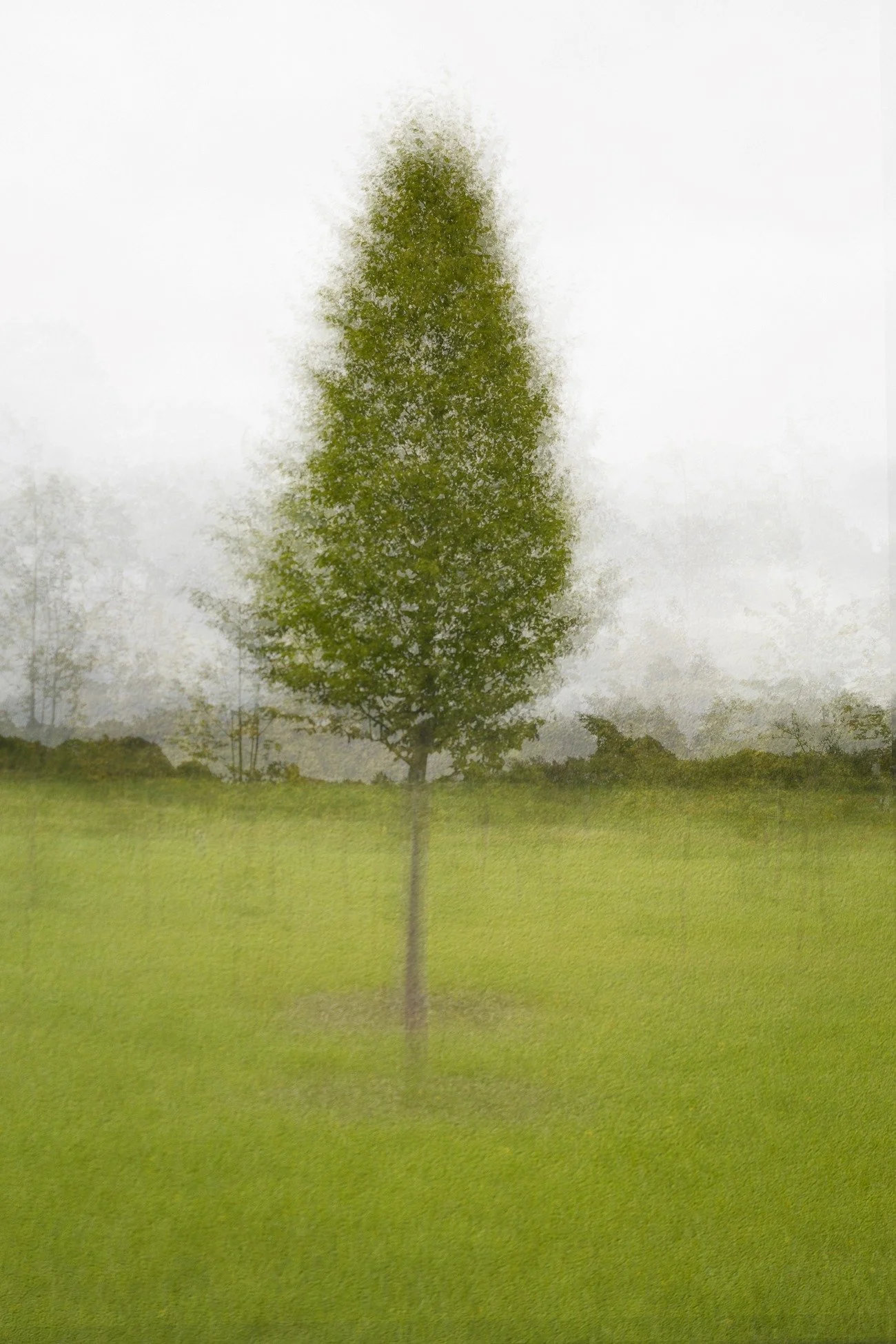
An impressionistic Multiple Exposure Image of a tree
The Subject
In this article I want to share what I did with one image on five different occasions.
I absolutely love making impressionist tree images. If you would like to know how I create them then please follow the link to the blog — or for more detailed instructions on the post processing, the PDF guide. I love the softness they bring to an image and how you can immerse yourself in the tree itself.
There are many photographers who create this type of work, not least the incredible Pep Ventosa who created the original series ‘in the round’ and so I also want my images to feel different from everybody else’s.
Back to the original tree image… I moved around this tree taking photographs from lots of different angles. It had wonderful symmetry which worked beautifully for this type of image. I wasn’t entirely sure about the contrast with the background because there were other trees behind it, but once I lined up the layers in post-processing the tree really stood on its own.
With just the tree layers combined together, I think the image feels calm and peaceful. It brings a sense of stillness but also quiet strength, as the tree gently rises from the background.
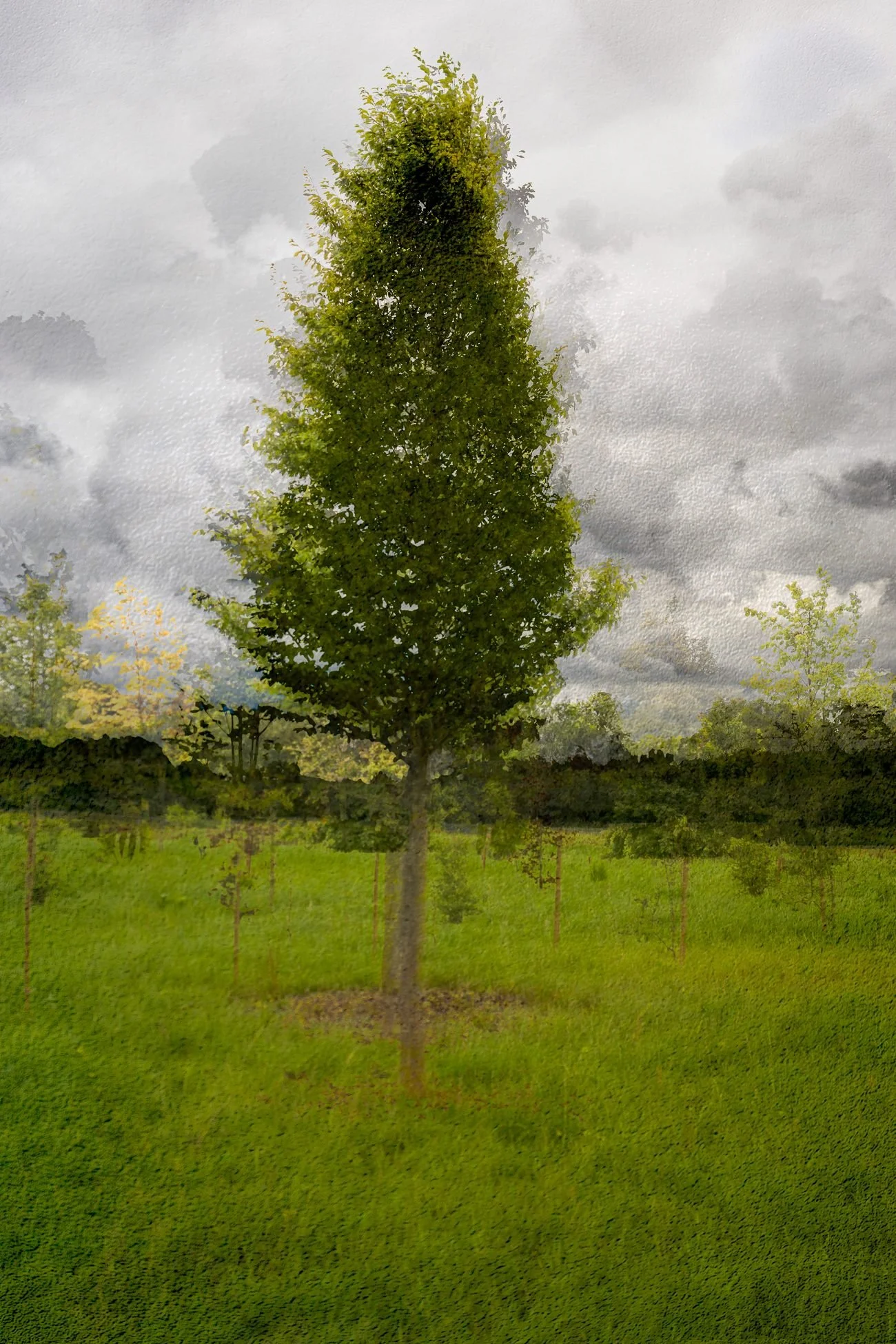
An impressionistic Multiple Exposure Image of a tree
Different Blend Modes
This image wasn’t initially made from a desire to create something entirely new, but don’t forget that something as simple as changing the blend mode can dramatically alter the feel of your work.
The first blend mode I used was Screen in Adobe Photoshop, which tends to produce soft images and gives a feathered look to the combined subject matter.
The blend mode I used here, however, was Pin Light. This was particularly interesting to me because I rarely use it, but I really liked what it did in this instance. It brought out the clouds and created a far more dramatic sky, while the background trees became much more visible. Because they were different colours, the contrast between them and the main tree still remained.
Full disclaimer — I also added a layer of white paint over the top of the image simply to introduce a little extra texture!
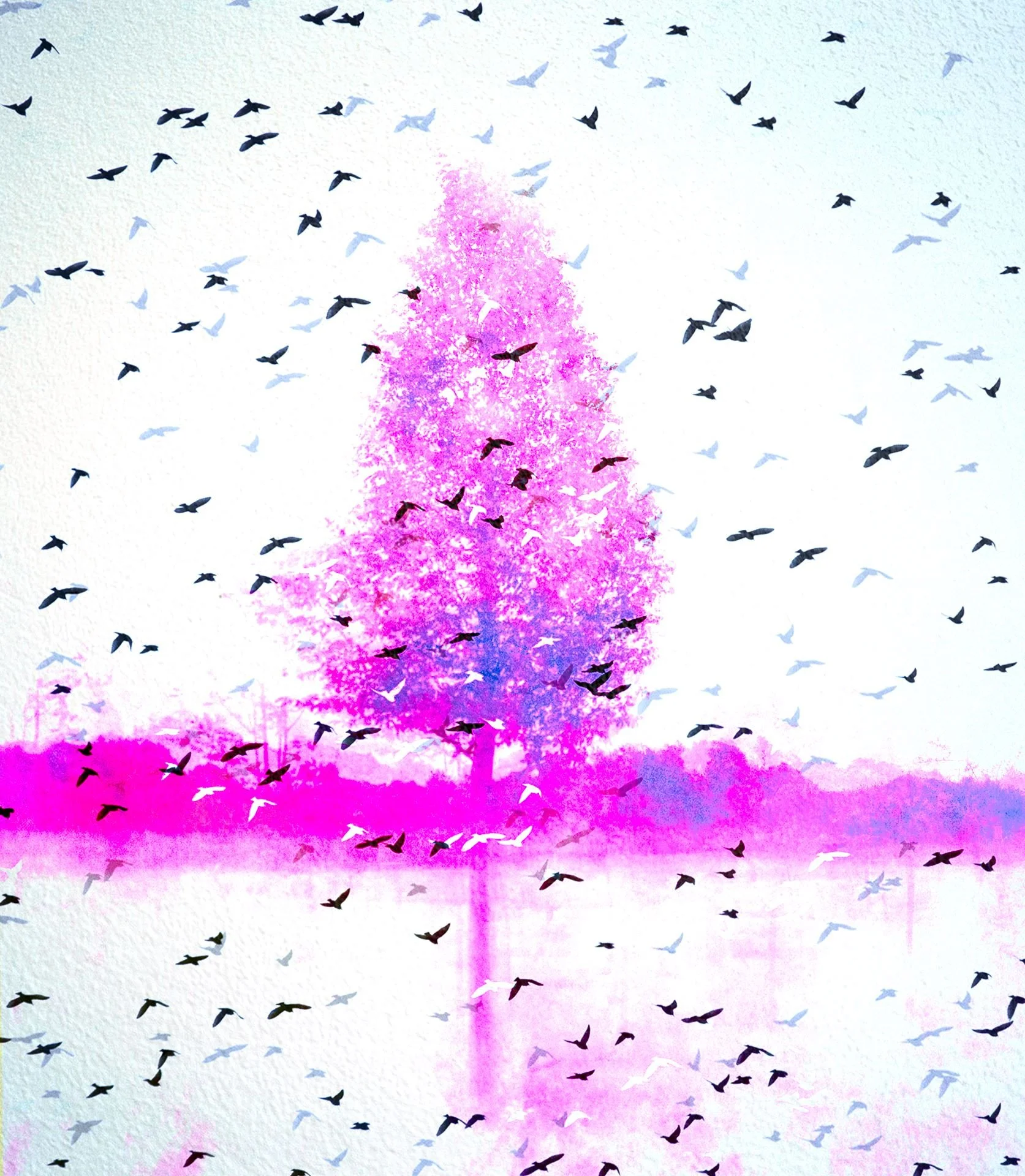
A Multiple Exposure image of a tree - with lots of birds
Pink With Birds
This may be the most dramatic alteration from the original image, both in appearance and mood, but chronologically it was the next version I created and so it felt right to include it here.
I was making an entire series called Reimagined, which incorporated chaotic layers of birds into each image. Do visit the gallery to see more of these works.
At the time I was in quite a chaotic mood myself. The Academy was growing rapidly and I was still working full time, so at times I felt rather squashed by everything! Chaos, however, can also be beautiful, and that was something I tried to pull from these images.
The tree itself is exactly the same as the original image - the layers have not changed whatsoever.
I first added two sunrise layers which introduced the pink tones into the scene. It was actually the first layer of birds, combined using Divide blend mode, that transformed the tree pink and turned the background white. The additional bird layers, there are four in total, appear different colours because of the other blend modes used throughout the image.
I really enjoyed the process of putting this together and creating my own unique interpretation of the subject.
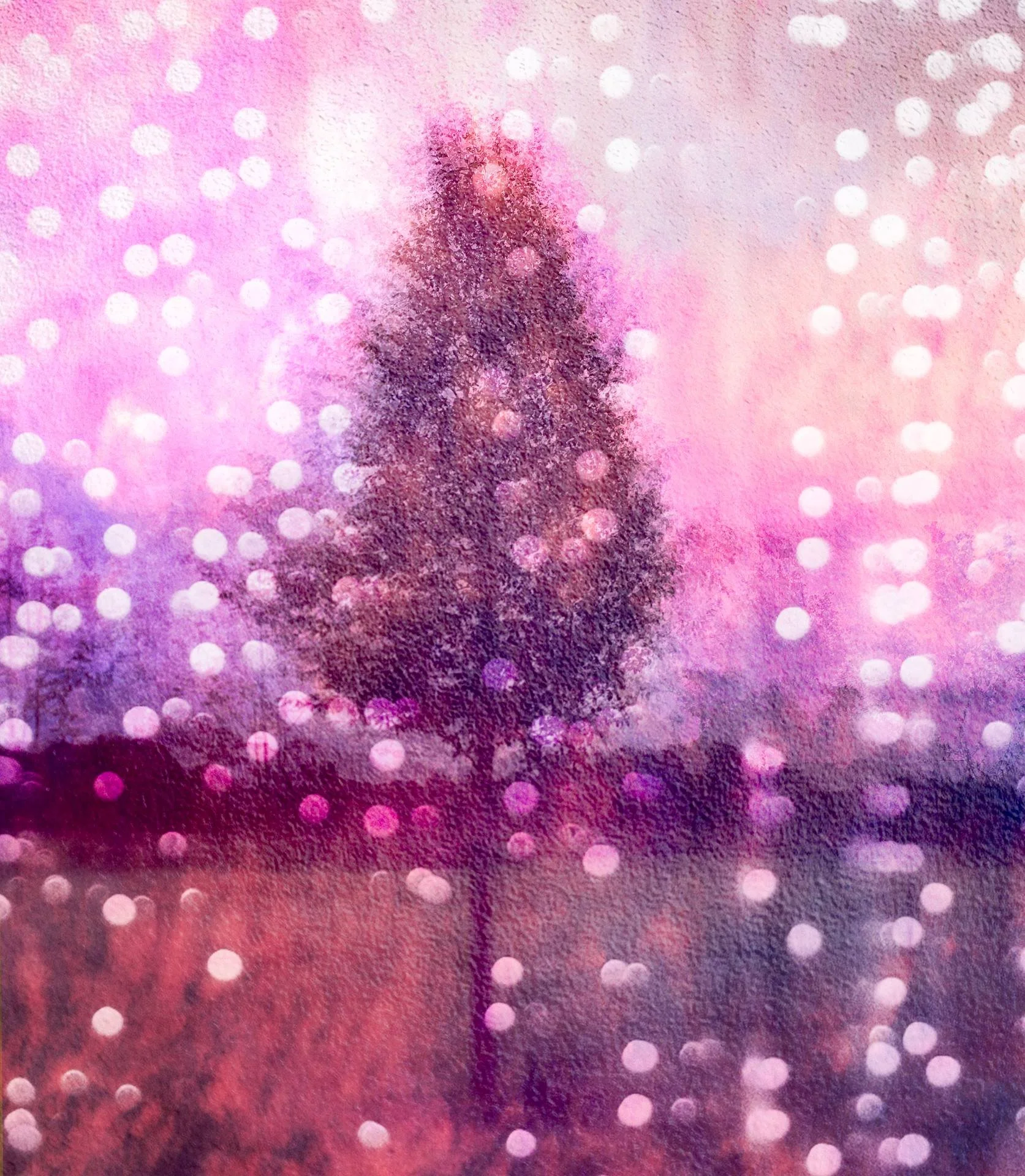
A Multiple Exposure Image of a tree with bokeh
Christmas Lights
I am not a huge fan of Christmas, so I often enjoy deconstructing it and presenting a different interpretation based on the typical imagery associated with that time of year.
I adore snowy photographs, but in the UK we don’t seem to get much snow these days - unless you head much further north! I wanted to represent snow without actually using snow.
I began by adding the sunrise sky layers again to create a pink-toned image. This would effectively have been similar to how the Reimagined tree looked before the bird layers were added.
I then searched through my collection for some bokeh lights. If you look carefully, and don’t mind ruthlessly cropping, it is amazing what hidden treasures you can find tucked away in your archive.
Those bokeh lights (from an outdoor restaurant in Bucharest!) became my “fake snow”. On top of this I added another layer of white paint to create additional texture and softness.
The result feels festive without relying on obvious Christmas imagery, and perhaps a little dreamier too.
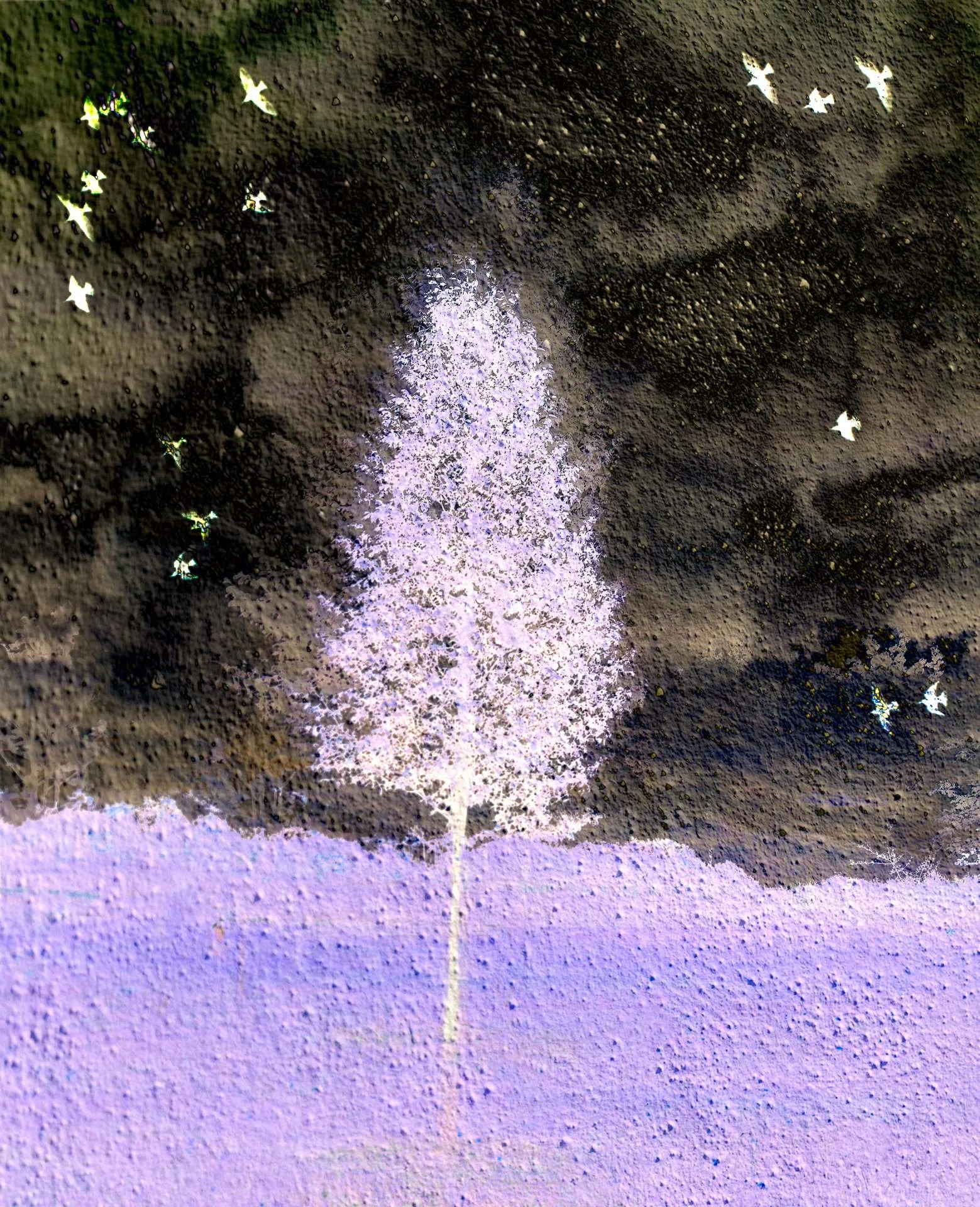
A Multiple Exposure Image of a tree appearing to be in night time
It’s Dark Out There
This image came about after a particularly busy period earlier this year. I had been working constantly and all I wanted to do was sit down and create, yet other things kept getting in the way.
Making images in-camera is full of fun and experimentation, but one of the great pleasures of creating multiple exposures in post-production is allowing your imagination to completely run away with you.
As expected, my base layers were exactly the same as the original tree image. This time I didn’t want the chaos of birds straight away, in fact they weren’t added until much later in the process.
Whenever I create, I tend to start with the subject at the bottom of the layer stack, and slowly add other frames on top. The process often reflects my emotional state and thought patterns at the time, which are always different.
This was actually a very simple multiple exposure. The second layer was a photograph of paint from the side of a house. Although the layer itself was white, using Difference blend mode transformed the vegetation and tree into a light purple while turning the sky black. Some of the textures from the paint layer also ended up resembling stars.
At first the image felt a little lonely with only the tree, so I eventually added a layer of birds on top. By using Divide blend mode once again I was able to turn them white so they stood out beautifully against the dark sky.
Although the image is set at night, I still think it feels peaceful. The warmth of the purple tones softens the darkness and creates a sense of calm.
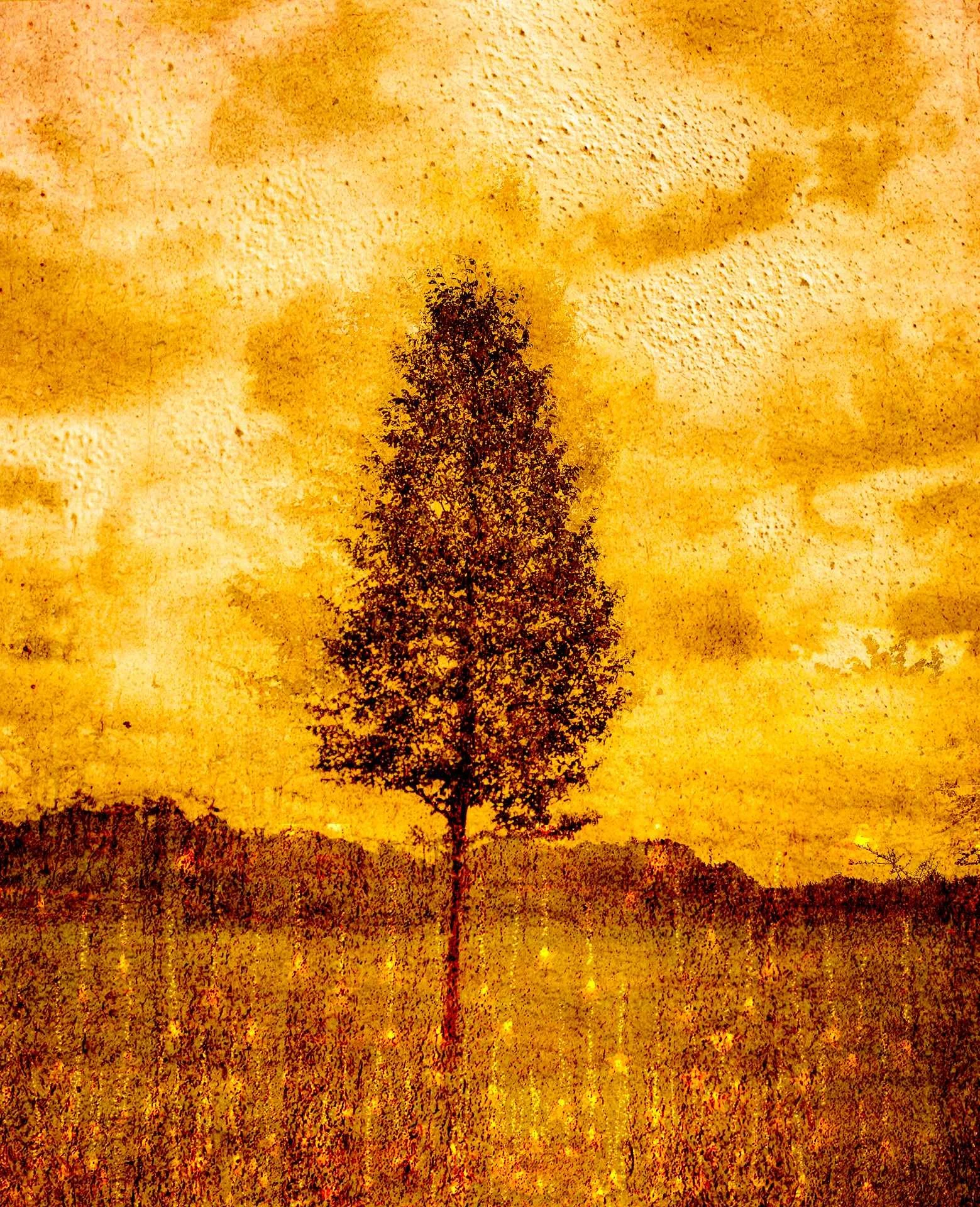
A Multiple Exposure image of an impressionistic tree in golden light
Golden Warmth
This image was made during one of those endlessly rainy, dark periods when I was desperately longing for longer days, warmth and even the smallest glimpse of sunshine.
I suppose longing was the mood behind the image, but interestingly the final result feels warm, glowing and optimistic.
The individual layers themselves, however, were not particularly warm at all.
Starting again with the same original exposures, I added the same paint layer because I liked the texture it introduced. This time, instead of Difference mode, I used Darker Colour blend mode because I initially wanted to pick out the yellow buttercups beneath the tree - perhaps one day I will create that image.
On top of this I added a layer of ice with sunlight bouncing off it, sandwiched between two yellow brick textures that I use frequently. This created the warmth I wanted, although the buttercups disappeared along the way.
To bring a final sparkle to the image I added a photograph of the Christmas lights on Tottenham Court Road in London at Christmas.
Hopefully knowledge of all of those cold layers haven’t lessened the warmth of the final image for you, it still feels wonderfully warm to me.
Final Thoughts
One of the things I love most about multiple exposure photography is that no image ever has to remain fixed. A single subject can become peaceful, chaotic, festive, dark, hopeful or glowing simply through the layers you choose and the emotions you bring to the process.
For me, this type of work is about far more than technique. It is about reflection, experimentation and giving yourself permission to create according to how you feel in that moment. Sometimes the process itself becomes just as important as the finished image.
So next time you are sitting at your computer wondering what to create, why not revisit an old image and ask yourself what mood you are in today? You may be surprised by just how many possibilities are hidden inside one single photograph.
Thank you so much for reading. I would love to hear your thoughts, so please do leave a comment or send me a message about your own experiences with multiple exposure photography.
If you would like more inspiration, news and creative ideas straight to your inbox, do join the Creative Circle. And of course, if you would like to explore multiple exposure photography further, why not join a course or workshop and create alongside us?