On Location: Multiple Exposure on the Jurassic Coast
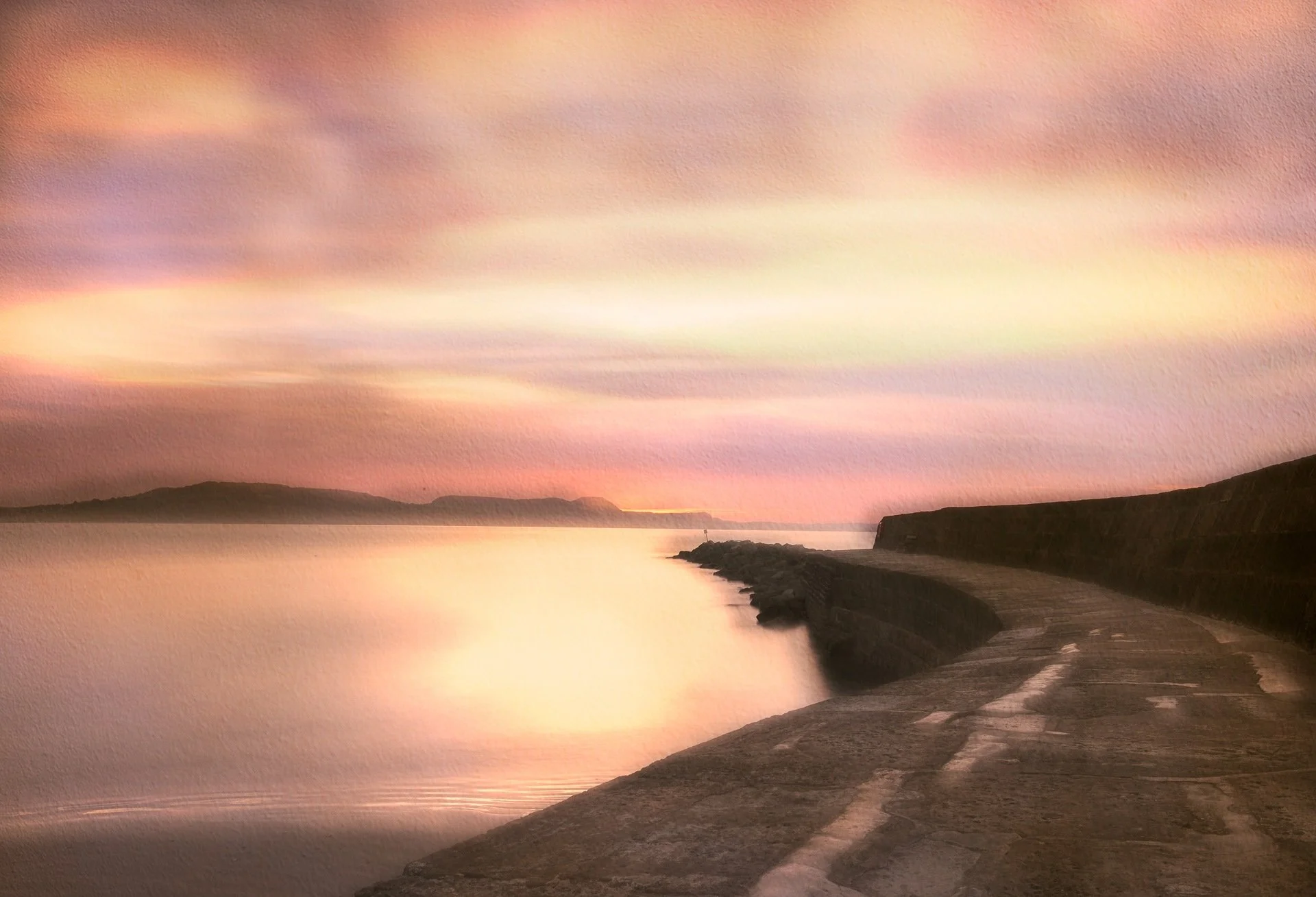
A Multiple Exposure image of the sunrise on the cobb at Lyme Regis
Introduction
Stretching for 95 miles along the southern coast of England, the Jurassic Coast is one of the UK’s most visually rich and inspiring landscapes. Famous for its dramatic cliffs, ancient geology and ever-changing light, it’s also home to a collection of utterly charming seaside towns. Among my favourites are Lyme Regis, Seaton and Beer — each offering something unique for photographers, particularly if you love working with multiple exposure.
This March saw a hugely successful women’s-only photography weekend here in partnership with SheClicks, and I’m delighted to say that dates are now live for April 2027 - find the details HERE. Across all three towns, there are endless opportunities to explore multiple exposure, both in-camera and through post-processing. Let’s begin in Lyme Regis.
Lyme Regis and The Cobb
The biggest photographic draw in Lyme Regis is undoubtedly The Cobb, the iconic harbour wall that sweeps gracefully out into the sea. If you’re lucky enough to catch a beautiful sunrise here, it becomes an irresistible subject. On one particular morning, the light was simply perfect - soft pink tones spilling across the sky and reflecting gently onto the water.
This is where long exposure comes into its own (and yes… I may have taken a few!). The curve of the Cobb creates a natural leading line, guiding the viewer effortlessly through the frame. The image at the top of this post started as a straightforward long exposure, but it didn’t stay that way for long.
In post-processing, I duplicated the original image and applied a blur to soften the detail, allowing it to sit as a shadow layer over the base image. I then introduced a bokeh layer, captured the previous day from the sparkle of sunlight dancing on the sea. Finally, I added a layer of white paint texture to complete the look. It’s a lovely example of how a strong base image can be transformed into something more painterly and expressive.
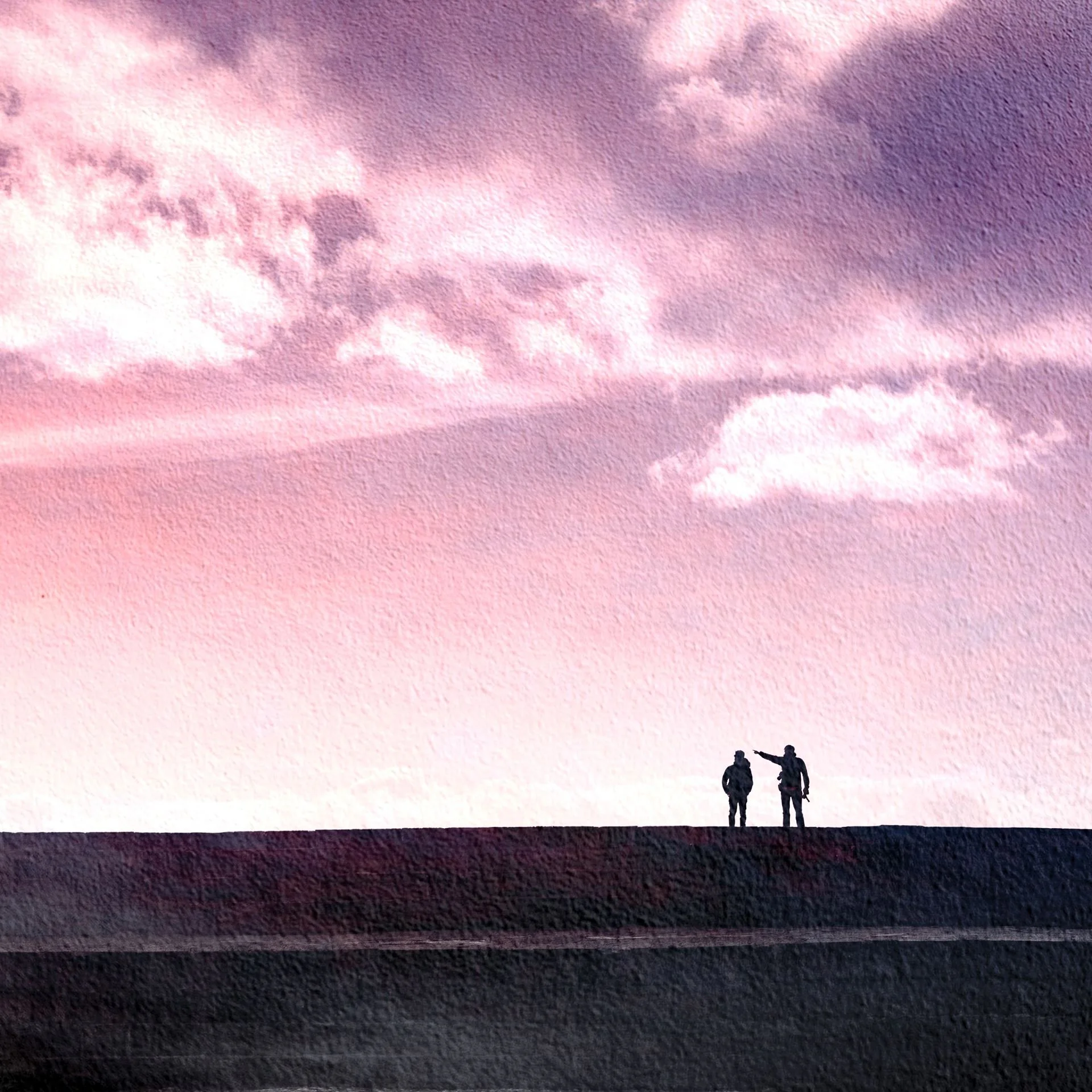
A Multiple Exposure Image of the cobb at Lyme Regis
Minimalism on The Cobb
The Cobb offers more than just sweeping vistas — it’s also a wonderful place to explore minimalism. Tiny figures walking along the top of the wall can become beautifully simplified subjects, especially when backlit. With the sun behind them, they turn into perfect silhouettes.
This particular image was enhanced with a couple of texture layers in post-processing to boost contrast and subtly shift the colour palette. It’s worth noting that minimalism and multiple exposure might feel like opposites — one about simplicity, the other about layering — but they can work together beautifully.
If you’d like to explore that idea further, do take a look at this BLOG for more inspiration and techniques.

A Multiple Exposure image of the beach huts at Lyme Regis
Beach Huts and Blend Modes
Lyme Regis also has a row of beach huts that present a slightly more technical challenge. They’re pale in colour and positioned in a way that makes in-camera 180-degree flips tricky. However, their light tones make them perfect candidates for working with blend modes - particularly Dark mode.
For this image, I paired the beach huts with a second exposure of waves from further down the beach. It did involve a bit of walking back and forth, but the result was well worth the effort. The key here is tonal understanding: the water is darker than the hut doors but lighter than the surrounding structures. This means that when using Darken mode, the water texture appears only on the doors — exactly where I wanted it.
This is where multiple exposure becomes less about chance and more about intention. When you understand how blend modes behave, you can start to design your images rather than simply experimenting blindly.
If you’d like to dive deeper into this, you can purchase a detailed PDF on blend modes from the Downloads section of Wilde Academy HERE.

An abstract Multiple Exposure Image of the sea at Seaton
Seaton Sea and Abstract Blues
Moving along the coast to Seaton, the architectural opportunities are a little more limited (though there is a rather lovely Art Deco building on the seafront). Where Seaton truly shines is its expansive shoreline.
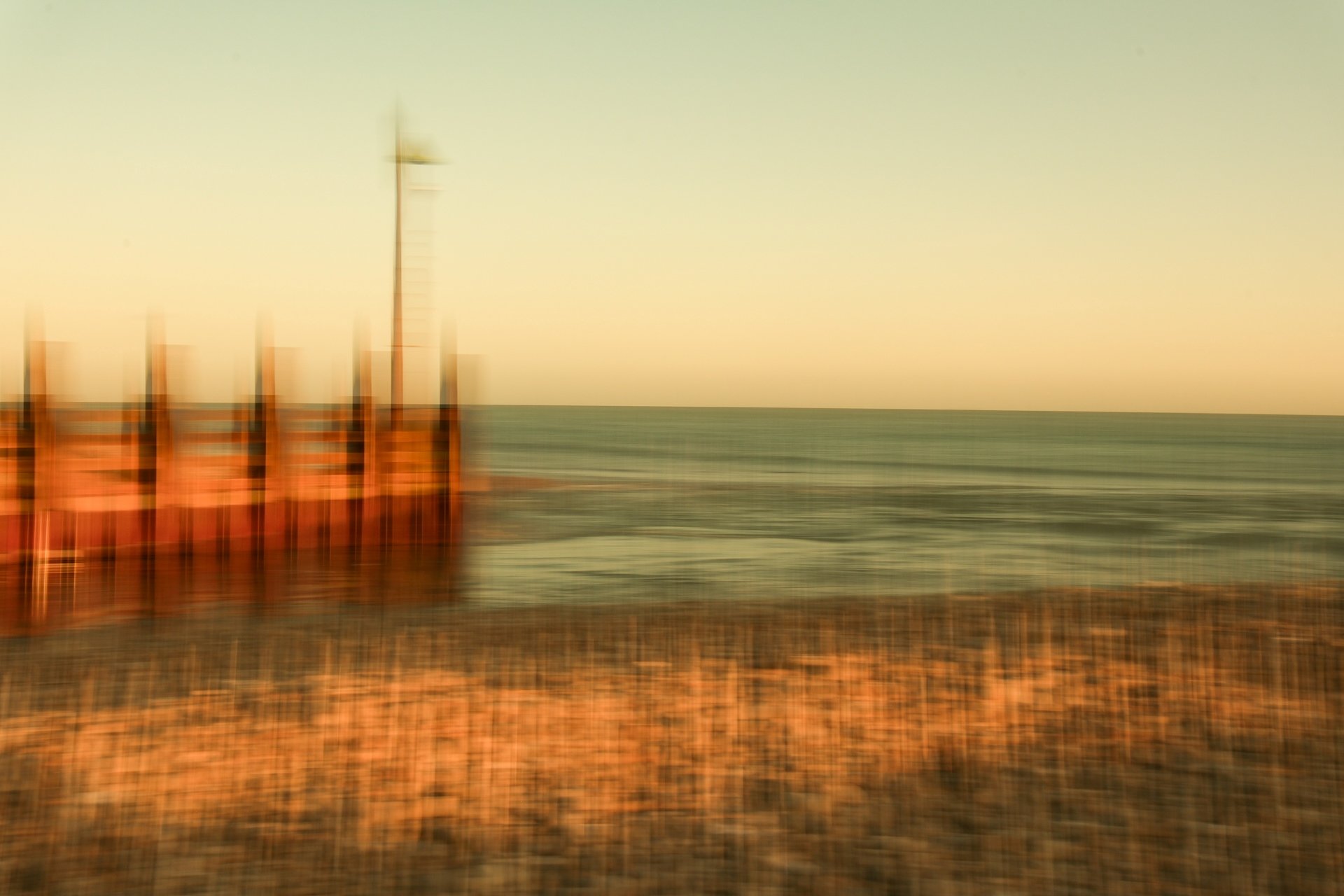
Here, you’ll find wide-open space, uninterrupted sea and sky, which is perfect for creating abstract multiple exposures. One of my favourite techniques here is a simple in-camera double exposure using intentional camera movement (ICM).
In this example, I took one 1-second exposure moving the camera in one direction, followed by another in the opposite direction. The result is something akin to a very slow cross-hatch effect, full of soft lines and layered motion.
You can play endlessly with colour here. On a good day, you’ll get beautiful blues - but let’s be honest, this is the UK, so greens and greys are just as likely! Any sparkle on the water will create lovely streaks in an ICM image, which then intersect beautifully in a multiple exposure.
A Multiple Exposure shot during golden hour at Seaton
Where the River Meets the Sea
Seaton also offers a fantastic meeting point between river and sea, the mouth of the River Axe. This area is full of interesting foreground elements, including a wooden groyne and textured shingle.
This location works particularly well for long exposures at sunset, adding depth and interest beyond the sky alone. It’s also a great place to experiment with cross-hatching techniques and blend modes. Using Darken mode here can help pick up the rich orange tones in the wood and stones.
Don’t forget the power of white balance either. A higher Kelvin setting will emphasise warm oranges, while a lower setting will pull out cooler blues - giving you creative control before you even press the shutter.
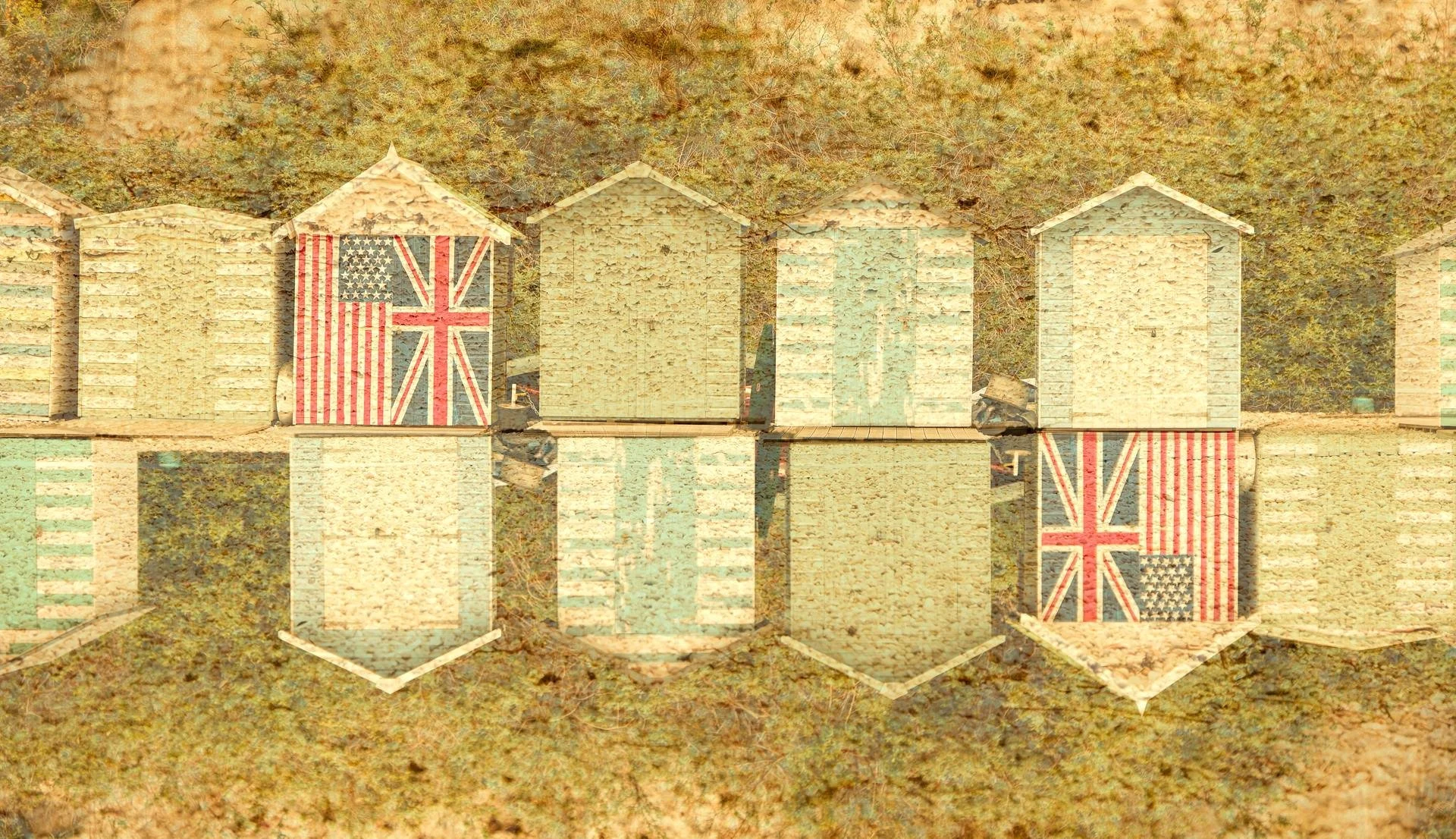
A Multiple Exposure Image of beach huts in Beer
Beer’s Beach Huts
In the village of Beer, you’ll find a beautifully arranged line of beach huts that are ideal for in-camera multiple exposure, particularly 180-degree flips.
The backdrop of cliffs adds a wonderful texture across the entire image, helping to unify the composition. To get the geometry right, it’s worth getting low - and yes, that may involve lying on the shingle! Alternatively, you can correct perspective later in Lightroom, but I always prefer to get it as right as possible in-camera.
If the tide is out, you can head further down towards the water and shoot back up towards the huts. Just be aware that you’ll need a longer focal length unless you’re aiming for a more minimal composition with tiny huts in the distance.

A Multiple Exposure image of boast in Beer
Beer’s Boats
Beer also boasts a line of traditional fishing boats resting on the shore, and they are absolutely full of character. They’re practically begging to be used in multiple exposures.
For this set of images, I created a double exposure in-camera using one sharp frame and one deliberately out-of-focus frame. This gave the boats a slightly whimsical, almost toy-like quality. In post-processing, I added texture layers to enhance that sense of character even further.
There are so many creative directions you could take here including different focus combinations, movement and layering - if you do experiment with this location, I’d genuinely love to see what you create.
Conclusion and Next Steps
The Jurassic Coast is a treasure trove for creative photography, and these three locations each offer something a little different when it comes to multiple exposure. From the sweeping curves of the Cobb to the abstract beauty of the sea and the characterful details of boats and beach huts, there’s no shortage of inspiration.
If this has sparked your interest, the women-only Jurassic Coast weekend will be running again in April 2027 - find the details here. And if you’d like to start exploring these techniques sooner, you can click here for in-person workshops and here for online courses focused on post-processing multiple exposure.
As ever, do leave a comment if you’ve enjoyed this post — and if you’re not already part of it, come and join the Creative Circle to receive Wilde Academy news each week.