How to Take Creative Multiple Exposures in Birmingham
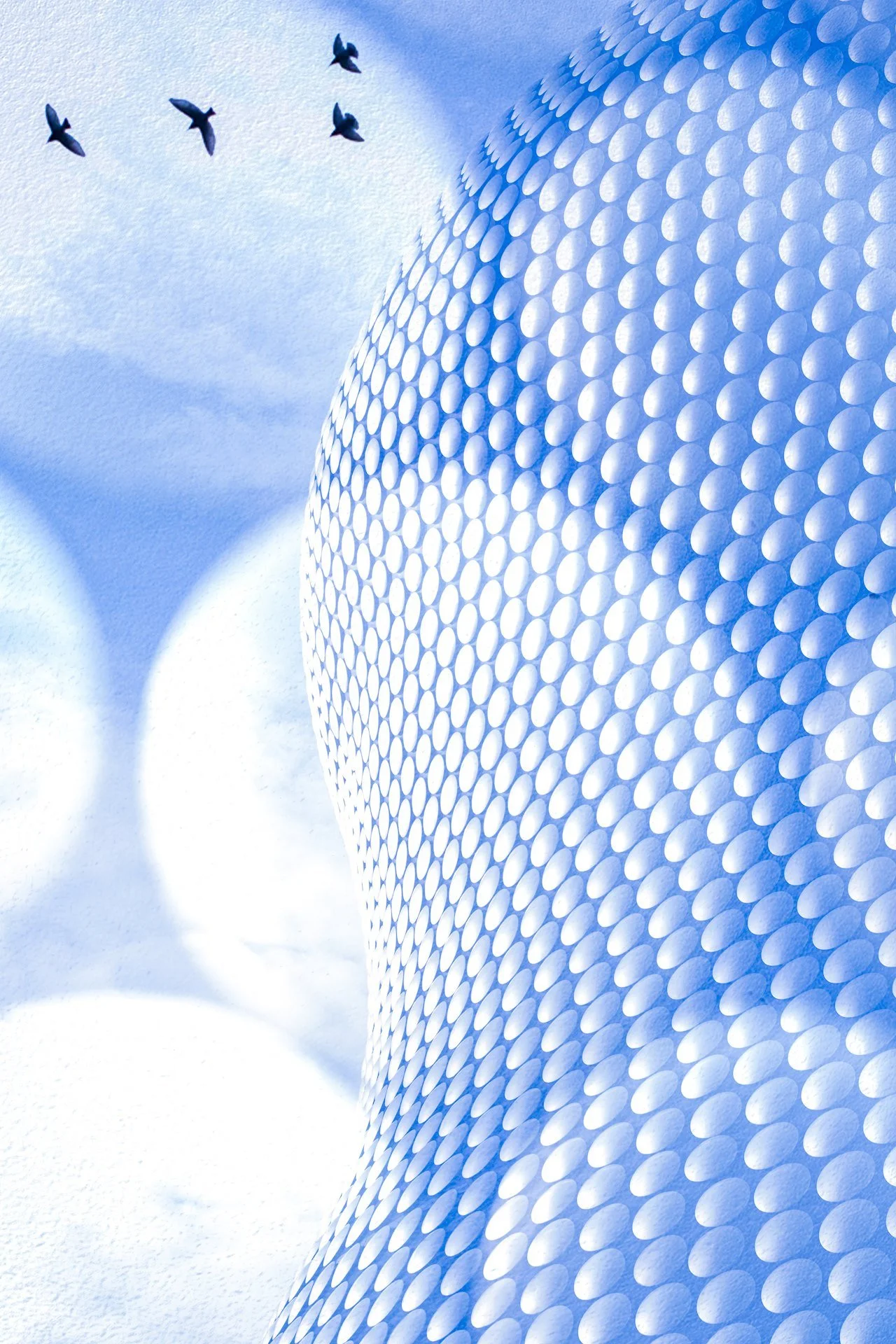
A Multiple Exposure Photography Image of the Selfridges Building made in post processing
I absolutely love shooting in Birmingham and it always surprises me when I get so few clients wanting to go to this wonderful city to take images with me! So I thought I would write a blog about what techniques you can practise in Birmingham and how its buildings enable stress-free exploration of practically all of the in-camera and post-processing techniques that exist.
If you haven’t booked simply because you didn’t know about it, then you can spend a day with me HERE, or join a women-only weekend HERE in collaboration with SheClicks.
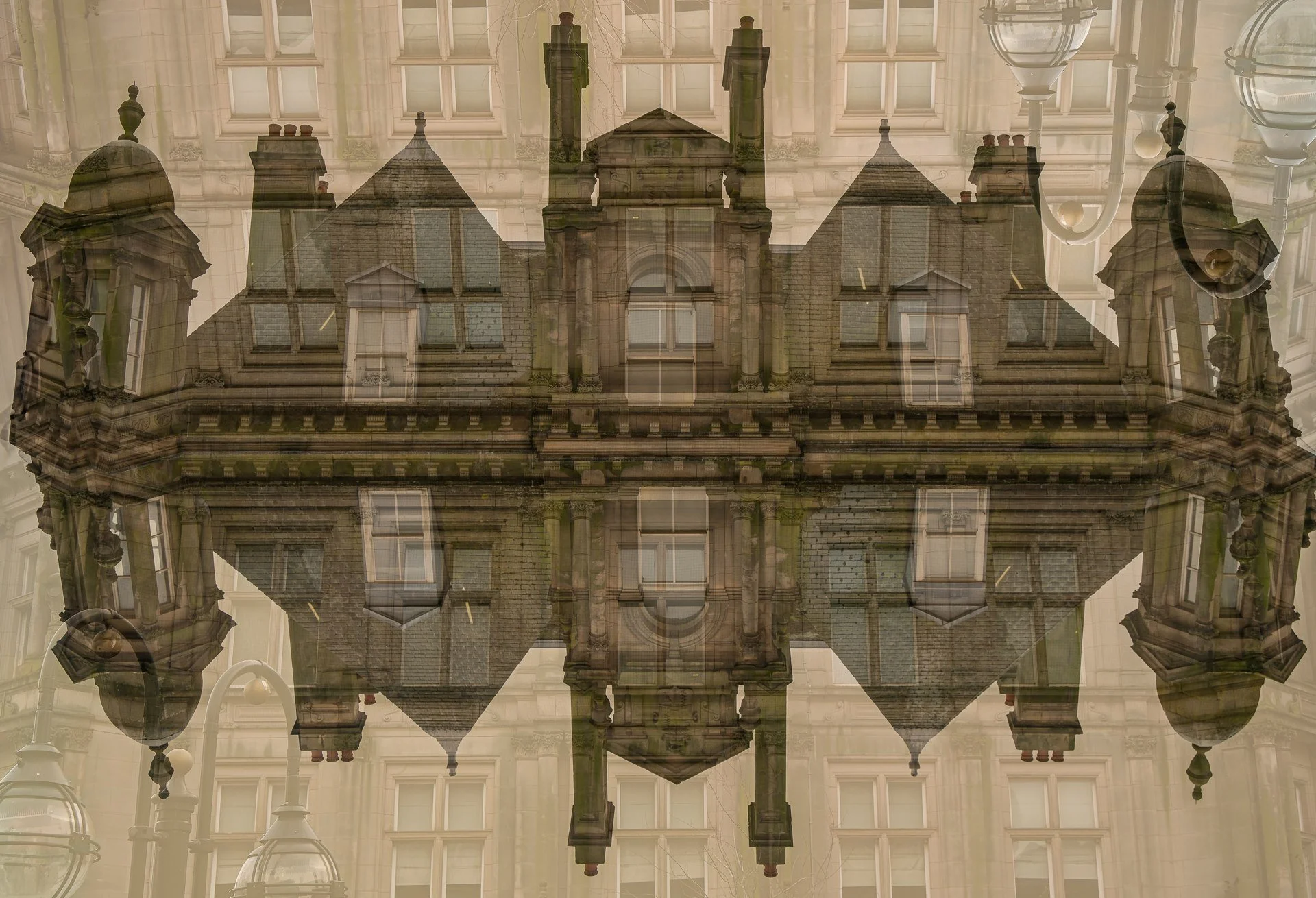
A multiple exposure photography image from Birmingham
Why Choose Birmingham?
1. The Variety of Buildings
Birmingham offers an incredible mix of architectural styles, making it a playground for creative photography. You have ultra-modern icons like the Selfridges Building, instantly recognisable with its futuristic façade of silver discs. Its curves and textures make it perfect for abstract and multiple exposure work.
In contrast, Moor Street Station gives you a completely different feel. With its vintage charm, period signage, and classic clock, it’s ideal for storytelling and nostalgic compositions.
Then there’s Birmingham Town Hall, with its grand columns and symmetry—perfect for structured, geometric techniques like flips and rotations.
And we can’t forget the Library of Birmingham, a bold and modern building that looks like a layered cake. Its repeating patterns and strong shapes make it brilliant for more experimental approaches.
This blend of old and new means you can practise a huge variety of techniques in one compact area.
2. Everything is Close Together
Starting at New Street, all of the locations I typically use are within about a 10–15 minute walk. This massively increases your photography-to-walking ratio—which, let’s be honest, is exactly what we want!
You can move quickly between locations, try different ideas, and revisit spots as the light changes without feeling rushed.
3. Freedom to Experiment
Unlike cities such as London, Birmingham doesn’t feel dominated by “must-get” iconic shots. Yes, the Selfridges Building is widely recognised—but beyond that, you’re free to experiment.
This takes the pressure off. You can focus on practising techniques without worrying about missing “the shot.” And here’s the best bit—you will come away with images better than you expect. I’ve seen it time and time again.
Even better, when you do visit cities like London, Paris, or Budapest, you’ll already have these techniques under your belt and ready to apply to recognisable landmarks.
4. A Destination in Its Own Right
That said, I don’t go to Birmingham just to practise. I genuinely love photographing it. To me, it has just as many interesting subjects as cities with more famous landmarks - it just hides them in slightly more unexpected ways.
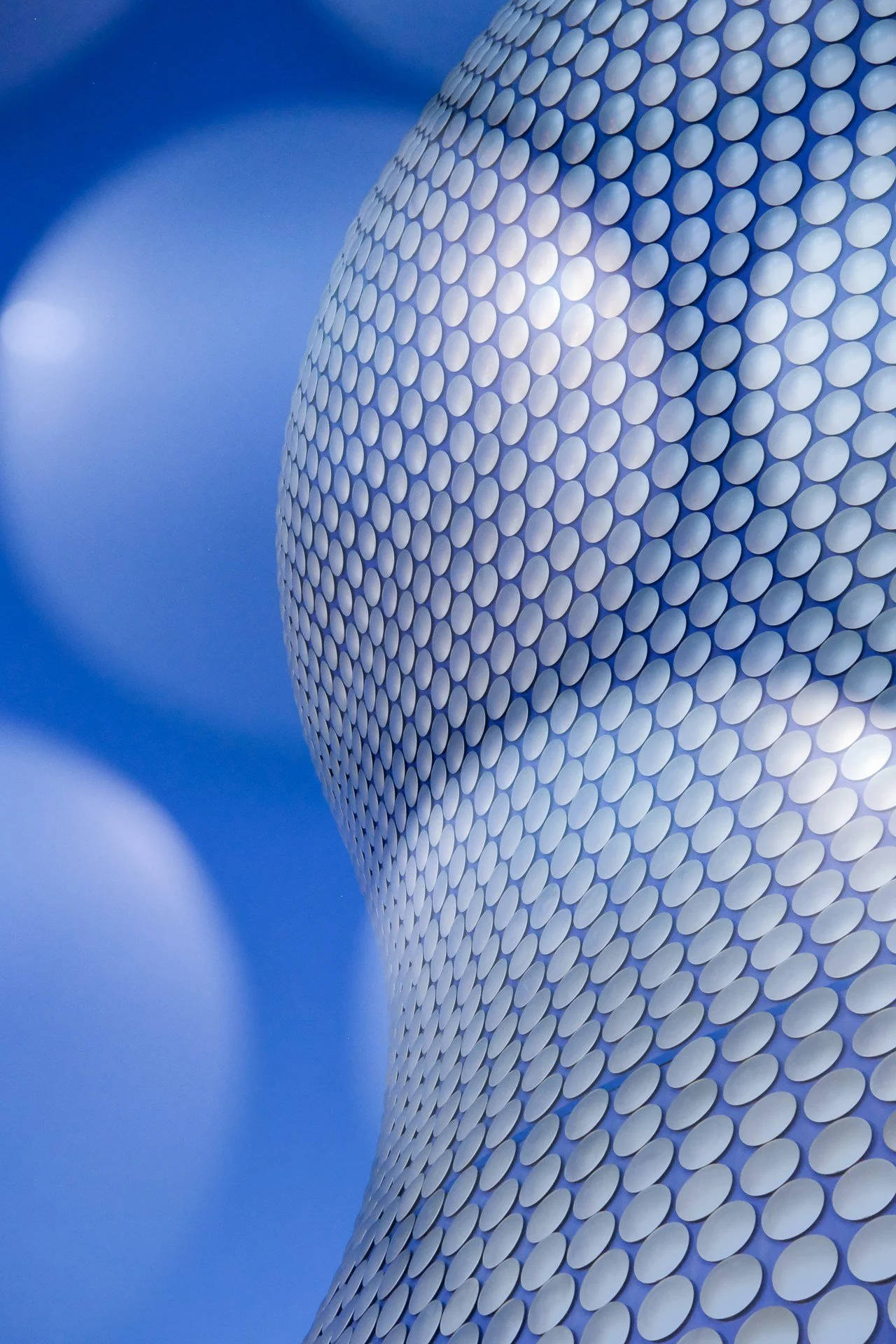
A multiple exposure photography image of The Selfridges Building at blue hour
Putting Different Subjects Together
The Selfridges Building is an absolute dream for combining subjects. Those curves are just stunning—they create beautiful flowing lines that work perfectly in multiple exposures.
You can explore this by layering different parts of the building. For example, shooting at blue hour introduces those rich, cool tones that enhance the structure’s futuristic feel.
One of my favourite approaches is to use the circular discs as a texture. You can take a close-up shot of the circles and then overlay it with another scene—perhaps the walkway below, capturing people moving through the frame.
This doesn’t always work perfectly - and that’s part of the fun - but when it does, it’s incredibly effective. It also works beautifully in black and white.
Another playful idea is creating a “selfie” multiple exposure. The circles aren’t actually big enough to stand in, so you can cheat a little! Take one image using a reflective surface, then compose yourself into one of the circles in a second exposure. Using a dark blend mode helps ensure you remain clearly visible. This is a great example of where understanding blend modes really makes a difference—it allows you to control how your images combine and makes these creative ideas possible.
And of course, don’t forget post-processing. Adding elements like birds or textures can transform the image even further, giving you complete creative freedom.

A multiple exposure photography image combining The Selfridge’s circles and a crowd scene

A multiple Exposure photography image of a ‘selfie’ in the Selfridges building’s circles
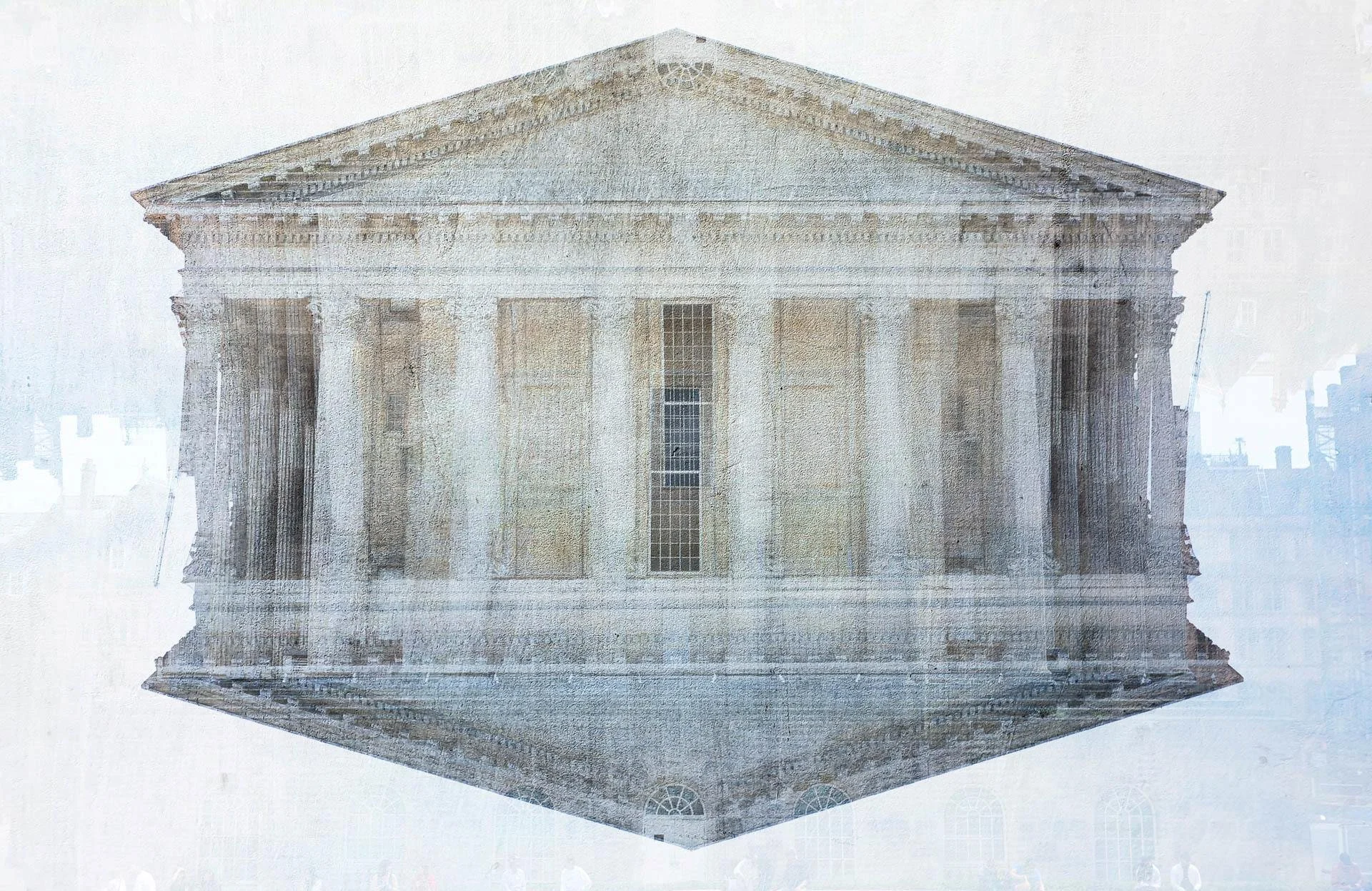
A multiple exposure photography image of the town hall using a 180 flip technique
Changing the Angle of Your Camera
This is one of the most satisfying techniques to try—and Birmingham is full of locations where it works beautifully.
A simple 180-degree flip can create striking symmetry. The Town Hall (see above) is particularly well suited to this thanks to its strong architectural lines. If you can line it up in-camera, it’s incredibly rewarding.
You can also take this further with a full 360-degree rotation, capturing an image at each 90-degree turn. A great example is St Martin in the Bull Ring. By focusing on a consistent element—like the clock—you anchor the image and prevent it from becoming too chaotic.
At Moor Street Station, you can experiment even more. By adjusting your focal length between exposures and repositioning the clock within the frame, you can create wonderfully quirky and unexpected results.

A multiple exposure photography image of the clock of St Martins church in Birmingham

A multiple exposure photography image of the inside of Moor Street station
Create Scenes of Movement
Birmingham is the UK’s second-largest city, with a population of around 1.1 million people. That’s a lot of movement—and movement is perfect for multiple exposures. Using 6–8 exposures is usually a good starting point. This gives you enough frames to show motion without turning everything into an indistinguishable blur.
Locations like the Bullring walkways are ideal. The key here is to recompose slightly between each frame. Fill in the gaps so that your final image feels complete and intentional. And remember—if it looks right after five or six frames, stop. That’s your image.
Stations like Moor Street are fantastic for this, especially when people are leaving a train. You get natural movement and direction. New Street Station also works, but the background is more complex, which can make alignment trickier. That said, even “mistakes” can add character—sometimes a slightly misaligned layer brings energy and atmosphere to the final image.
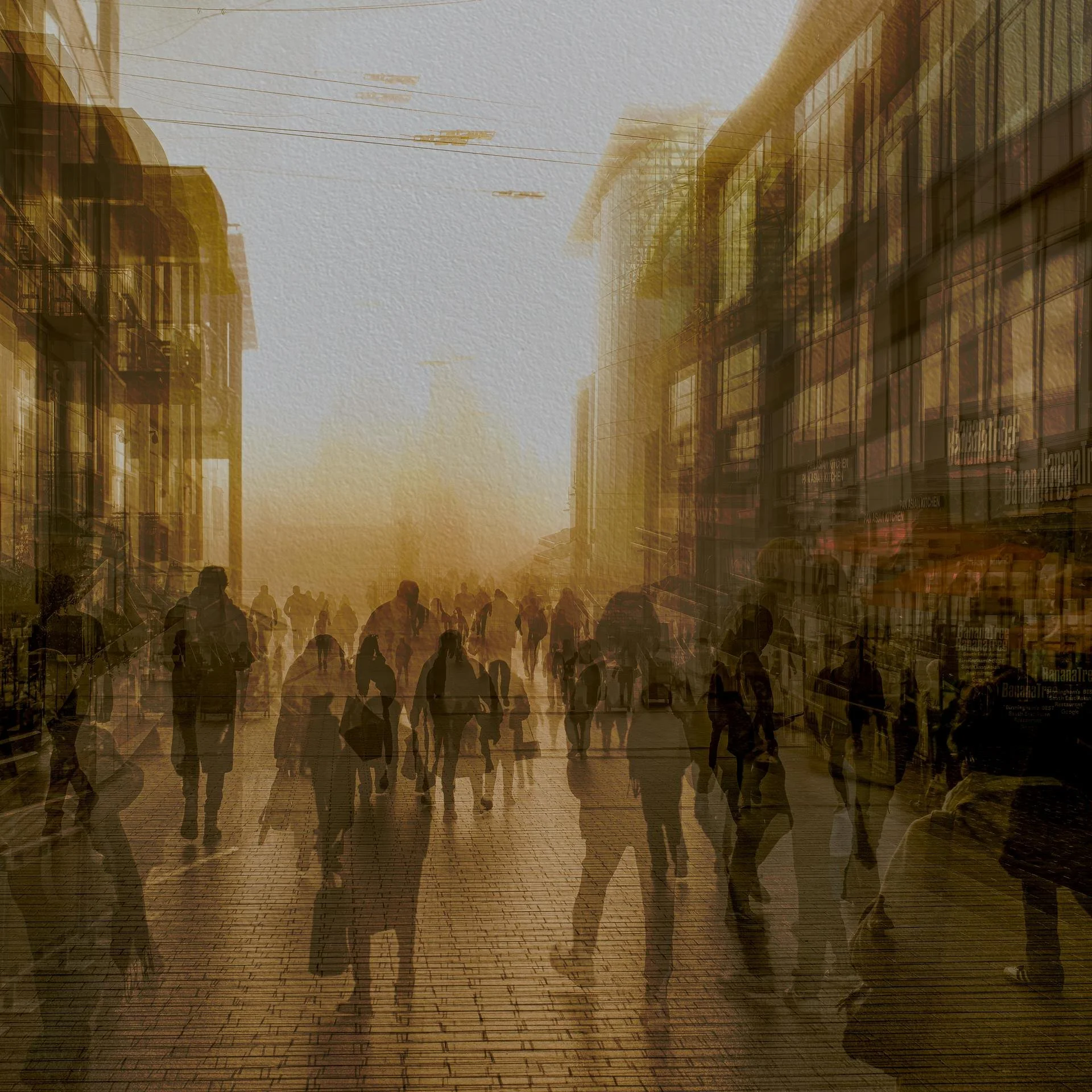
A multiple exposure photography image of people walking around the Bullring shopping centre, Birmingham

A multiple exposure photography image of people leaving Moor Street station, Birmingham

A multiple exposure photography image showing how cross hatching can work on modern buildings in Birmingham
Crosshatching
I couldn’t possibly write this blog without mentioning crosshatching - probably my favourite technique!
Birmingham offers some brilliant opportunities for this, particularly around the Library where modern buildings feature strong lines and sharp edges. Interestingly, the Selfridges Building doesn’t lend itself quite as well here because of its curves. Crosshatching really thrives on structure and straight lines.
Using dark blend mode can enhance colours beautifully - bringing out tones like pinks and greens in a really striking way, you can see this effect with the image above.
The Library itself is a bit of a challenge to photograph traditionally because of its size, you simply can’t always get far enough back. But crosshatching solves that problem by focusing on details, shapes, and patterns rather than the whole structure.
And of course, this technique works wonderfully at night. Even buildings like the Birmingham Museum take on a completely different character under artificial light, giving you endless creative possibilities.
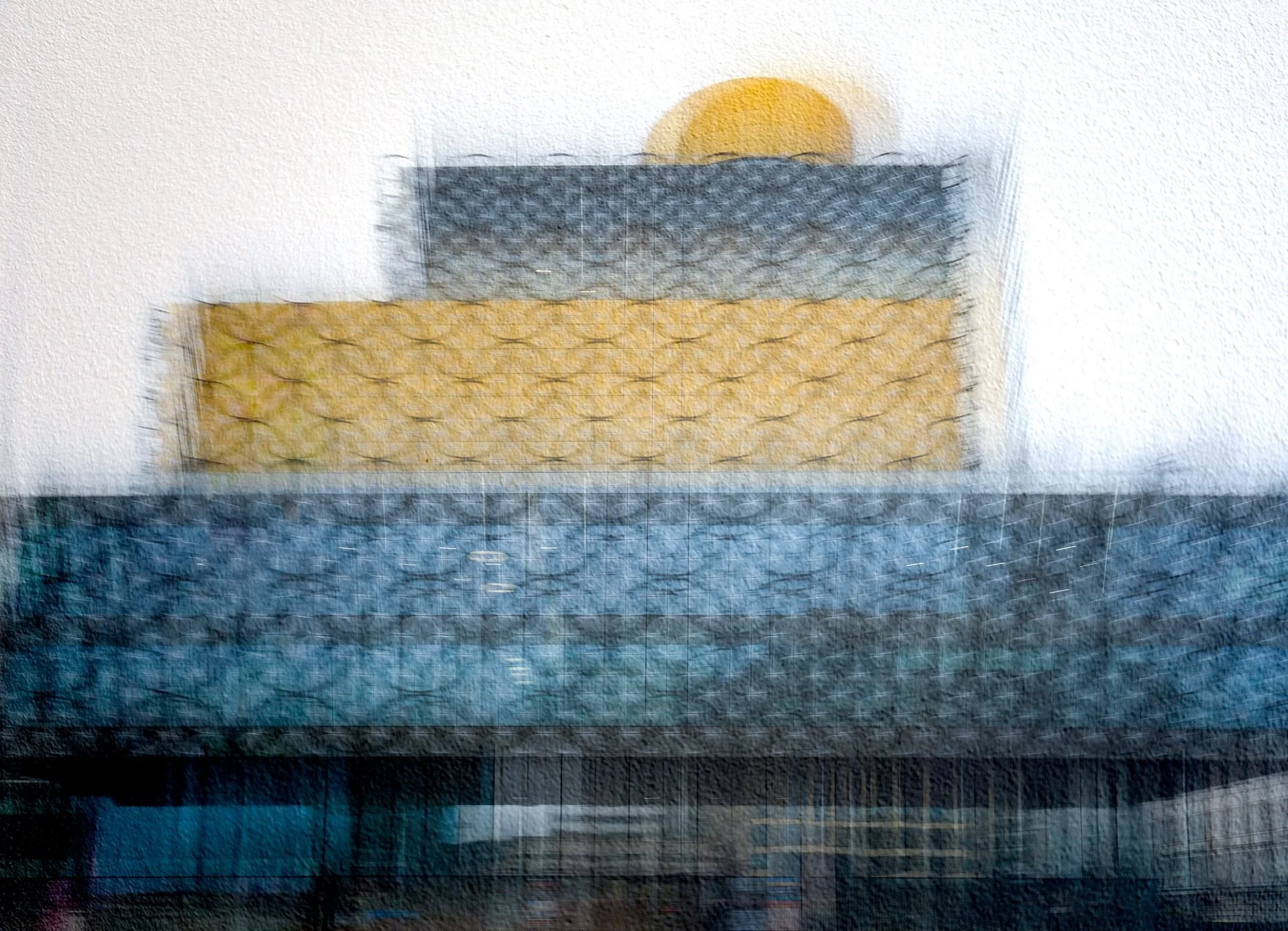
A multiple exposure photography image of the library in Birmingham
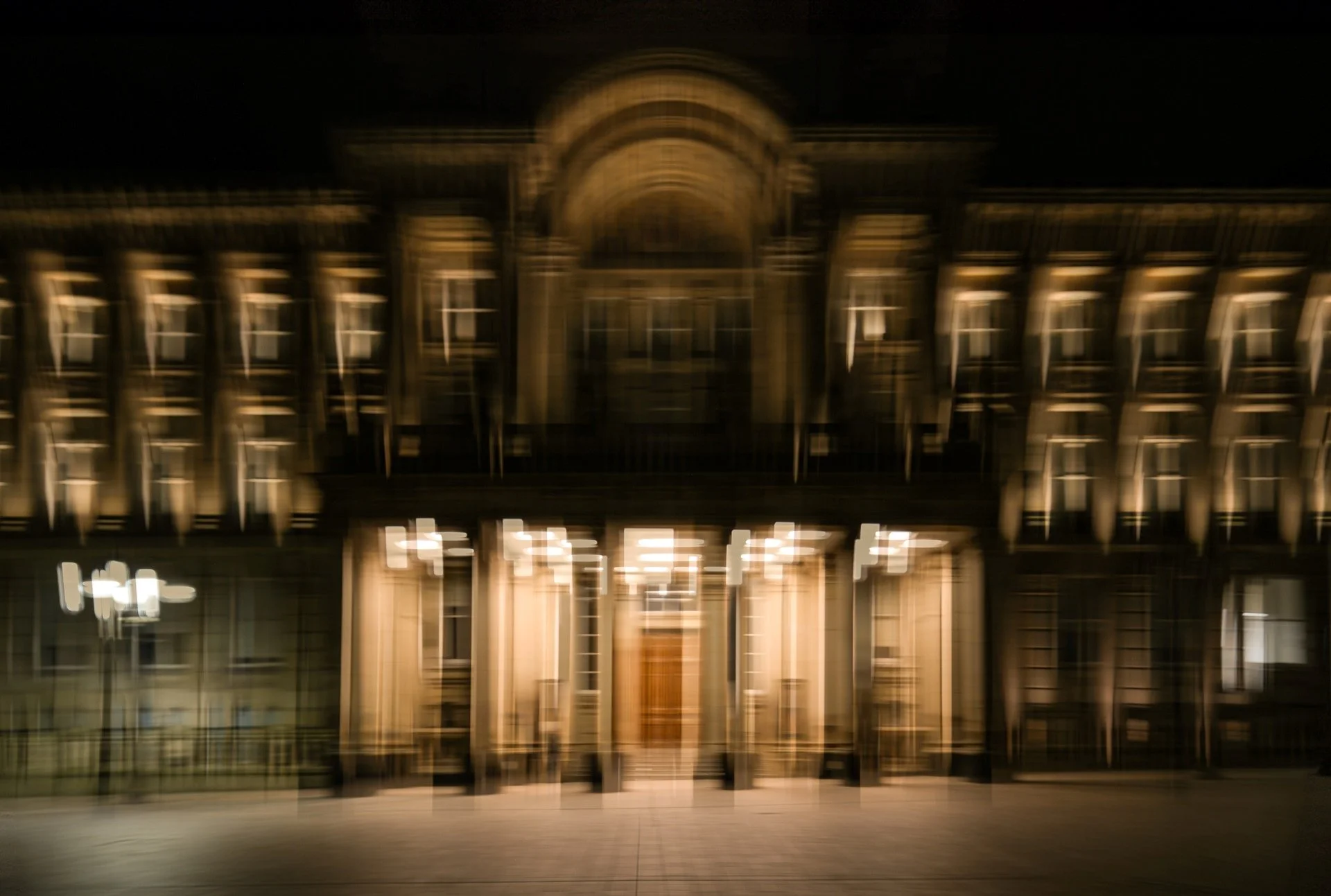
A multiple exposure photography image of the museum in Birmingham at night
Conclusion
Birmingham is an absolute treasure trove for creative photography. The combination of architectural variety, compact layout, and freedom to experiment makes it the perfect place to develop your multiple exposure skills.
From combining textures at the Selfridges Building, to rotating compositions at the Town Hall, capturing movement in busy walkways, or exploring crosshatching around the Library—there is an incredible range of techniques you can practise in a single day.
If you’ve been hesitating about joining one of my workshops, hopefully this has shown you just how much Birmingham has to offer. Whether you’re spending a day refining your skills or joining a longer, more immersive weekend, you’ll leave with a deeper understanding of both in-camera and post-processing techniques—and a set of images you’ll be genuinely proud of.
And perhaps most importantly, you’ll start to see buildings - and cities - in a completely new way.