Multiple Exposure Flower Photography: Creating Depth, Emotion and Story
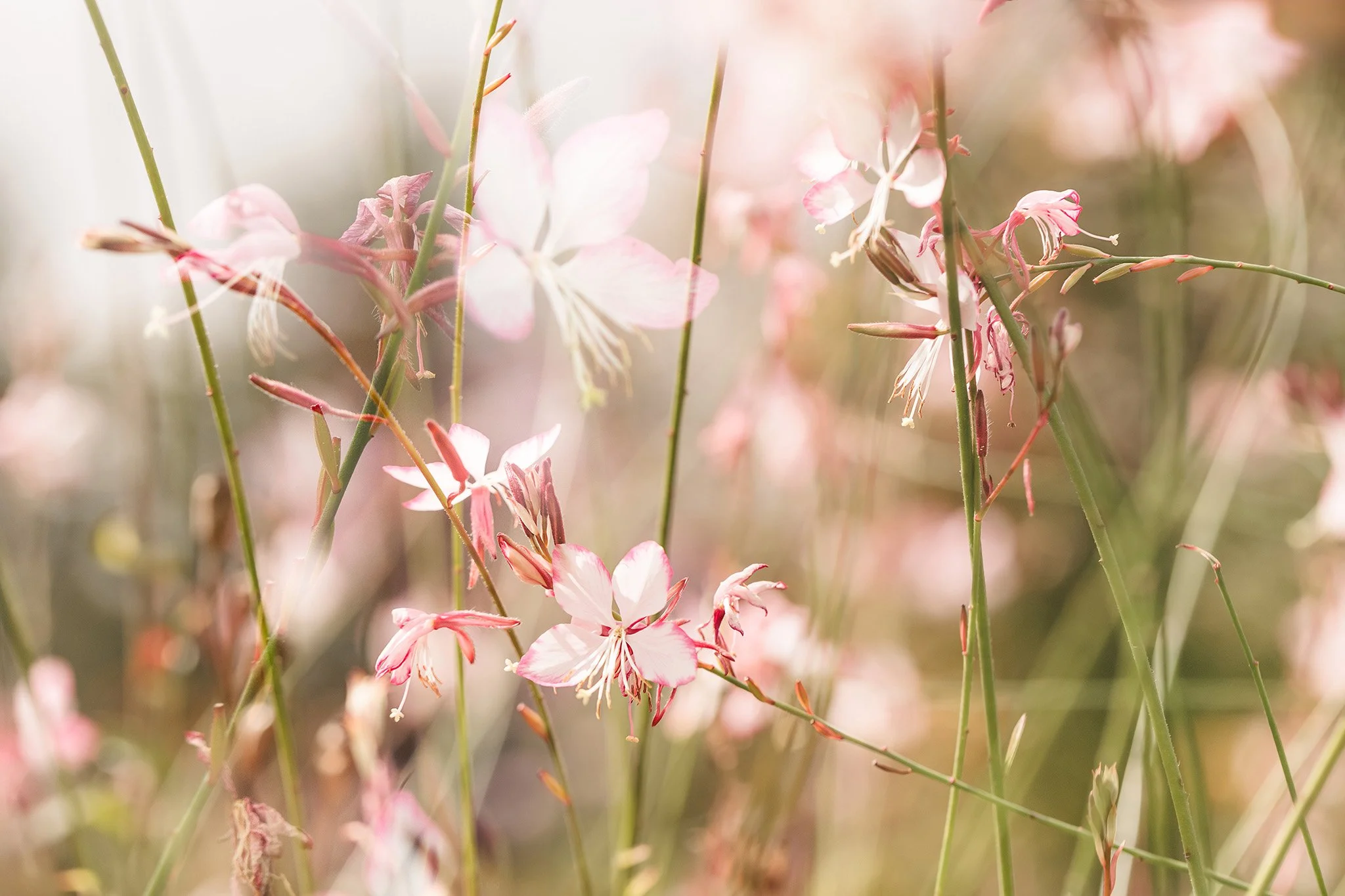
A Multiple Exposure image of pink guara
Introduction
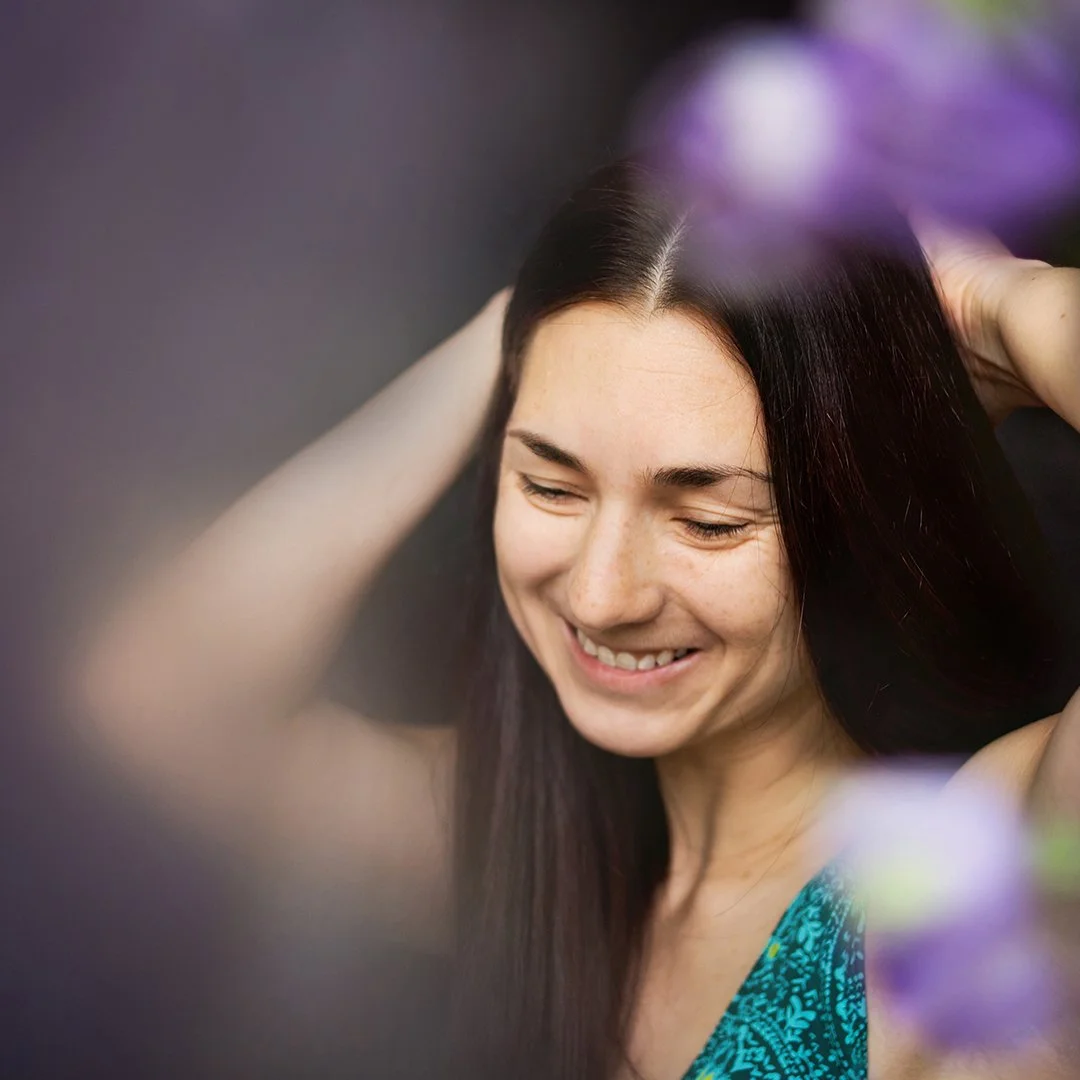
Hello! I’m Abi Coop, a photographer and photography mentor from Cardiff in Wales, UK. My photography journey began in 2020 when, during lockdown, I picked up a camera I had only previously dabbled with and turned to the art as a way to help my mental health. It quickly became a passion and I worked hard to learn as much as I could, hone my skills, and develop a unique creative voice.
My goal with photography, regardless of the genre, is for my images to tell stories. To be so much more than just a snapshot of my subject. I want to capture fleeting moments that reveal not just what a scene looked like, but how it felt to be there in that exact time and place. I want to evoke emotion, inspire energy, and bring my images alive with the illusion of three-dimensional depth. I want to think outside-the-box, break the rules, create magic, experiment and capture the world from my own individual perspective. One of my favourite ways to do this is through multiple exposure photography, where two or more photos layered and blended to form a single, unique image.
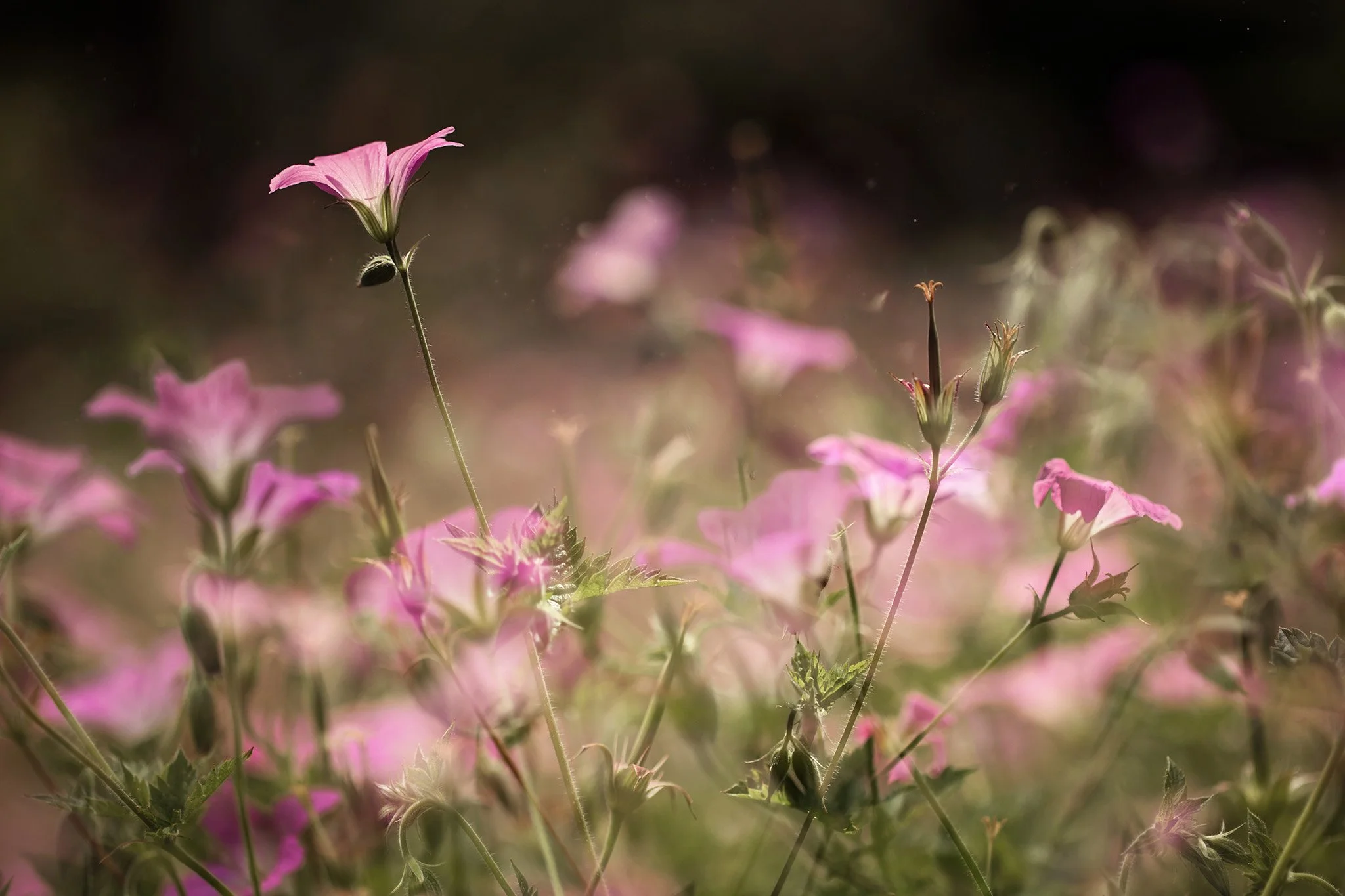
Multiple Exposure Photography image of corncockles
Flowers have become one of my favourite subjects for this technique. Their delicate shapes, intricate details, gentle movement and beautiful colours make them ideal for layered images. They also have the added advantage of being available all year and, unlike some subjects, they don’t run or fly away! Flower multiple exposures can be simple, soft and pretty, they can be bold, abstract and colourful, or literally anything in between. In multiple exposure photography there are no rules or limitations. You can create what you love. Your unique art. Layering and blending, masking and manipulating until your vision is brought to life. In fact, sometimes you might not even start out with a clear idea, but simply let the creative process take you where it will..
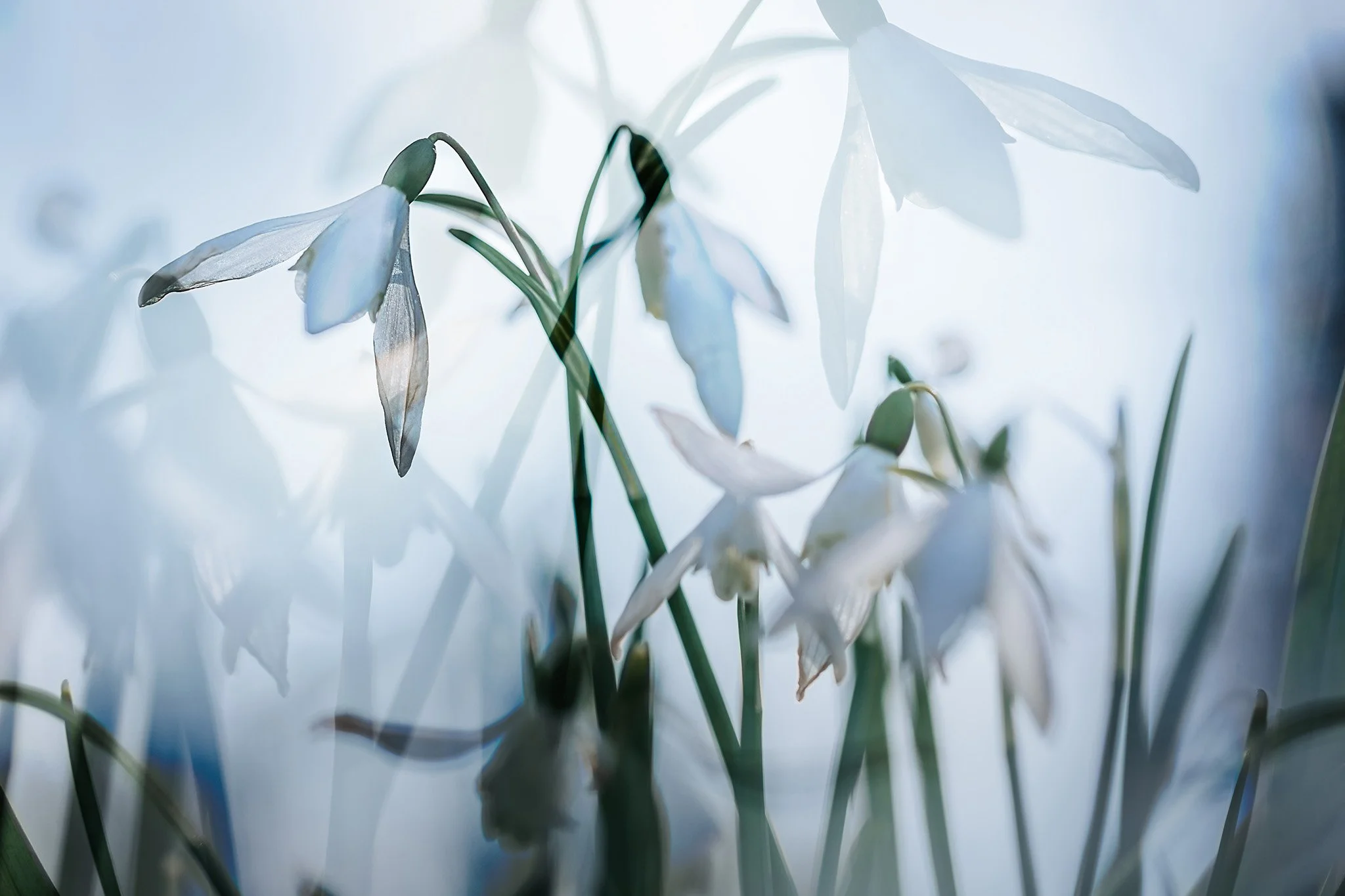
Multiple Exposure Photography image of snowdrops
How to begin
Whether you choose to create your multiple exposures in-camera or in post-processing, the first step is always identifying your subject. This technique benefits from intention rather than randomness; building your image with purpose rather than simply layering photographs and hoping something works! Even if you don’t yet know the final direction the image will take, a strong foundation is essential.
Slow down, and notice which flower, group of flowers or floral detail you are drawn to. This might be a particular shape, colour, or texture. It could be the way light falls across the petals or how the flower moves in the breeze. Explore your subject from different angles and begin to think about how you want that first image to feel. Do you want everything sharp, or a softer, dreamier background? Are you looking for stillness, or would you like to introduce movement with a longer exposure? Are you aiming for natural colours, or open to a more creative white balance? Asking yourself these kinds of questions helps guide the process and establishes a strong base image upon which to build your layers.

Multiple Exposure Photography Image of pink blossom
Adding Layers
From that initial base image, the process of adding layers can be intuitive and organic, or more experimental and expressive. The image should evolve by building on what’s already there, responding to the subject rather than competing with it. Instead of thinking in terms of “more”, think in terms of “why”, why this next layer helps tell a richer story than the base image could tell on its own.
With flowers, these additional layers might bring softness and depth, or energy and abstraction. They may add light, colour, movement, texture, detail or context. Sometimes a layer will be obvious and bold, other times, a more subtle addition is all that’s needed. As you add layers, pause and consider how the image is speaking to you. What does it make you feel?
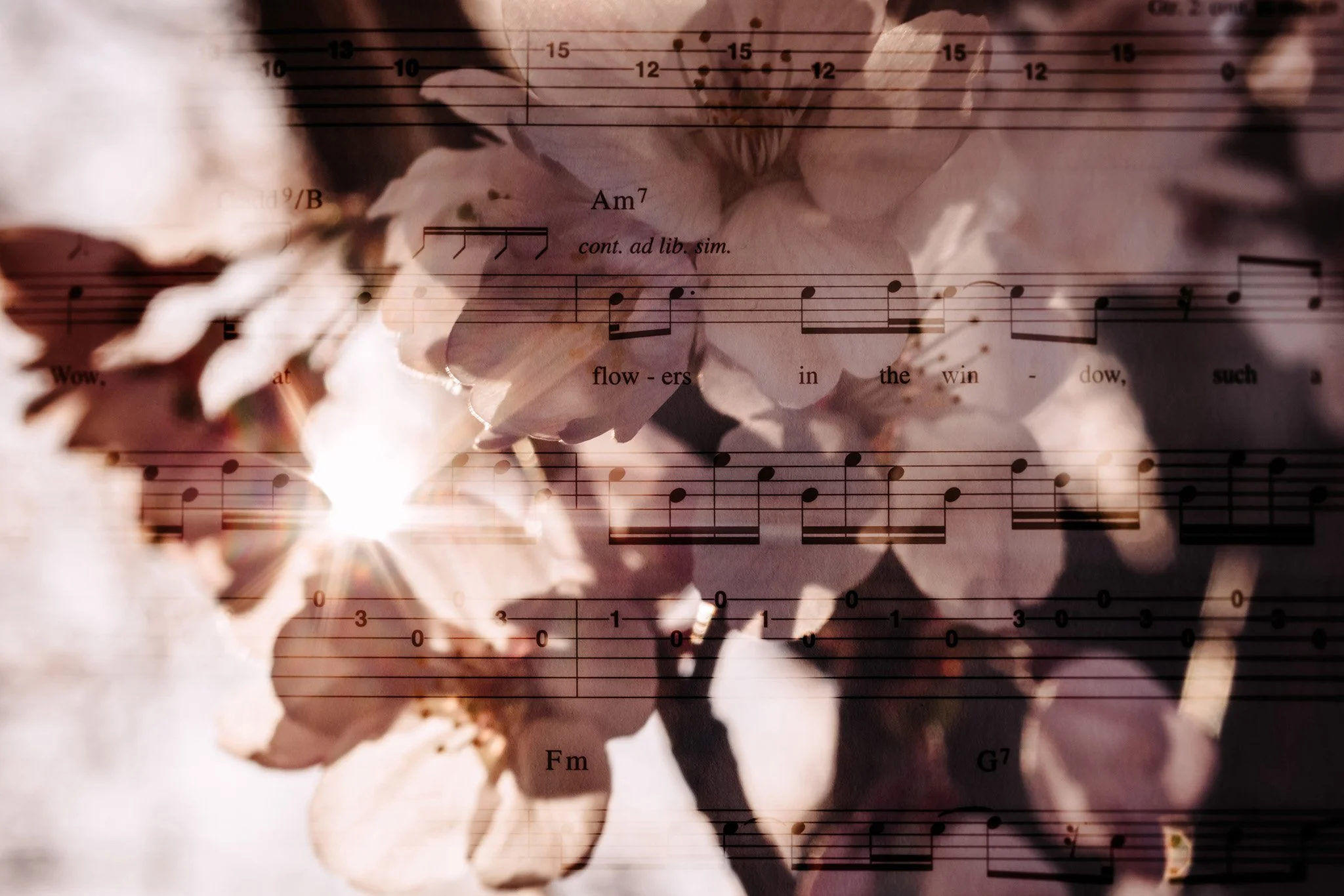
Multiple Exposure Photography Image of pink blossom and music notes
One of the great advantages of working with digital cameras or post-processing software is the freedom to step back and re-assess. In-camera, you can return to your first frame and start again (be sure to set your camera to save the individual RAWs). In post-processing you can delete a layer entirely or reduce its opacity. You can change the blending mode or mask off sections. Learning to trust the process, deciding what to add, how to add it, and then when to stop, is part of what makes multiple exposure photography such a rewarding journey.
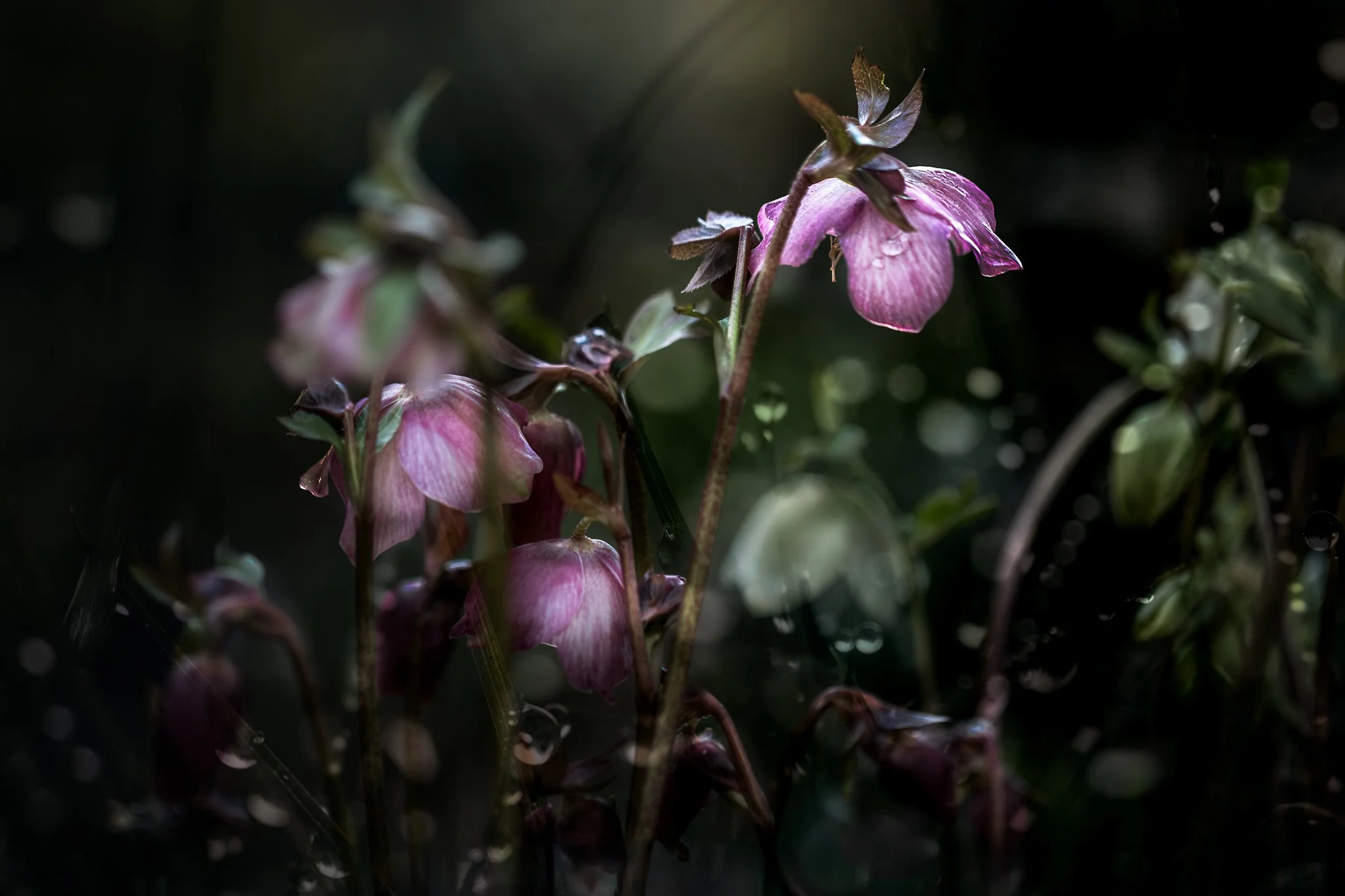
Multiple Exposure Photography image of hellebores with droplets
Taking it Further
As well as a beautiful creative process, multiple exposure flower photography can also be a therapeutic mindfulness exercise. It encourages you to slow down, stay present, and connect more deeply with both your subject and your own creative intuition.
By taking the time to practice with patience and intention, you can create stunning, unique artwork, and develop your own voice within the technique. My “Echoes in Bloom” course offers structure and guidance to support you along that journey. Across the three sessions, you’ll not only explore these creative ideas in depth, but also dive into the technical details you need to bring them to life (don’t worry - I’ll be there to guide you through the tricky bits!). You’ll have space to experiment, refine your approach, and receive gentle feedback. The images you create will capture not just how the flower world looks to you, but how it feels. They’ll reflect your vision, your curiosity and you own individual artistic voice.
Spaces are limited, so if this blog has inspired you, I’d love to see you on the course. You can find out more and reserve your place here
Check out more of my work on my website and follow my Instagram page here
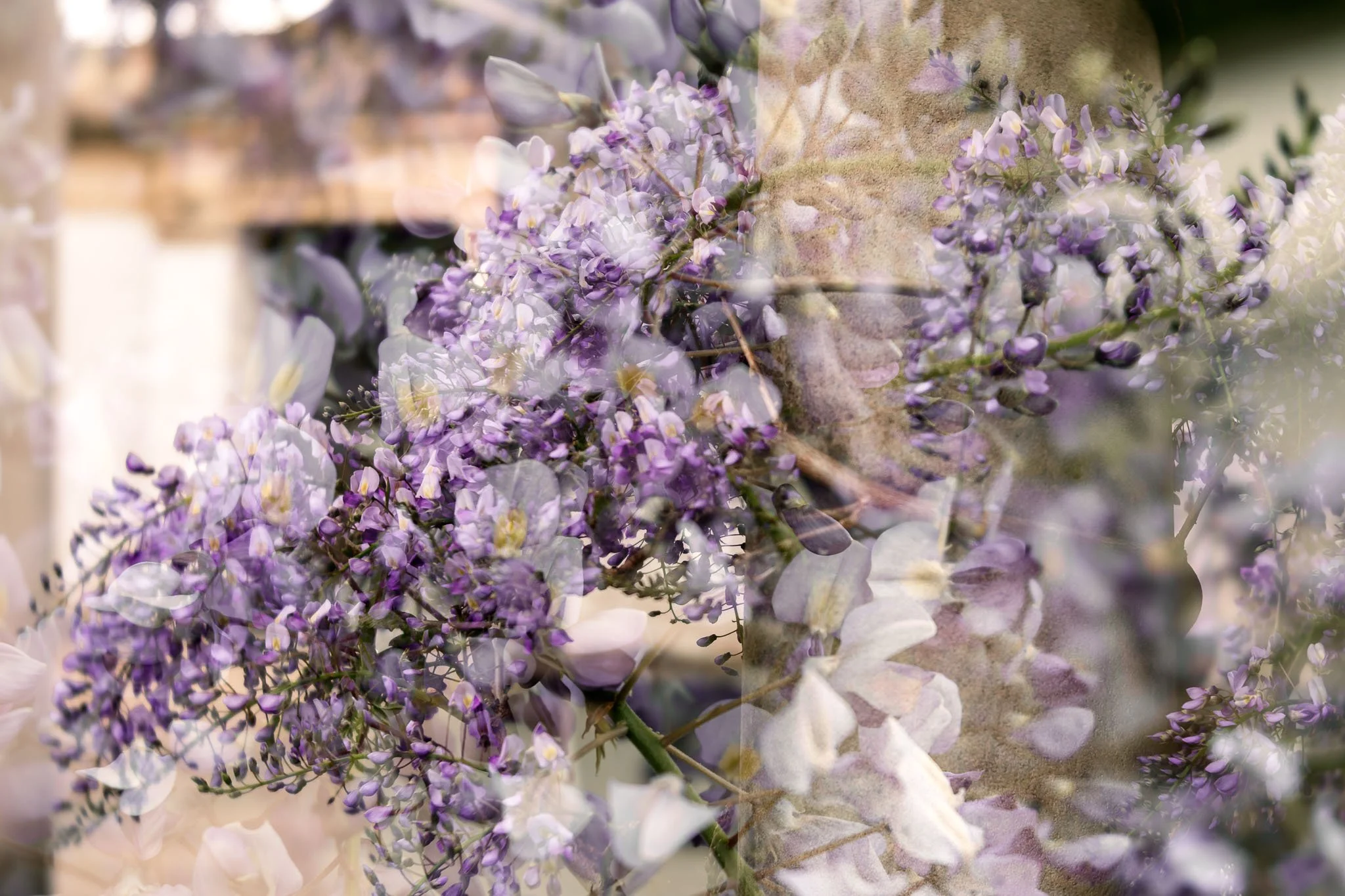
A Multiple Exposure Photography Image of wisteria