When One Photograph Is Never Enough!
There are more and more of you visiting the Wilde Photography Academy website, reading the blogs and becoming part of our wonderful creative circle, which is rather fabulous! It's lovely to see so many photographers discovering multiple exposure, experimenting with different techniques and sharing their own interpretations of the world around them.
With so many new faces joining us, I thought it was time to add a little variety and bring together some of my favourite multiple exposure techniques in one blog post. Whether you're completely new to this wonderful way of making photographs or have been experimenting for years, I hope you'll find something here to inspire you. We're going to explore everything from impressionistic techniques to upside-down buildings, camera movement a little post-processing magic and some of my more recent images. So, grab a cuppa and welcome to the wonderful world of multiple exposure photography! Do have a browse of the courses available on the website by Clicking Here.
NB If you are already a regular on this blog then welcome to some new images for you to browse - there’s some extra ideas in here for you too!
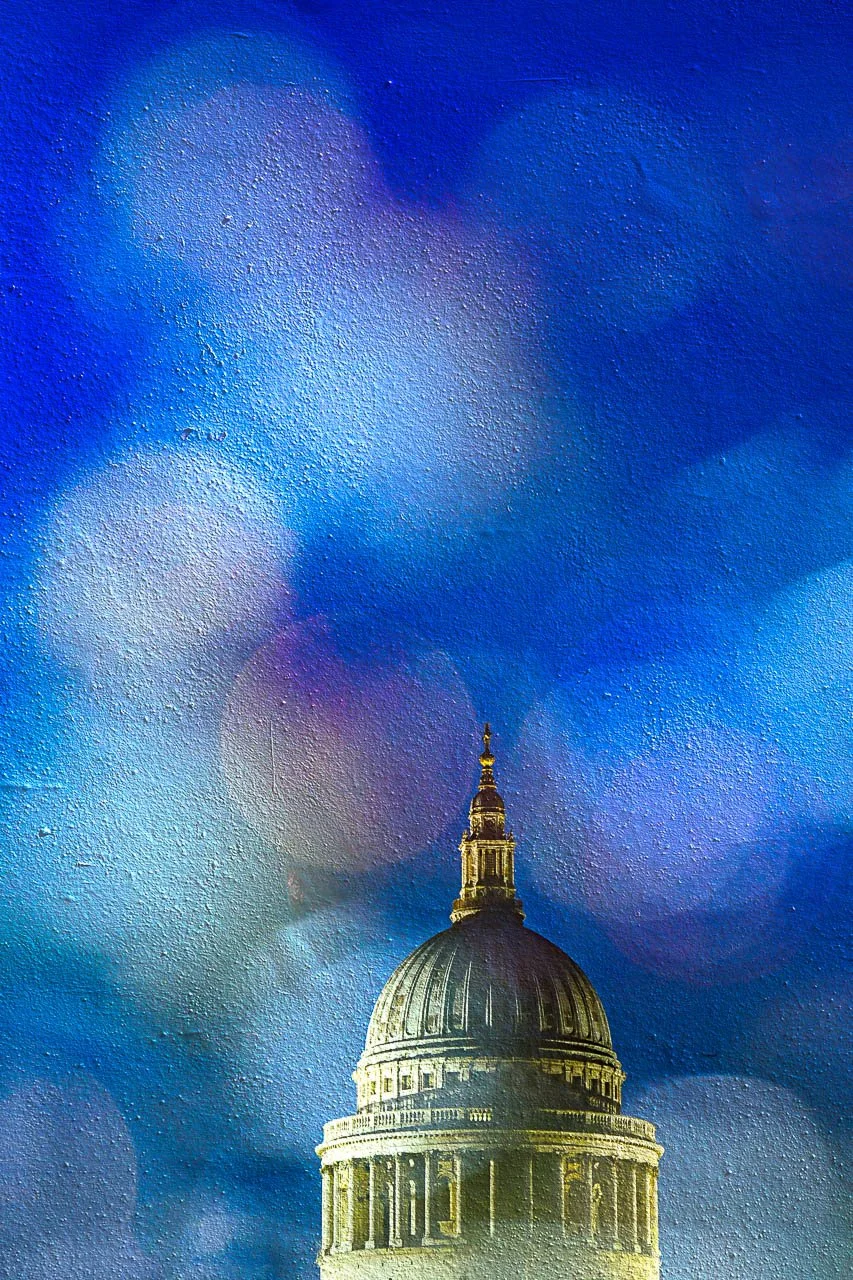
Multiple Exposure of St Pauls Cathedral - with added bokeh lights!
In-Camera or Post-Processing: Which Is Best?
This is a question I am often asked, and my answer is always the same: both! I honestly don’t know what I would do if someone said I HAD to choose!
In-camera multiple exposure allows you to create your finished image there and then. You select your multiple exposure settings, choose a blend mode and start photographing. There's something rather magical about seeing your creation appear on the back of your camera, especially when the result is something you hadn't quite anticipated!
Post-processing, on the other hand, gives you time to experiment. You can combine photographs taken days, months or even years apart, adjust their positions, change blend modes and play with colours and textures until you're happy with the result.
Neither approach is better than the other. They simply offer different creative opportunities, and I would encourage you to experiment with both.
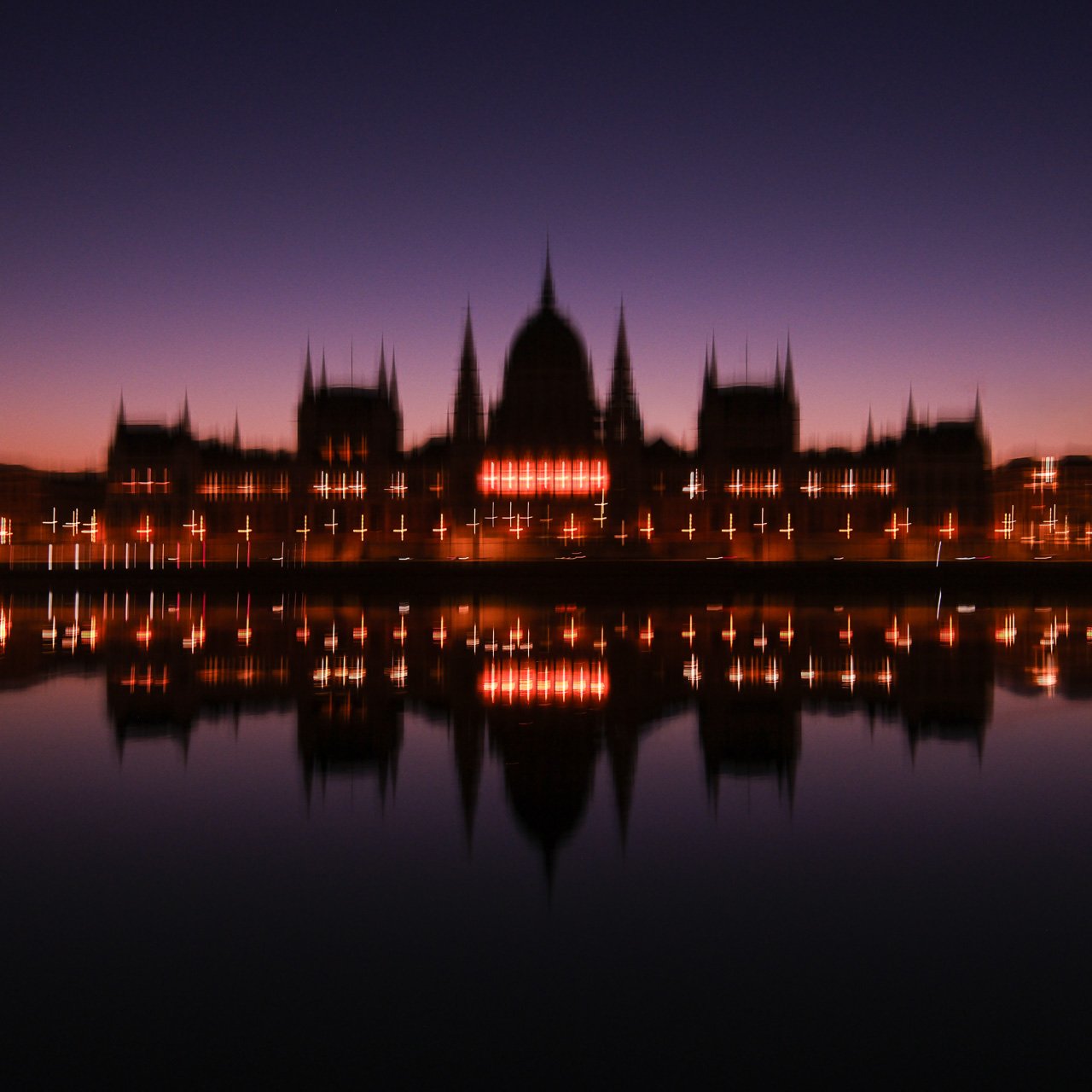
A Multiple exposure of the Parliament Building in Budapest that I NEVER get tired of pointing my camera at!
Photographing Trees and Flowers 'In the Round'
Another technique that produces beautifully impressionistic results is photographing a subject in the round, inspired by the work of photographer Pep Ventosa. This involves taking a series of photographs as you move around a subject, perhaps a tree, statue or flower, before combining them in post-processing. You might photograph a complete 360-degree circle or work around just 180 or 90 degrees. Try to maintain a consistent distance from your subject and look for good contrast between it and the background. FYI This was the first technique I ever learned……..and I never looked back.
Once you've collected your photographs, bring them into your editing software, align the subject and experiment with different blend modes and opacities. The overlapping details create a wonderful sense of movement and texture, often producing images that look more like paintings than photographs. Trees are particularly effective, especially during autumn when the leaves provide a glorious palette of reds, oranges and yellows. It's a technique that rewards experimentation, and you never quite know what the finished image will look like until those layers come together. Obviously I shall be contrary and illustrate this with a lamppost (and it also looks like it’s snowing (if you squint!) - my recent obsession with this technique!
If you enjoy experimenting with different photographers' approaches, the Inspired by the Photographers course explores how artists including Pep Ventosa can inspire our own multiple exposure creations
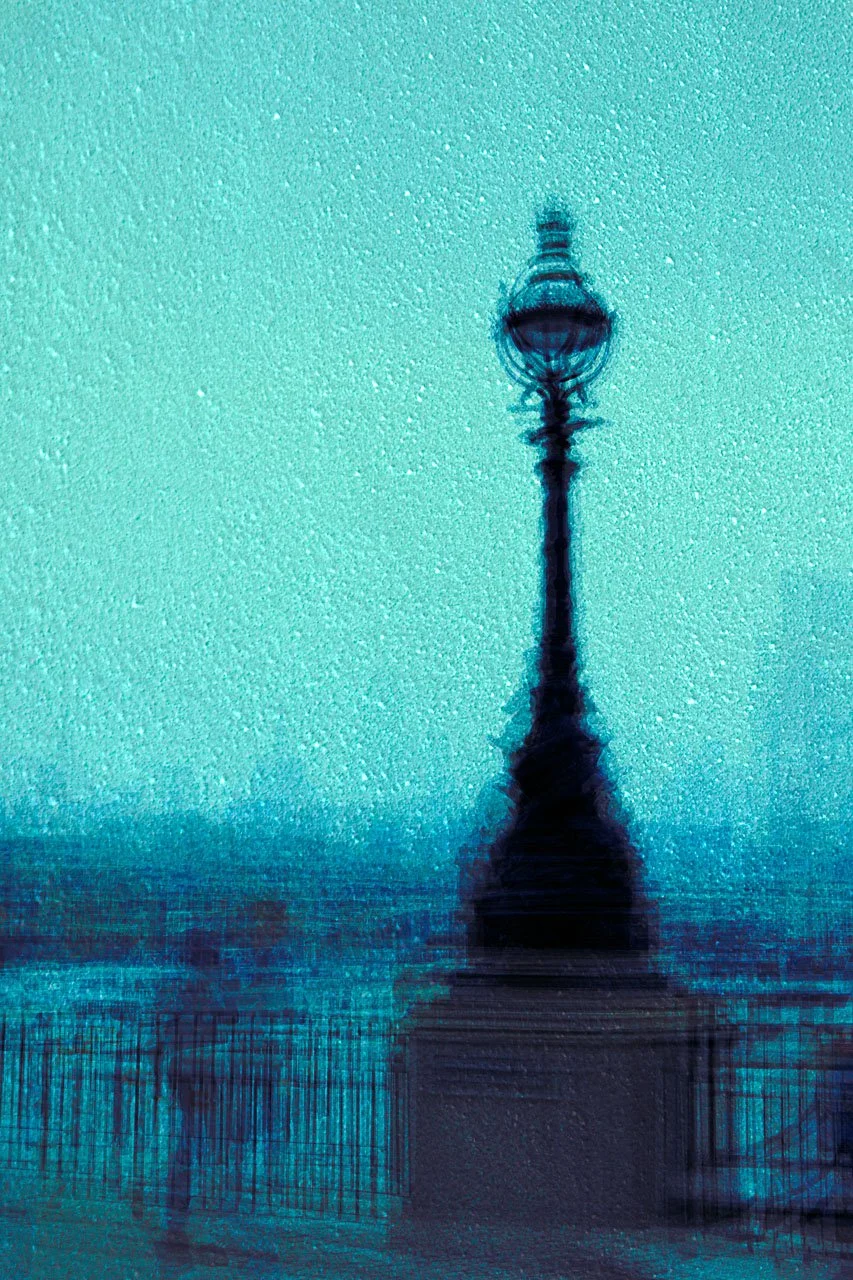
An ‘In the Round’ example of a lamp post in London.
Creative Architecture Photography: The 180-Degree Flip
Anyone who knows my photography will know that I have a particular fondness for architecture. Give me an interesting building and a camera with multiple exposure capabilities, and I can happily disappear for quite some time! One of my favourite techniques is the 180-degree flip. Take your first photograph of a building, rotate your camera through 180 degrees and take your second exposure, carefully aligning the architectural features. The result can produce fascinating symmetry, repeated patterns and unexpected shapes, transforming familiar buildings into something quite extraordinary.
Don't restrict yourself to symmetrical buildings, either. Experiment with 90-degree rotations, tessellations and overlapping architectural elements. You can also change your white balance between exposures to introduce contrasting warm and cool tones, or explore different blend modes. Lighten and Darken can produce dramatically different results from exactly the same subject. It's a brilliant way to make familiar architecture your own, particularly when photographing landmarks that have already been photographed millions of times!
I have, more recently become particularly interested in looking at different subjects for this - from doing some camera club talks recently I have been inspired to go and find some more hedgerows - The London Eye makes an interesting subject for this technique (particularly if you change the white balance in-between layers.
If you'd like to put these techniques into practice, why not join me on a London multiple exposure photography workshop, where we'll explore creative ways of photographing some fabulous architecture?
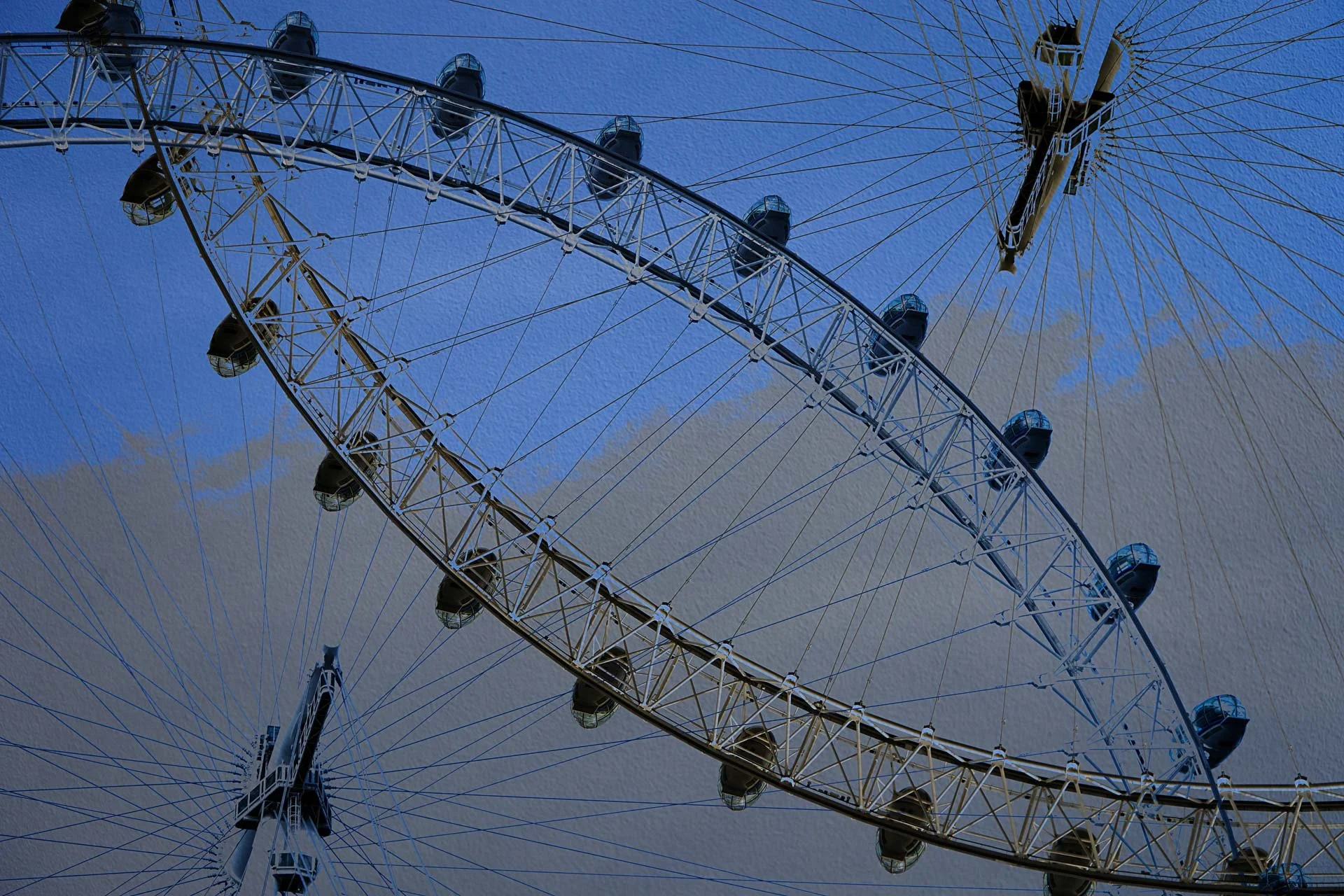
an 180 degree flip on The London Eye.
Post-Processing Multiple Exposure: Let Your Imagination Run Wild
While I love creating multiple exposure images in-camera, post-processing opens up another wonderful world of possibilities. Rather than combining photographs taken in the same place, you can bring together images captured days, months or even years apart. Imagine photographing a beautiful building and combining it with a dramatic sunset, a murmuration of starlings or some softly glowing bokeh. Suddenly, you're creating something far more personal than a straightforward photograph.
I've combined architecture with clouds, birds, textures and different skies, sometimes using several additional photographs to create the finished image. The important thing is to consider what each layer contributes. Does it introduce colour, movement or atmosphere? Experiment with blend modes, opacity and positioning, and start building a library of useful photographs that you can return to whenever inspiration strikes. It's rather like having a creative pantry, although sadly without the biscuits! Eating jaffa cakes (or, at this time of year mince pies) alongside editing is always encouraged!
If you're already familiar with the basics but would like some new challenges, the Explore Multiple Exposure course looks at creative layering techniques, including textures, birds, bokeh and intentional camera movement
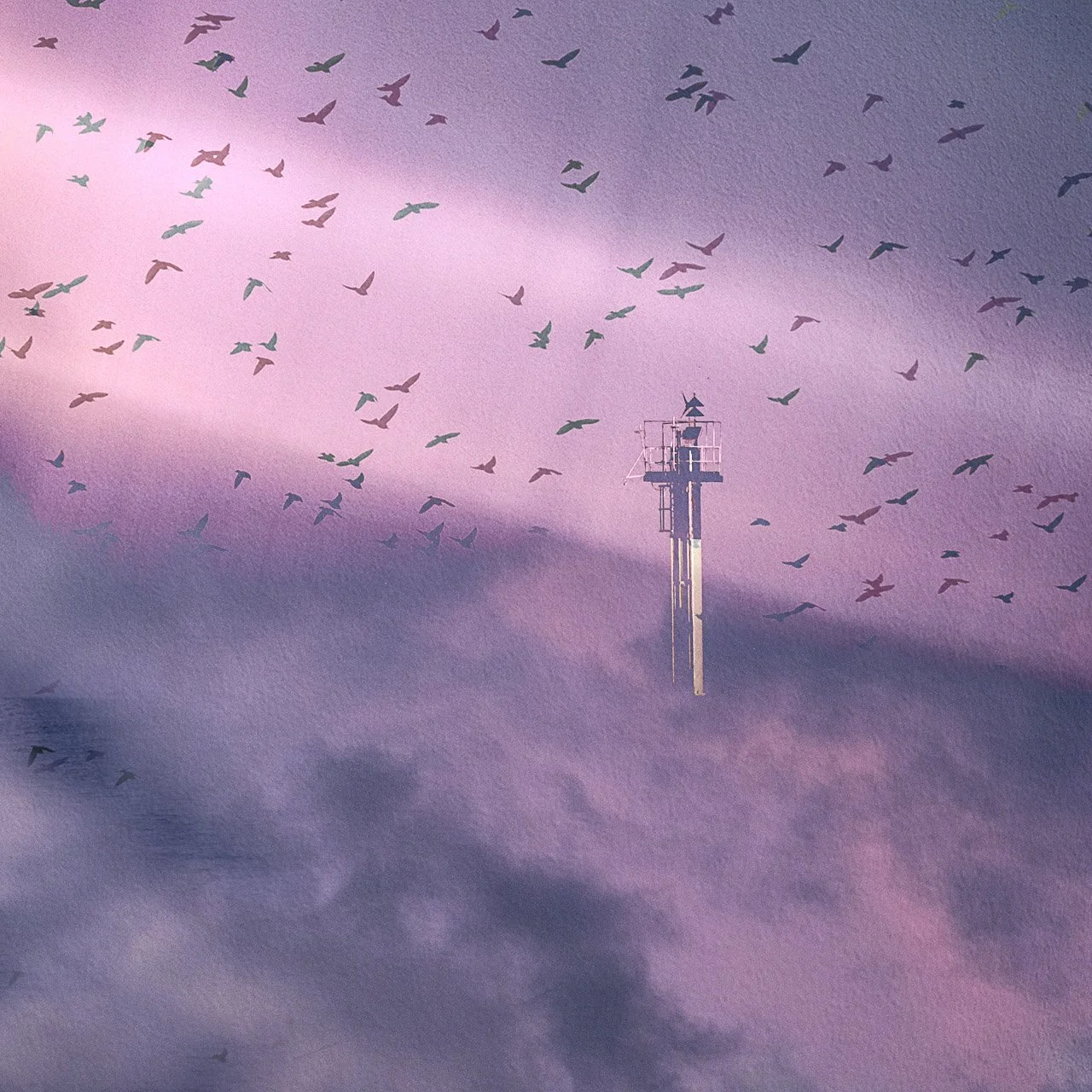
A Multiple Exposure image created in Photoshop
Finding Your Own Creative Voice Through Multiple Exposure
For me, the most exciting thing about multiple exposure isn't any particular technique. It's the freedom it gives us to develop our own creative voice. Two photographers can stand in exactly the same place, photograph the same subject and produce completely different images because they notice different things and respond to them in different ways. Multiple exposure encourages us to slow down, look more carefully and think about what we actually want our photographs to communicate. Sometimes the results are exactly what we imagined, sometimes they're even better, and occasionally they're completely baffling! But every experiment teaches us something.
If you're new to multiple exposure, I hope this has given you a few ideas to try. Start with something simple, an architectural flip or a little crosshatching. If you're already experimenting, why not revisit a technique or combine a couple of ideas in a new way?
If you'd like to explore these techniques further, the Wilde Photography Academy offers online courses, practical workshops and a growing creative community to help you develop your skills and discover your own approach to multiple exposure photography click here to explore
Now, go and have a play. You never know what you might create! And show me your images by Clicking Here.
Happy multiple exposing!