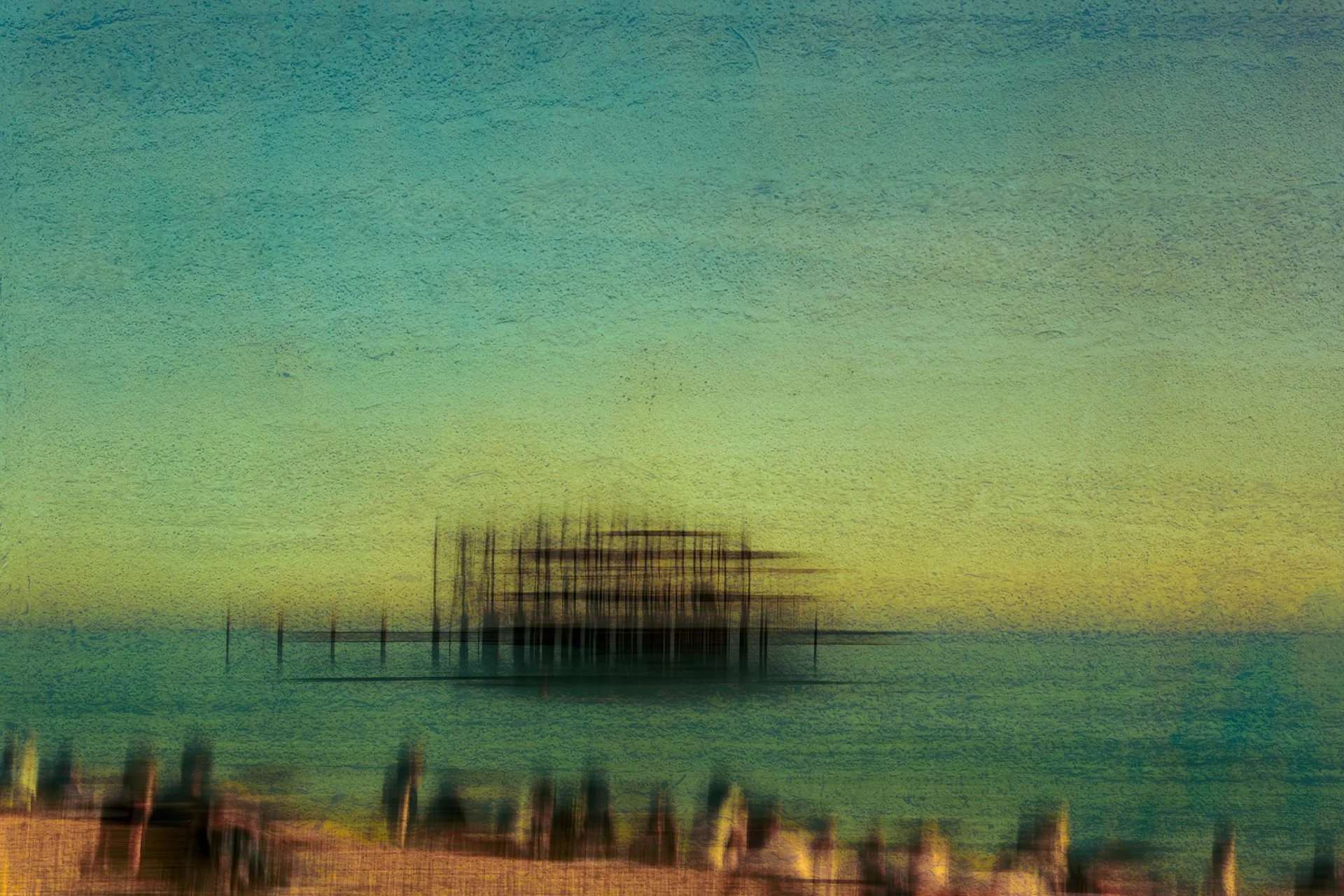
A multiple exposure image of the West Pier with a texture
An Old Friend on the Brighton Seafront
There are certain structures that you can photograph time and time again and never quite tire of, and for me, Brighton's West Pier is most definitely one of them. It has long been one of my favourite subjects for multiple exposure photography, offering endless opportunities to experiment with movement, colour, light and creative interpretation. I have photographed it in sunshine, under brooding skies, in beautiful evening light and in weather that has made me seriously question my choice of clothing! Yet every time I return, I find something different to explore.
The West Pier is, of course, no ordinary structure. Opened in 1866, it was once one of Britain's finest Victorian pleasure piers, welcoming millions of visitors during its heyday. It became the first Grade I listed pier in England, but its fortunes gradually declined, and it closed to the public in 1975. Years of exposure to the elements, followed by two devastating fires in 2003, left the skeletal remains that have become such an iconic part of Brighton's coastline.
And now, following further storm damage, its familiar silhouette has changed once again. There is something rather poignant about watching a structure that has provided so much photographic inspiration gradually disappear into the sea. We cannot know exactly how much longer the remaining structure will survive, but I do know that I am incredibly grateful for the opportunities I have had to photograph it over the years.
This weekend I will be leading a photography workshop in Brighton, and one of the things I am particularly looking forward to is seeing how the pier looks now. Will the changes alter the compositions I have become so familiar with? Will they open up completely new possibilities? I suspect the answer to both questions is yes, and that is part of the excitement of creative photography.
One of my photographs of the West Pier is currently being exhibited at the Chester Photo Festival, which makes this particular subject even more special to me. It is lovely to see an image of a structure I have returned to so often finding its way onto an exhibition wall.
So, before I head back to Brighton, I thought I would share some of the different ways I have photographed this wonderful old structure. Hopefully, they will give you a few ideas for approaching a favourite subject of your own.
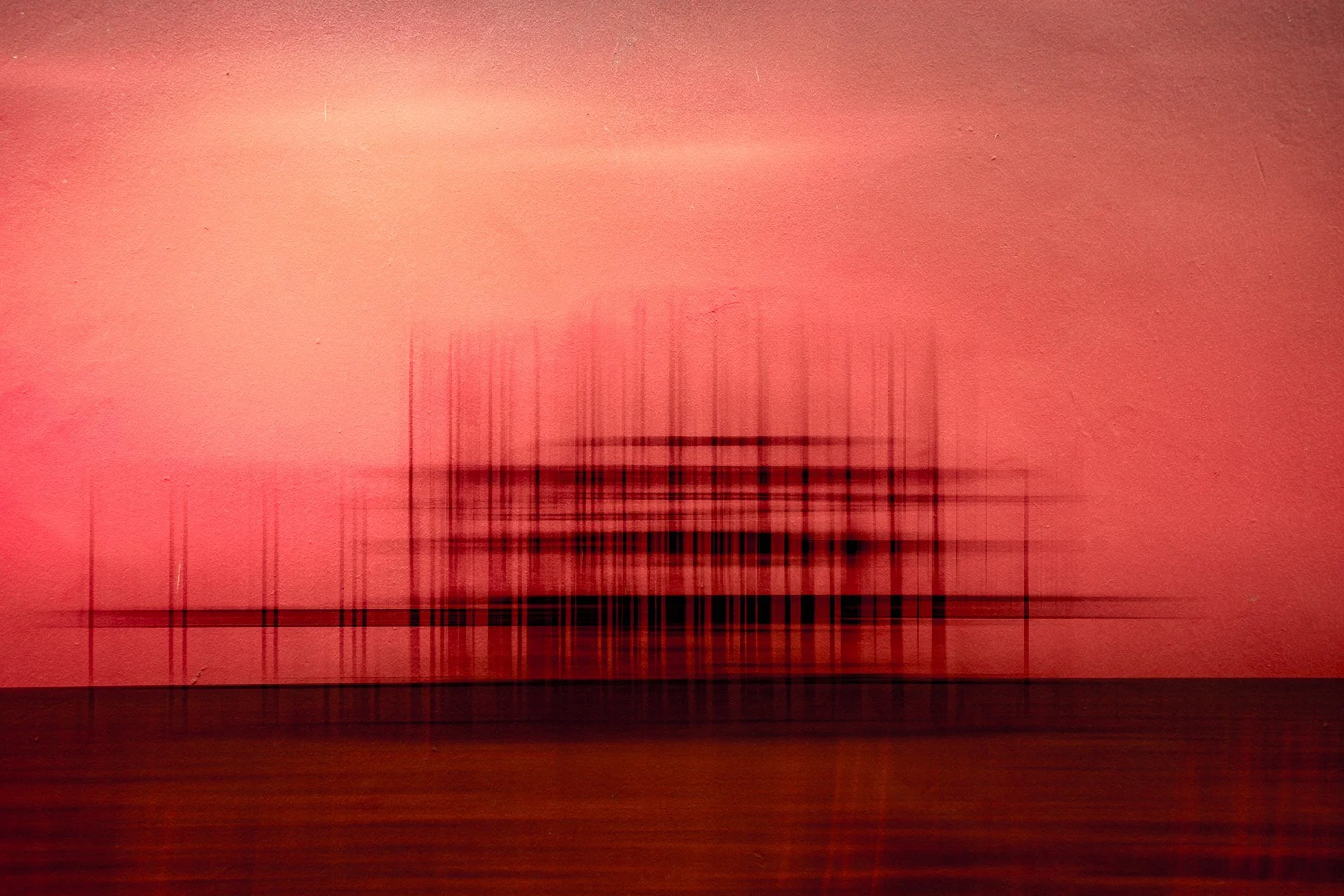
A multiple exposure image of the West Pier which has just been exhibited at the Chester Photo Festival
Changing the Mood with White Balance
One of the simplest ways to transform the atmosphere of an image is to experiment with white balance. We tend to think of white balance as something that helps us achieve accurate colours, but I much prefer to think of it as another creative tool in the camera bag.
With the West Pier, changing the white balance can produce wonderfully different interpretations of exactly the same scene. Cooler blue tones can emphasise the isolation of the structure against the sea, while warmer yellow and orange tones can create an almost nostalgic atmosphere, suggesting memories of the pier in its former glory.
I particularly enjoy pushing the settings beyond what might be considered technically correct. After all, who says the sea has to be blue or the sky has to look remotely realistic? Certainly not me!
When combined with multiple exposure, these colour changes become even more interesting, particularly when different exposures contribute contrasting tones to the final image.
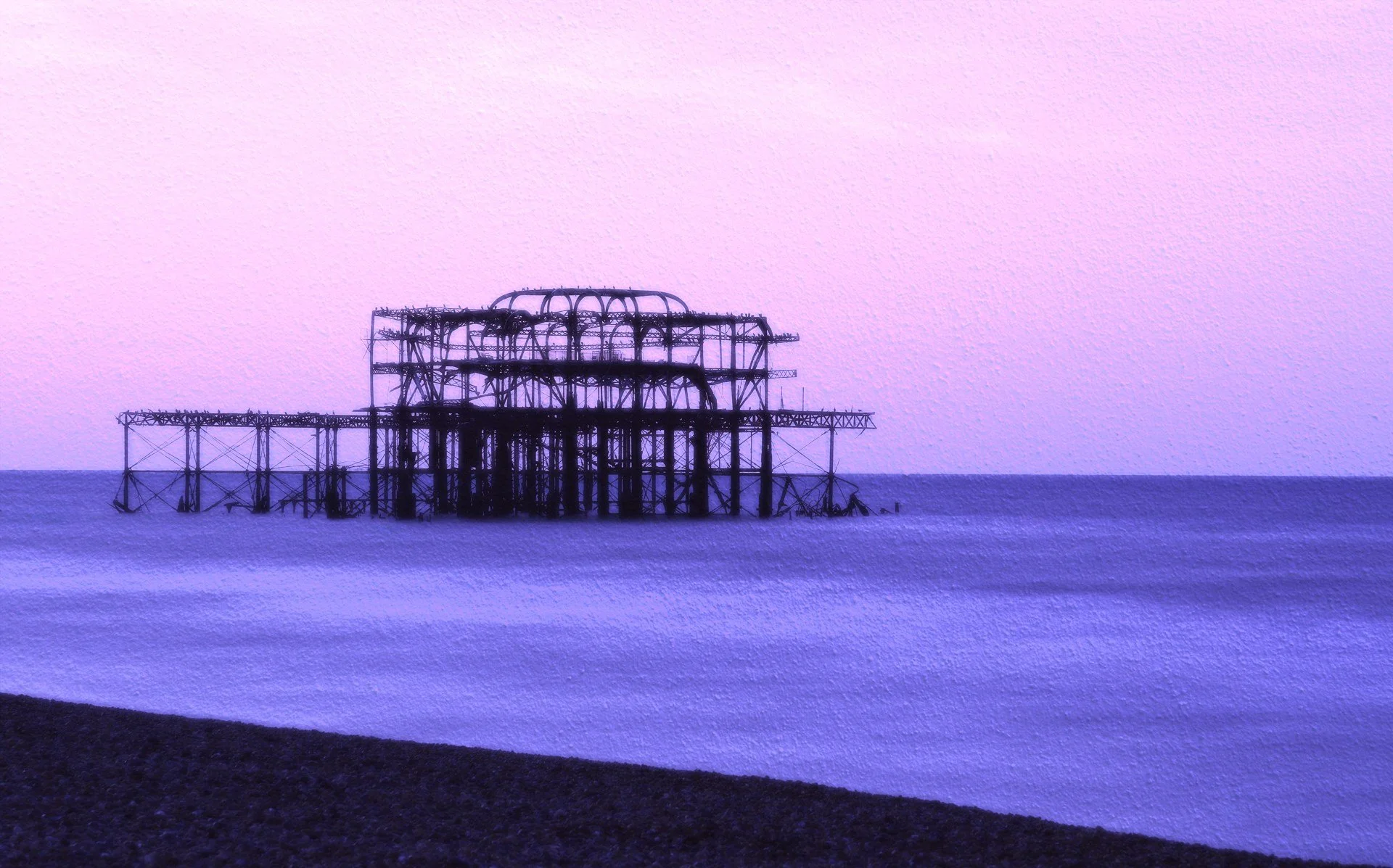
A multiple exposure image of the West Pier showing a rather dramatic shift in white balance!
Crosshatching: Adding Movement to a Static Structure
Crosshatching is one of my favourite techniques for photographing architecture, and the West Pier is an absolutely fabulous subject for it. Those vertical supports and horizontal sections provide a wonderful starting point for introducing intentional camera movement.
My approach is to take two exposures, moving the camera vertically for one and horizontally for the other. I will often work at around 1/15 or 1/8 second, depending on the available light and the effect I am hoping to achieve. The resulting combination can create an almost woven appearance, where the original structure becomes softened and transformed into something much more abstract.
What I particularly love about crosshatching is that it allows me to respond to the shapes and lines of a subject rather than simply record what is in front of me. The West Pier might be stationary (well, mostly!), but the image certainly doesn't have to be.
It is also interesting to combine crosshatching with changes in white balance. Suddenly, a familiar Victorian structure can become a wonderfully colourful, almost painterly creation.
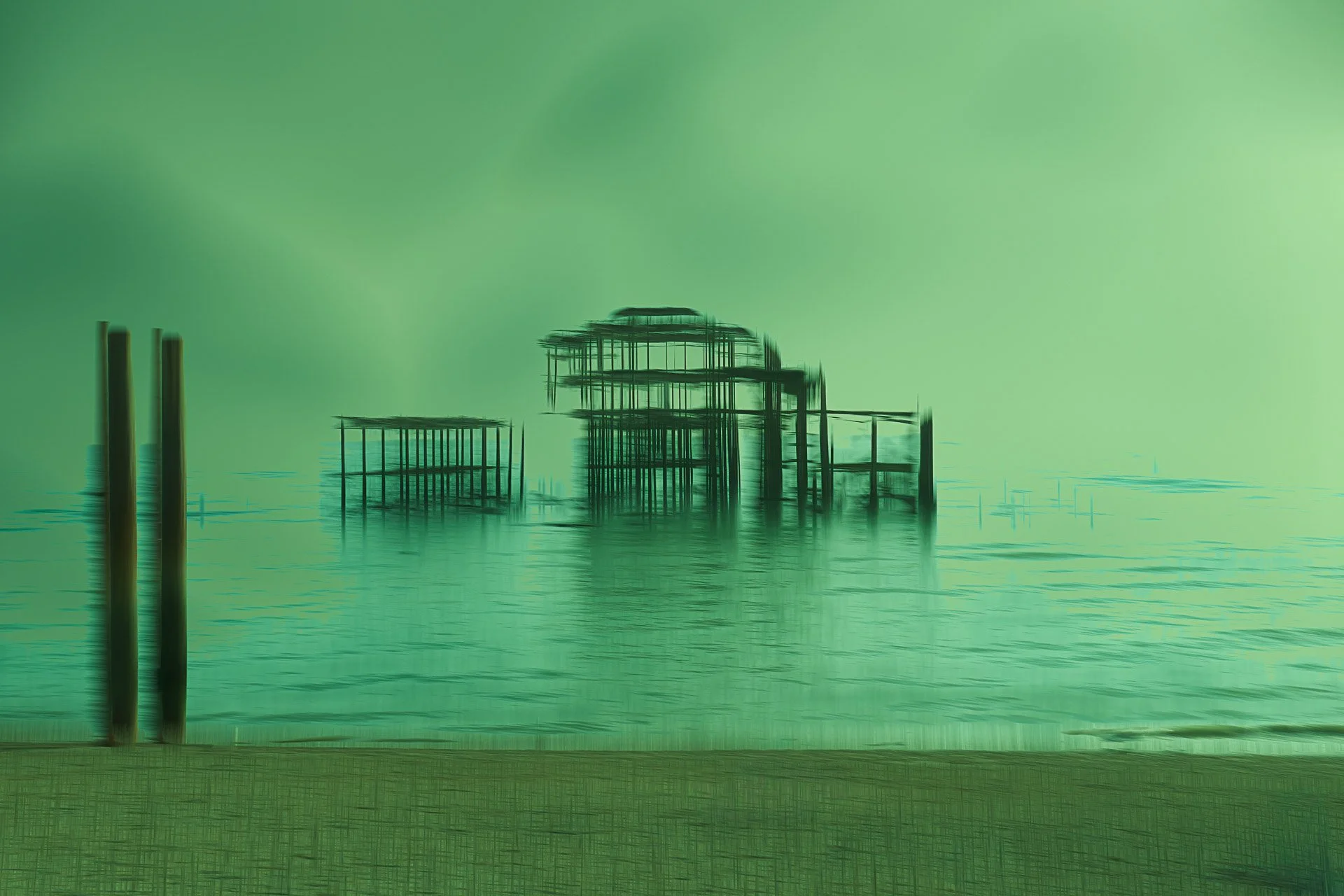
A multiple exposure image of the West pier showing my favourite technique - cross hatching!
Bokeh: A Little Bit of Magic
Bokeh is another technique that I have enjoyed using with the West Pier, particularly when I want to create something a little more dreamlike. By deliberately throwing an exposure out of focus, points of light can become soft circles, introducing a completely different texture and atmosphere to the image.
I particularly like combining an in-focus exposure of the pier with a second, deliberately defocused image of something sparkly. This allows the recognisable structure to remain visible while the softer layer introduces a sense of mystery. Sometimes I will use the same subject for both exposures, but mostly I will look for additional light or reflections that might complement the composition.
The lovely thing about bokeh is that you never quite know what you are going to get until you start experimenting. And occasionally, something that looks like a complete muddle through the viewfinder turns into something rather wonderful. Those are always my favourite surprises!
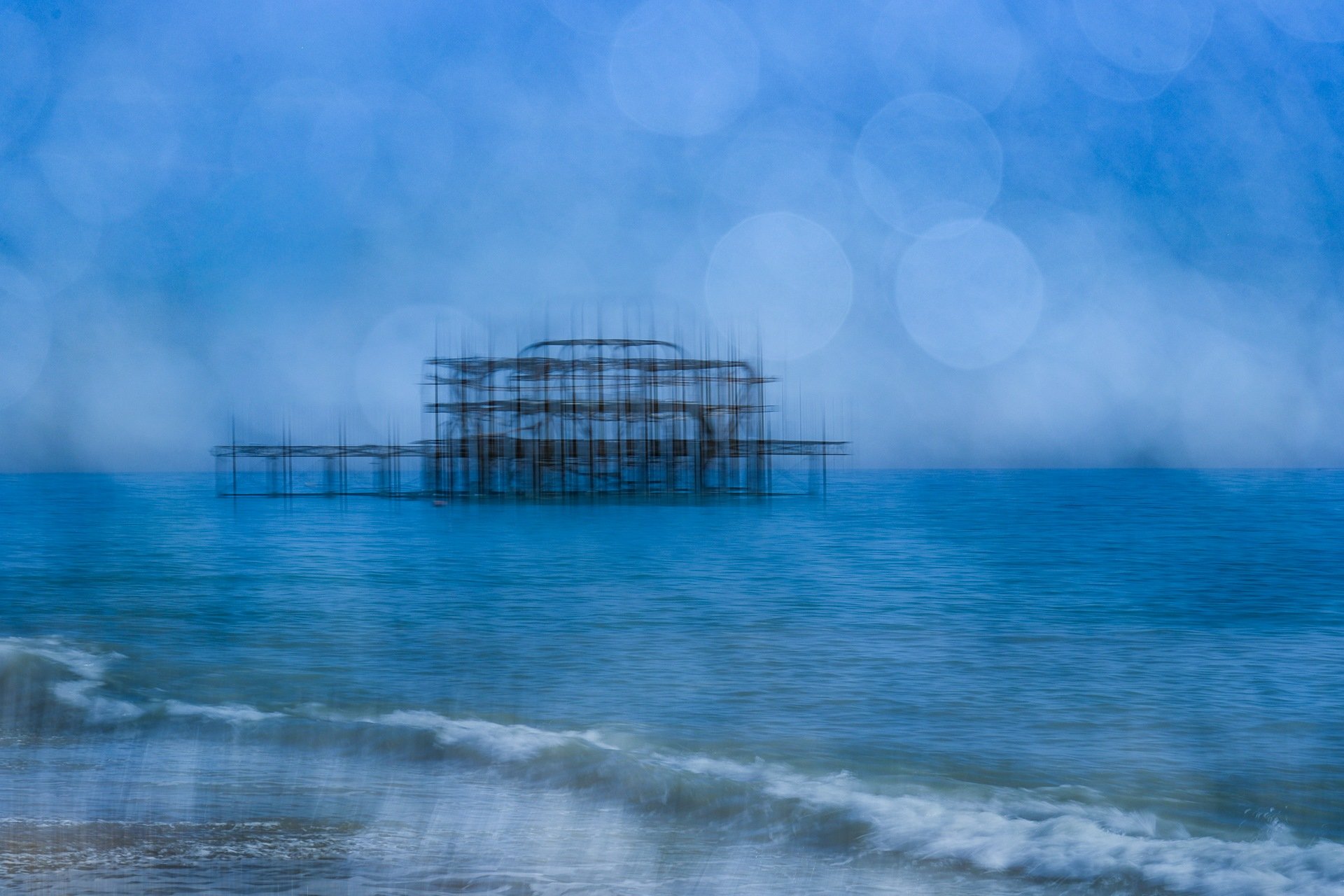
A multiple exposure image of the West pier with bokeh
Lighten Mode: Letting the Structure Shine Through
Another approach I have used is Lighten blend mode, which offers a completely different way of building a multiple exposure image. Rather than blending everything equally, Lighten mode favours the brighter areas of each exposure, allowing you to experiment with how different shapes and structures interact.
With a subject such as the West Pier, I can use this to explore the relationship between the dark skeletal framework and the brighter sea or sky. By slightly changing my composition between exposures, I can introduce additional lines, repeated shapes and unexpected patterns.
I particularly enjoy how this technique can transform something recognisable into something much more abstract while still retaining enough of the original subject to give the viewer a starting point. It is a wonderful reminder that multiple exposure photography isn't simply about taking several photographs and putting them together. It is about making creative decisions that change how we see the world.
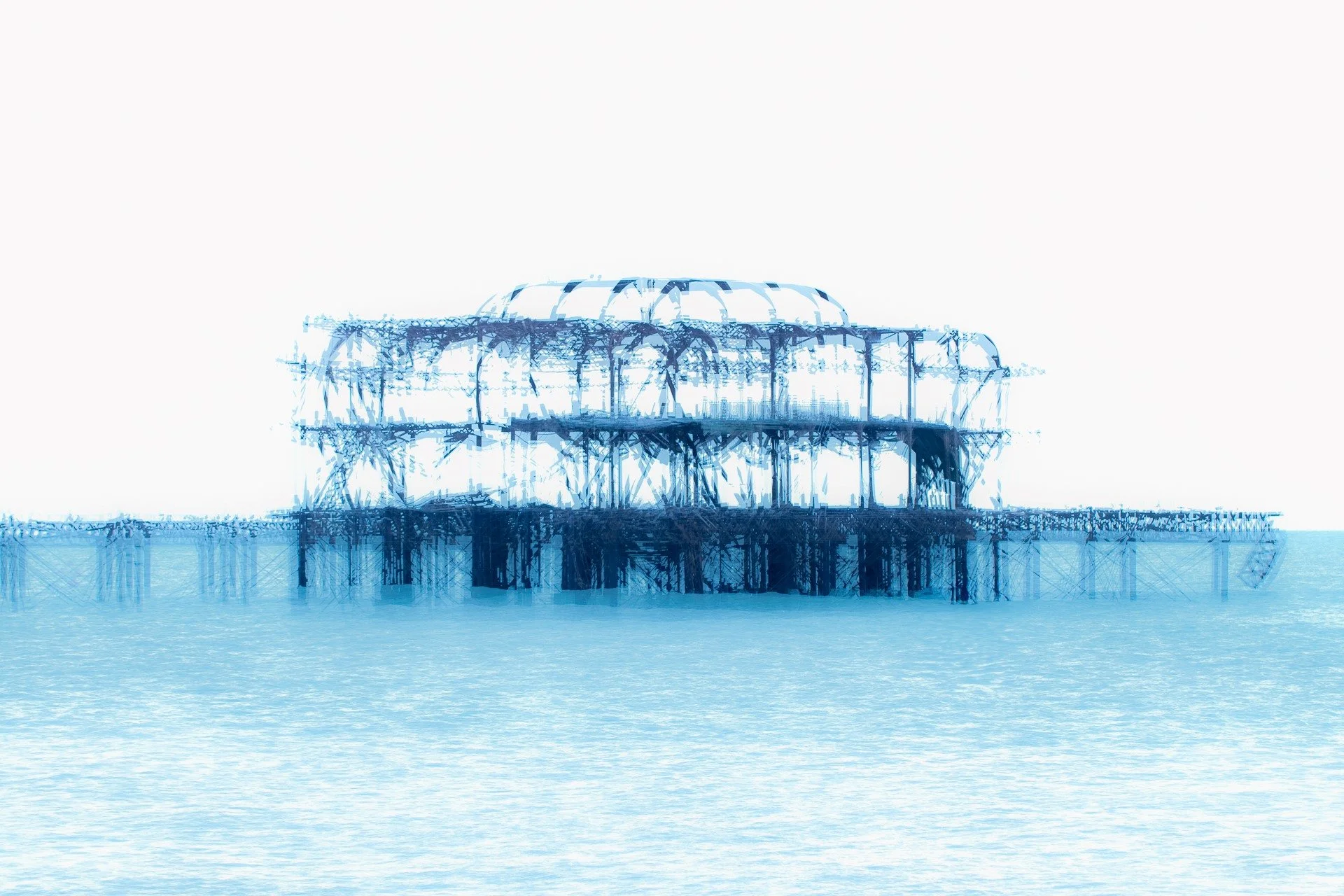
A multiple exposure image of the West Pier using light (or bright) mode in camera
Photographing Change: What Will the West Pier Look Like Now?
The recent damage has made me think rather differently about all the photographs I have taken of the West Pier. On Friday 23 October 2026, Storm Austen battered the Brighton coastline, causing another significant section of the remaining ironwork to collapse into the sea. The West Pier Trust has confirmed that the structure continues to deteriorate and that further losses are inevitable.
It is incredibly sad to see such an iconic landmark gradually disappearing, particularly when it has given me so much inspiration. But perhaps there is something important here about photography and the passing of time. Every photograph we take becomes a record of a moment that can never be repeated in quite the same way. Click here for more information.
This weekend, when I return with my workshop group, I will be looking at the pier with fresh eyes. I have no doubt that some of my familiar compositions will no longer be possible, but I am equally certain that new ones will emerge. We will be exploring how the remaining structure interacts with the sea, the sky and the light, and how we can use multiple exposure techniques to respond creatively to what is still there, all from a safe distance.
And who knows? Perhaps I will come home with a completely new favourite image. Although, knowing me, I will probably also come home with several hundred photographs that need sorting through and a rather urgent appointment with Photoshop!
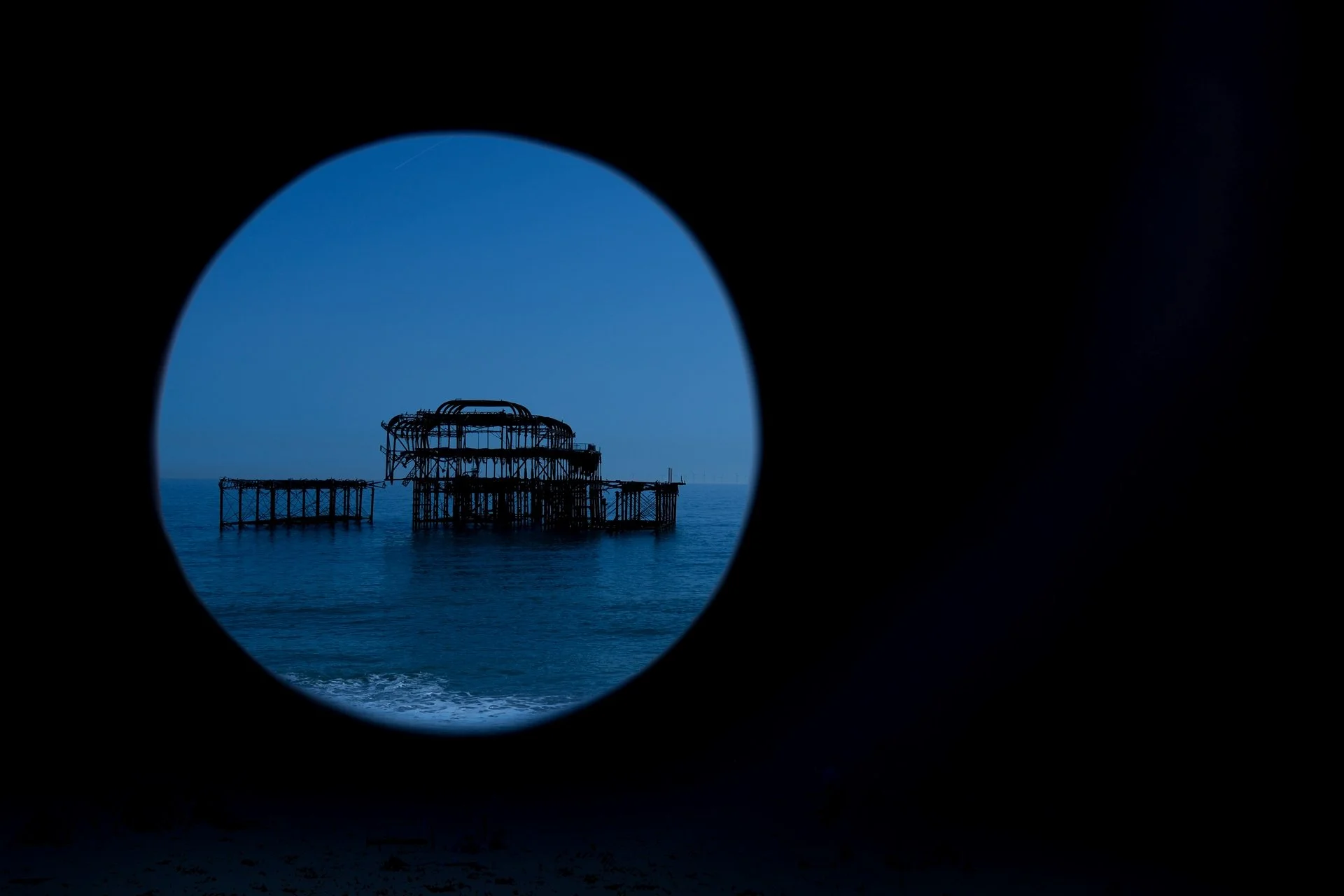
A multiple exposure image of the West pier through a bin, yes, through a bin!! Intrigued? come on a workshop to find out….
Join Me in Brighton in April
If this has inspired you to explore Brighton through multiple exposure photography, there are two opportunities to join me next April.
Our Brighton Weekend Workshop for women, in collaboration with SheClicks offers a wonderful opportunity to spend two days exploring Brighton creatively, alongside Angela Nicholson. We will be looking beyond the obvious photographs and experimenting with techniques that help us create something much more personal. From the beautiful architecture of the Royal Pavilion to the colourful Lanes, seafront and West Pier, Brighton offers an enormous variety of subjects. It is a women-only workshop with plenty of tuition, encouragement and, I suspect, a fair amount of laughter!
Alternatively, my Brighton Day Workshop in April is perfect if you would like a concentrated day of creative exploration in a small group. We will experiment with different multiple exposure techniques, look at how to recognise photographic opportunities and, most importantly, have some fun along the way.
You can explore other workshops and courses at Wilde Photography Academy.
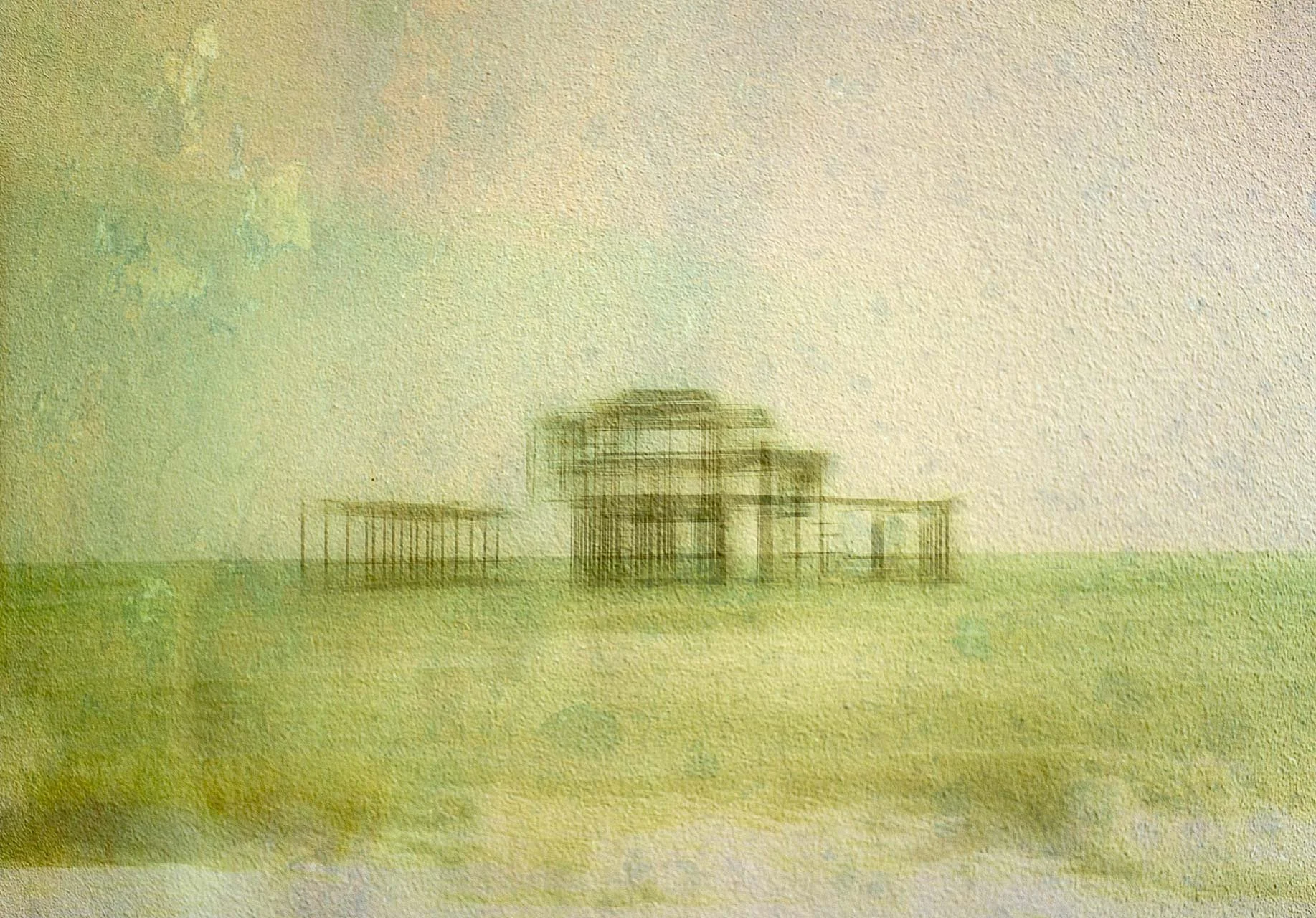
A multiple exposure image of the West Pier and texture from the poles on the shore line.
A Tribute to the West Pier
I have always believed that photography is about much more than recording what something looks like. It is about how we respond to it, what we notice and how we choose to interpret what is in front of us.
The West Pier has given me years of creative enjoyment, from colourful white balance experiments to soft bokeh creations and abstract crosshatched images. It has been a constant source of inspiration, even as the structure itself has continued to change.
I don't know what the pier will look like in another year, let alone another decade. But I do know that the photographs I have taken will preserve my own interpretations of it, and that is something rather special.
So, if you have a favourite structure, tree, landscape or even an ordinary street corner that you return to time and time again, keep photographing it. Experiment with different techniques, different light and different seasons. You might be surprised at just how much creative inspiration one subject can provide.
And as for the West Pier? Well, I am not quite finished with you yet. See you this weekend!