How to Photograph a New City: Planning a Creative Photography Trip to Valencia
One of the questions I get asked most often when I travel to a new destination is how much planning I do beforehand. The answer is both "quite a lot" and "not nearly as much as people think."
Before any trip, I will spend time researching locations. I'll scroll through Instagram, look at maps and save places of interest. I often create a shot list and even a rough timetable of where I would like to be and when. On paper, it can look incredibly organised.
But here's the thing: I find it almost impossible to visualise exactly what I am going to create before I get there. The reason is simple. My photography, particularly using multiple exposure, is a response to what I am experiencing in the moment. The colours, atmosphere, architecture, weather and even my mood all influence the images I make. The layers I choose, the way I combine them and the techniques I use are rarely decided in advance.
So if I can't fully plan the image, what exactly am I planning?
Let's use Valencia as an example. Yes, obviously I am running a workshop there next year (!) alongside the wonderful Angela Nicholson and SheClicks. It is a women-only workshop and I am incredibly excited about it. The city offers such an incredible variety of subjects and creative opportunities. Do CLICK HERE for more info.
Anyway, back to the blog…….The planning stage helps me identify potential locations, understand how they relate to one another and make sure I don't miss important opportunities. It gives me a framework. What happens creatively inside that framework is where the magic begins.
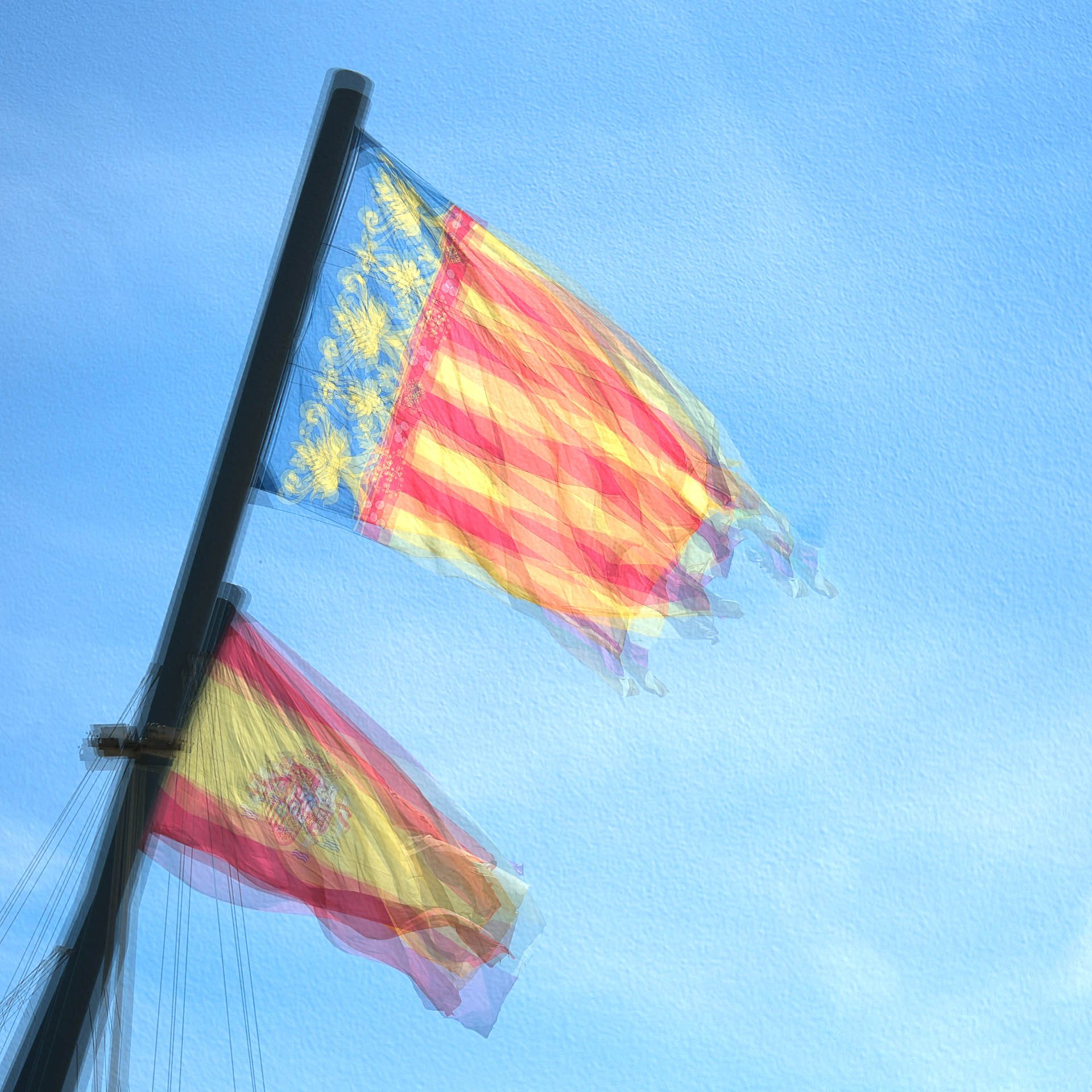
A Multiple Exposure Photography Image of the flag of Valencia and of Spain
Starting with a Shot List
When researching Valencia, my initial shot list looked something like this:
Colourful streets of El Cabanyal
Traditional architecture in the Old Town
Valencia Cathedral area
City of Arts and Sciences
Reflections around L'Hemisfèric
Palm trees and Mediterranean details
Sunset architecture
Blue hour cityscapes
Using internet search tools helped me identify locations that photographers regularly visit and allowed me to work out where the light would fall and whether sunrise or sunset might be the better option.
I could then create a rough timetable. Perhaps El Cabanyal in the morning when the colours are vibrant but the streets are quieter and cooler. The Old Town in softer afternoon light. The City of Arts and Sciences for sunset and blue hour. Simple. Or so I thought.

A Multiple exposure photography image of a palm tree
El Cabanyal: When a Place Dictates the Technique
El Cabanyal is Valencia's old fishing district, situated close to the Mediterranean coast. Once home to generations of fishermen, it has developed a unique identity with brightly coloured tiled facades, geometric architecture and an atmosphere that feels distinctly different from the historic centre.
The moment I arrived, I knew exactly why photographers love it. The colours are bold, the lines are strong and the contrast between buildings, sky and shadows is dramatic. While I had planned to photograph the area, I had absolutely no idea what multiple exposure techniques I would use until I stood there.
Suddenly the answer became obvious. The architecture was crying out for clean geometric treatments. Strong symmetrical compositions worked beautifully with 180-degree flips, while repeating shapes lent themselves naturally to cross-hatching techniques. (for more information on these techniques please head to the Blog Inspirations: My Top 5 In-Camera Multiple Exposure Techniques by clicking HERE)

A Multiple Exposure Photography image in Cabanyal in Valencia
What surprised me was how these approaches continued to work even when I moved away from the buildings themselves. A line of palm trees could still retain an architectural feel through careful layering and repetition. For me, palm trees instantly evoke warmth and holiday destinations. They are visual shorthand for heat, sunshine and Mediterranean life.
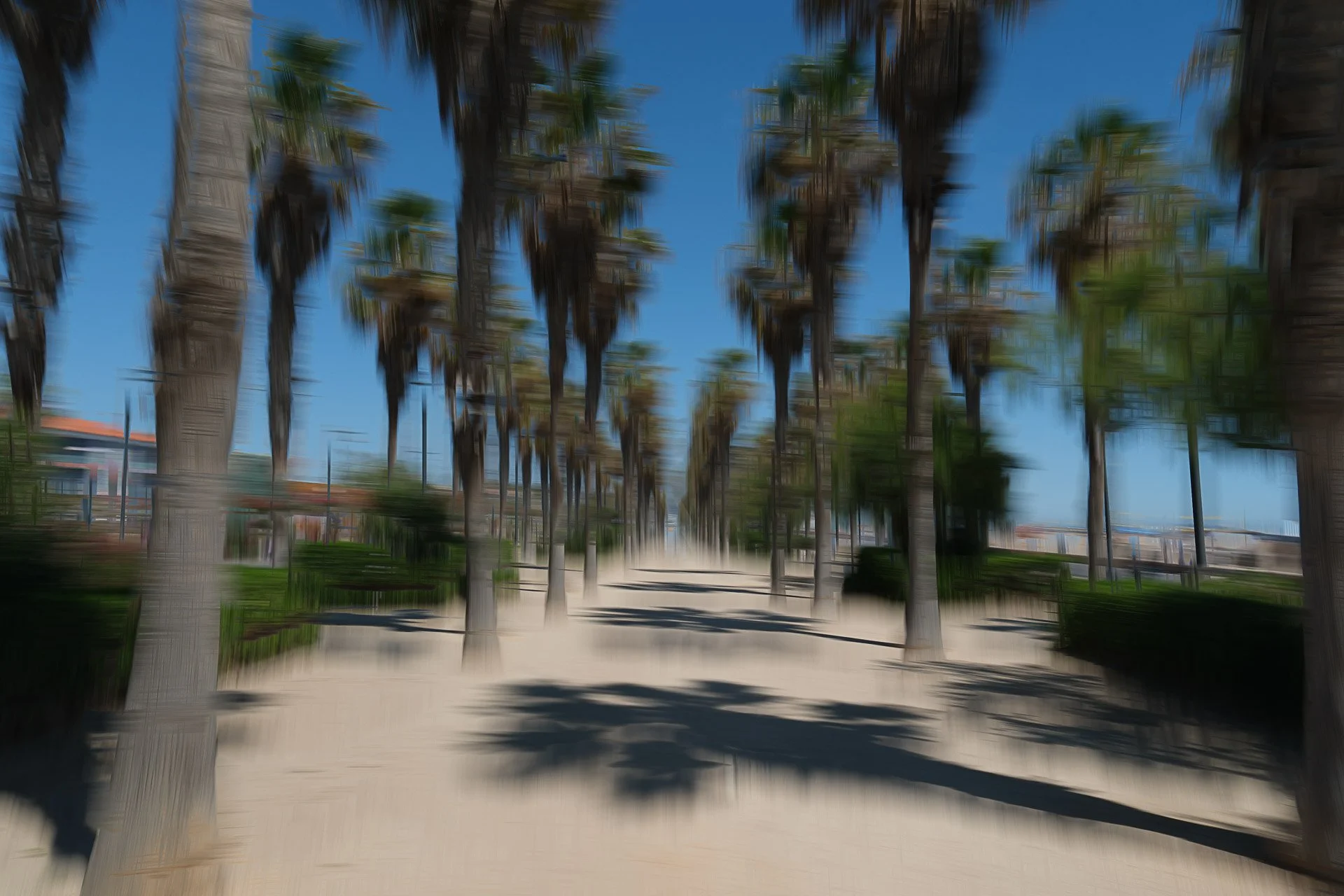
A Multiple Exposure Photography Image of palm trees
The Old Town: Simplifying the Complex
Valencia's Old Town is one of the largest historic centres in Europe, with a history stretching back over 2,000 years. Roman foundations, Gothic churches, medieval gateways and elegant squares combine to create layer upon layer of visual interest. Which is wonderful - and also rather challenging for multiple exposure photography. Ornate architecture contains huge amounts of detail. If you simply start layering images together, the result can quickly become confusing and cluttered. This is where understanding the atmosphere of a location becomes important.
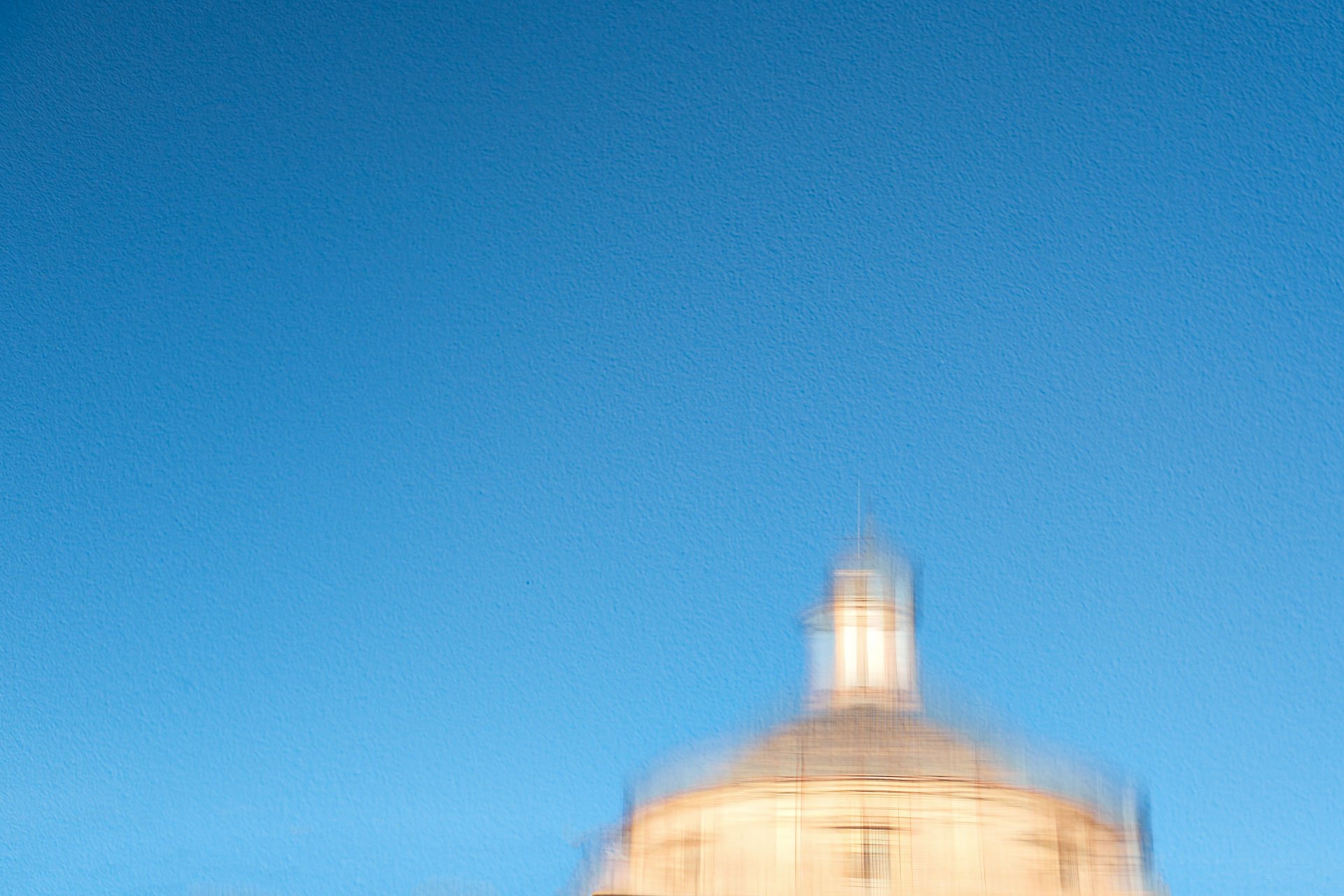
The Old Town felt nostalgic, historic and elegant. Rather than fighting against the complexity, I found myself searching for simplicity within it. Minimalism became the key. By isolating individual structures and reducing distractions, I could preserve the character of the buildings while still creating something artistic.
One image in particular focused on the dome of the Valencia Basilica rising above the city. By simplifying the composition and allowing space around the architecture, the final image retained that sense of history and grandeur without becoming overwhelming.
Again, I couldn't have planned that exact photograph beforehand. I could identify the location and know it would be worth visiting, but the creative solution only appeared once I was standing there.
The City of Arts and Sciences: The Grand Finale
If there is one location synonymous with modern Valencia, it is the City of Arts and Sciences. Designed primarily by Valencian architect Santiago Calatrava, this extraordinary complex opened in stages from the late 1990s onwards and has become one of Spain's most recognisable architectural landmarks. The sweeping curves, reflective pools and futuristic structures make it a dream location for photographers. Every piece of research I did suggested that sunrise was the best time to visit. The common wisdom seemed to be that sunset would be too busy. In reality, there were far fewer people than I expected.
It's a useful reminder that online advice should guide you rather than dictate your decisions.
I visited both at sunset and again during daylight hours, and each visit inspired completely different creative responses. At sunset, the colours became important. The oranges and warm reflections immediately caught my attention. Looking at the half-circle shape of L'Hemisfèric, I knew it was destined for a 180-degree flip. The resulting image emphasised the symmetry while creating something that felt almost otherworldly.

A Multiple Exposure Photography Image of L'Hemisfèric in Valencia
Returning during the day completely changed my approach. The intense light and heat made me think about high-key imagery. Lowering the Kelvin setting and introducing cooler tones helped create photographs that conveyed brightness and sunlight without relying on traditional colour palettes. The clean lines and dramatic shapes of the architecture worked beautifully with this treatment.
The same location. The same buildings. A completely different emotional response.

A Multiple Exposure Photography image of L'Hemisfèric in Valencia
So How Much Should You Plan?
For me, planning and spontaneity are not opposites. They work together. Research helps me identify opportunities and understand where I need to be and when. But I don't try to plan the finished photograph. I don't decide the exact layers, colours or multiple exposure techniques before I arrive, instead, I allow the city to tell me what it wants to become.
The atmosphere of El Cabanyal suggested geometry and repetition. The Old Town encouraged minimalism and nostalgia. The City of Arts and Sciences inspired experimentation, symmetry and bold architectural interpretations. Those responses only emerged through experience. So if you're heading to a city you've never visited before, absolutely do your research. Build your shot list. Create a timetable. Then give yourself permission to abandon the plan when the city reveals something better. Valencia is a wonderful example of why this approach works so well. From colourful coastal streets to centuries of history and futuristic architecture, every area has its own character, atmosphere and creative possibilities.
And that, ultimately, is what makes photographing a new city so exciting. You never quite know what images you are going to make until you arrive.

A Multiple Exposure Photography image of the opera house in the City of Arts and Sciences in Valencia
Join Us in Valencia
If Valencia sounds like the kind of city that would spark your creativity, why not come and experience it with us?
From 11th–15th May 2026, I will be leading a four-night photography workshop in Valencia alongside the wonderful Angela Nicholson in partnership with SheClicks. This women-only workshop is designed for photographers who want to explore not only what they photograph, but how they respond creatively to a destination.
Together we will photograph the colourful streets of El Cabanyal, the historic heart of the Old Town and the spectacular City of Arts and Sciences. Along the way, we'll explore multiple exposure techniques, creative composition, storytelling and ways to develop your own personal photographic style.
Rather than simply ticking off famous locations, we'll be encouraging you to look beyond the obvious, respond to the atmosphere around you and create images that reflect your own experience of the city.
The workshop costs £1,600 with a £500 deposit and is limited to just 10 participants, ensuring plenty of individual guidance and support throughout the trip.
Valencia offers an incredible combination of colour, architecture, history and modern design, making it the perfect destination for creative photography. We'd love you to join us.