Inspired by the Artists: Finding Your Own Voice Through Creativity
One of the questions I get asked most often when teaching is “where do you get your inspiration from?” The truth is, inspiration comes from everywhere. Sometimes it is a place, sometimes it is music, sometimes it is a colour palette or a fleeting moment of light. But over the years, one of the richest sources of inspiration for me has been artists.
Not photographers. Artists.
Painters, installation artists, abstract creators and people who viewed the world differently. Looking outside of photography has completely changed the way I approach my own work, especially in multiple exposure photography. It has encouraged me to experiment more, loosen up creatively and stop worrying so much about documenting reality exactly as it appears.
I think there is often a misconception that inspiration means copying. It absolutely does not. Inspiration is about understanding why something resonates with you and then allowing that feeling to influence your own creative process. Emulation is simply recreating somebody else’s work, inspiration is taking elements that speak to you and transforming them into something personal.
Over the years there are four artists in particular whose work has continually inspired me: Claude Monet, Gustav Klimt, Yayoi Kusama and Georgia O’Keeffe. Each of them has influenced the way I see colour, shape, layering and emotion within an image.
The Wilde Academy does facilitate an ‘Inspired by the artists course’ led by me - it’s so much fun! If you fancy joining in then CLICK HERE
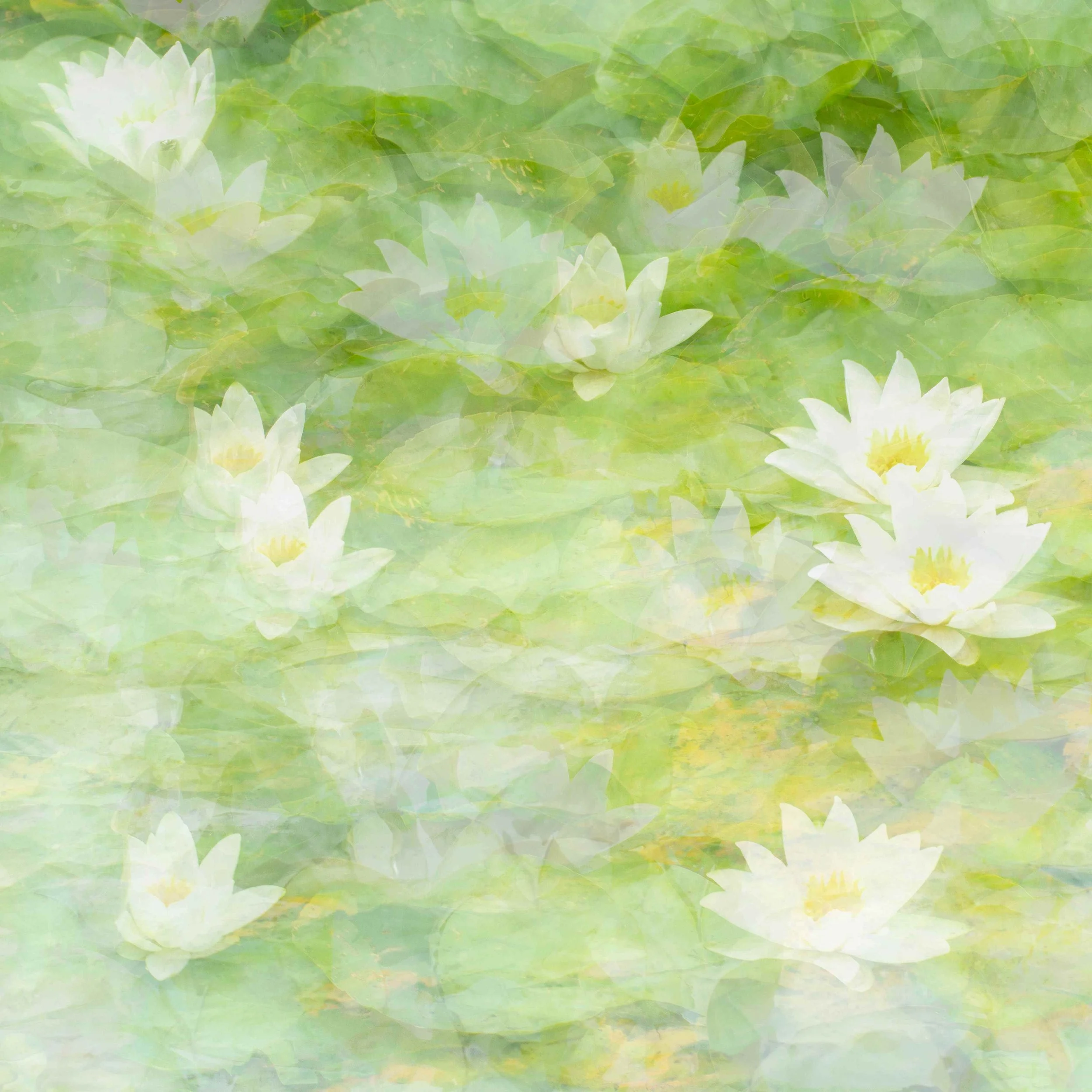
A Multiple Exposure Image inspired by Claude Monet
Claude Monet – Atmosphere Over Detail
Whenever I think about impressionism, I immediately think of Monet. His paintings were never really about recording exact detail. They were about atmosphere, movement, changing light and emotion.
His fascination with gardens, water lilies and landscapes particularly resonates with me because I spend so much time photographing outside. I love the softness in his work and the way shapes gently dissolve into one another. There is often a dreamlike quality which feels incredibly similar to what can happen in multiple exposure photography.
What I find fascinating is that Monet spent decades painting the same subjects repeatedly. Haystacks, gardens, water lilies, bridges and coastlines appeared again and again in his work. Yet every version feels different because the light, weather and mood had changed.
That is something I often encourage people to embrace in photography too. We do not always need new locations to create fresh work. Revisiting the same place repeatedly allows you to see it differently. Different seasons and weather conditions can completely transform an image - when you factor in creative techniques as well the possibilities are endless.
In my own photography, Monet has inspired me to experiment more with soft focus and lots of layers. Rather than aiming for clinical sharpness all the time, I often want images to feel painterly and emotional. Some photographs are not meant to describe a scene perfectly; they are meant to evoke a feeling.
I also love how his work encourages us to slow down. In a world of fast scrolling and instant images, there is something rather wonderful about taking time to truly observe colour and light.
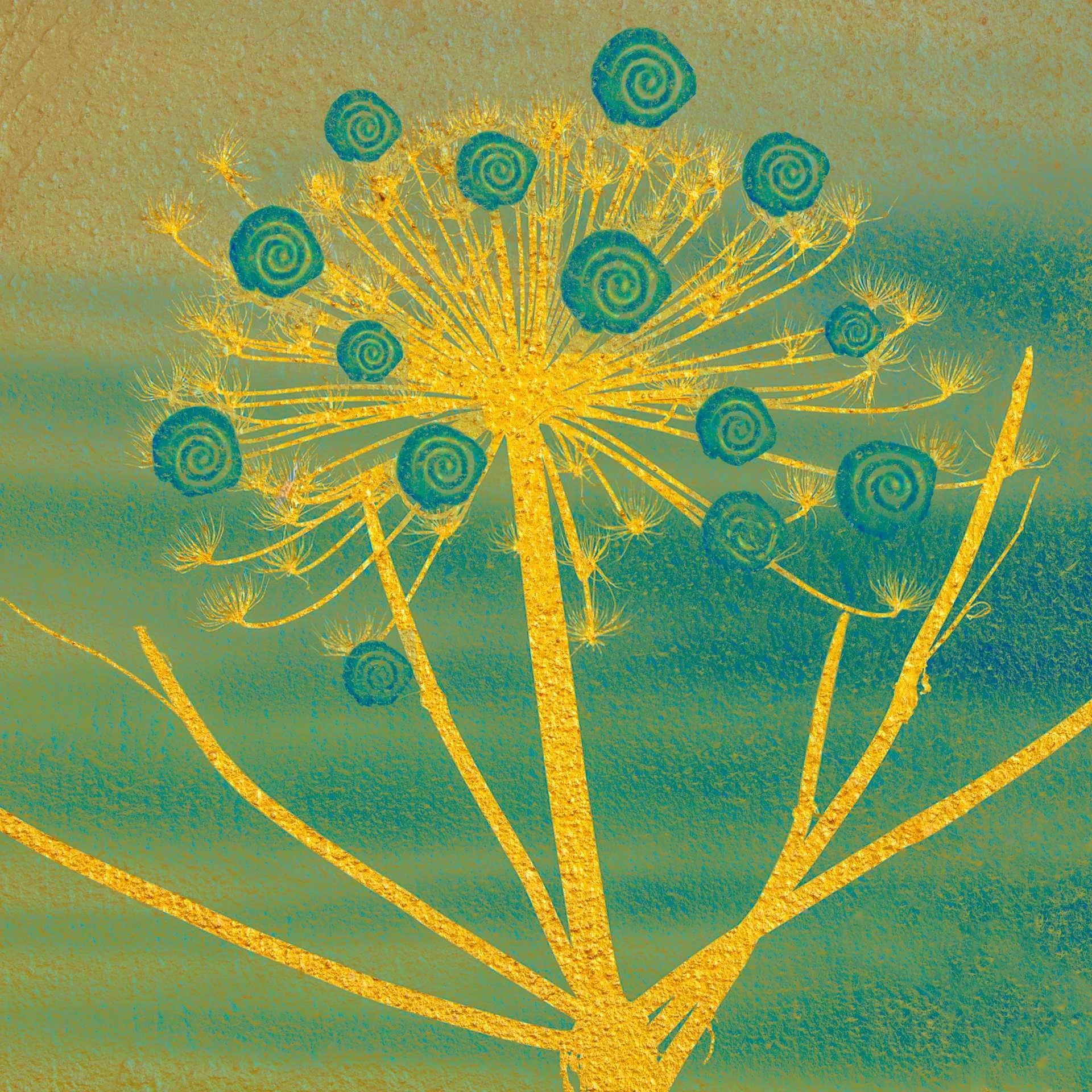
A Multiple Exposure Image inspired by Gustav Klimt
Gustav Klimt – Gold, Texture and Decorative Beauty
Where Monet inspires softness, Klimt inspires richness.
His work feels luxurious, layered and intricate. Of course, many people immediately think of gold when they think of Klimt, particularly in paintings like Portrait of Adele Bloch-Bauer. But what interests me most is the balance between realism and abstraction.
Parts of his paintings are highly detailed and recognisable, while other areas dissolve into pattern. That interplay between reality and abstraction feels incredibly relevant to multiple exposure photography.
I often find myself inspired by the decorative nature of his work. Repetition of shapes and strong colour palettes can all influence photographic composition. Even when I am photographing architecture or city scenes, I frequently look for patterns and geometric details in a way I probably never would have done before studying artists like Klimt.
Instead of simply overlaying two images, I started thinking about creating visual texture within photographs. Reflections, foliage, architecture and movement can all become layers that build complexity within an image.
Klimt also reminds me not to shy away from boldness. Sometimes as photographers we can become overly concerned with rules and technical perfection. His work feels unapologetically expressive, and I think there is a great lesson in that.
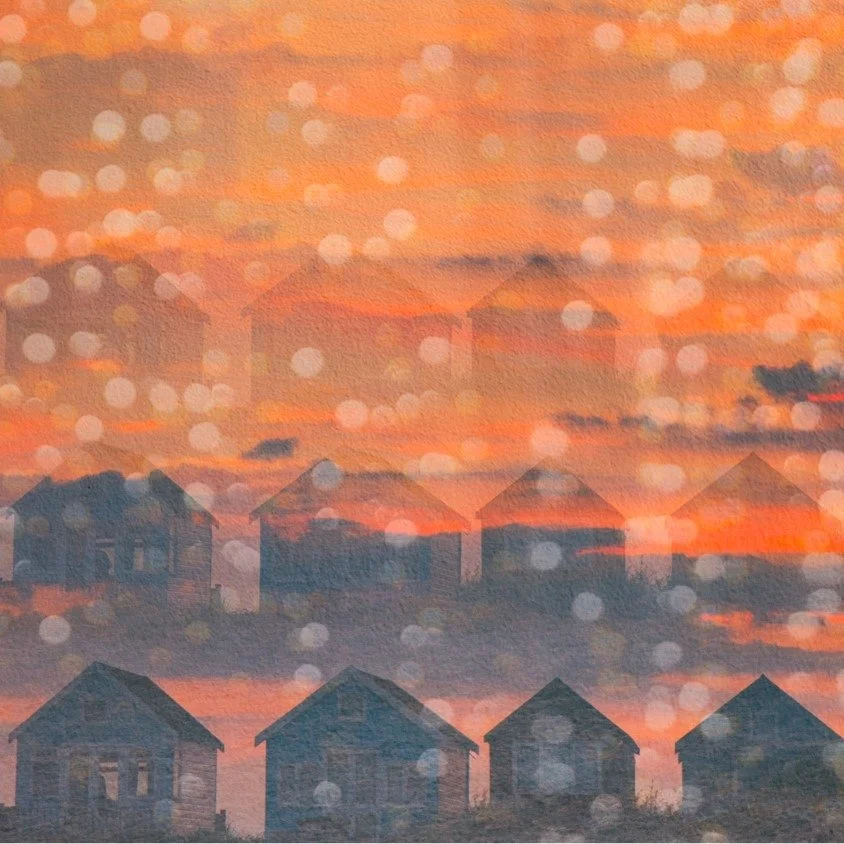
A Multiple Exposure Image inspired by Yayoi Kusama
Yayoi Kusama – Repetition, Immersion and Playfulness
If Monet inspires atmosphere and Klimt inspires texture, Kusama inspires fearlessness.
Her work is instantly recognisable through polka dots and repetition, but underneath the visual spectacle there is an incredible sense of emotion and personal expression.
What I particularly love about Kusama’s work is the idea of creating immersive experiences. Her Infinity Rooms are not simply things to look at; they are environments to step into and feel part of. That idea has definitely influenced the way I approach some of my more experimental photographic projects.
Multiple exposure photography can create a similar sense of immersion. Layers can pull the viewer into an image in a way that feels less literal and more emotional. Sometimes I want viewers to explore an image slowly, discovering shapes and details gradually rather than understanding everything instantly.
I think there is also something wonderfully freeing about her creativity. Her work reminds us that art does not always have to be serious to be meaningful. There can be joy, playfulness and curiosity within experimentation.
That is something I try very hard to encourage during workshops. Some of the most exciting images happen when people stop overthinking and simply start experimenting.
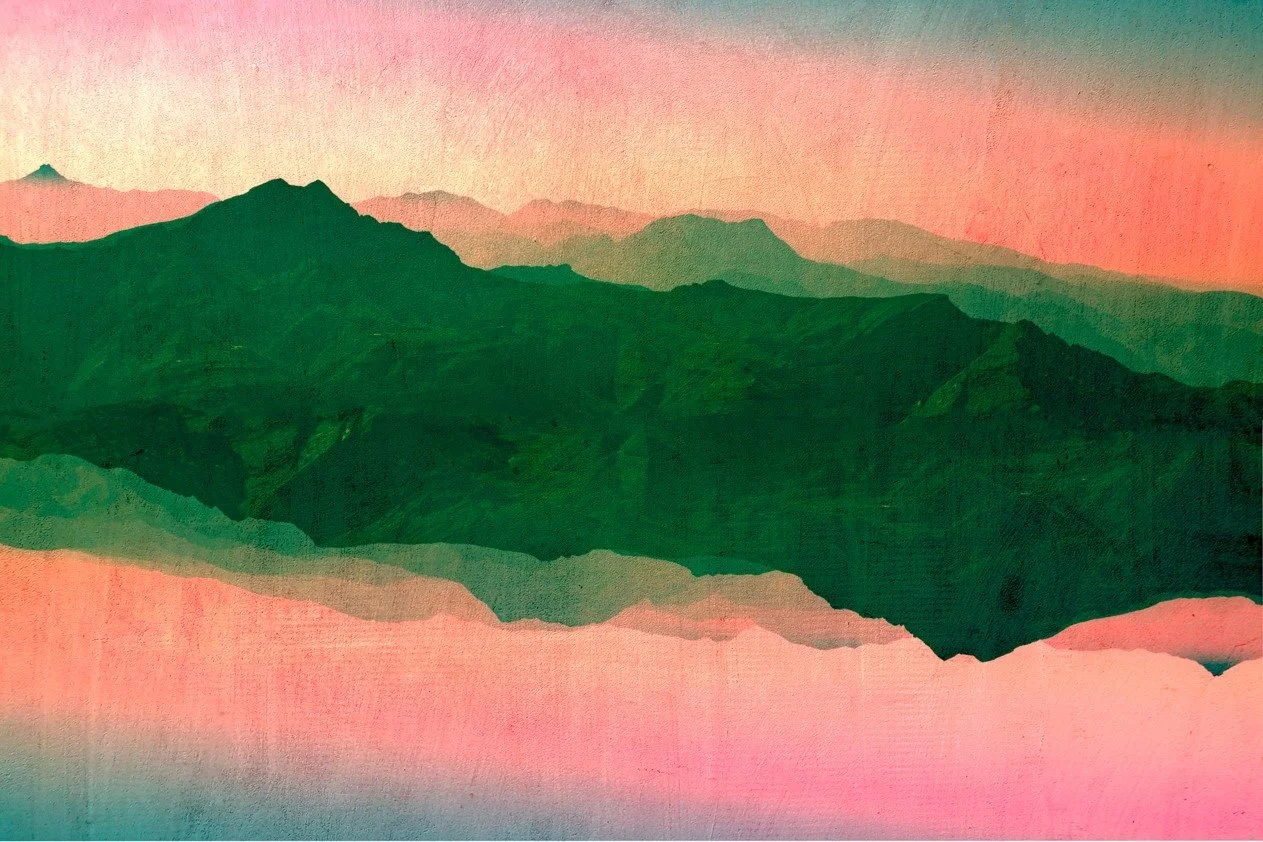
A Multiple Exposure Image inspired by Georgia O’Keeffe
Georgia O’Keeffe – Seeing the Familiar Differently
Georgia O’Keeffe’s work has influenced the way I photograph flowers more than almost anybody else.
What I love about her paintings is how she transformed ordinary subjects into something abstract and powerful simply by changing perspective and scale. By moving closer and simplifying the scene, she encouraged people to see familiar objects differently.
That is exactly what often happens in photography too.
A flower photographed conventionally may look pleasant, but by isolating shapes, focusing on curves and exploring detail, the image becomes far more interpretive and emotional.
O’Keeffe’s work also has a beautiful sense of simplicity. There is space to breathe within her compositions. As photographers we sometimes feel pressure to include everything, but often the strongest images come from reduction rather than addition.
Her landscapes from New Mexico are another huge source of inspiration for me. The soft tonal shifts, abstract mountain or church forms and use of negative space all translate beautifully into photographic thinking.
She reminds me that inspiration is not always about complexity. Sometimes it is simply about truly seeing.
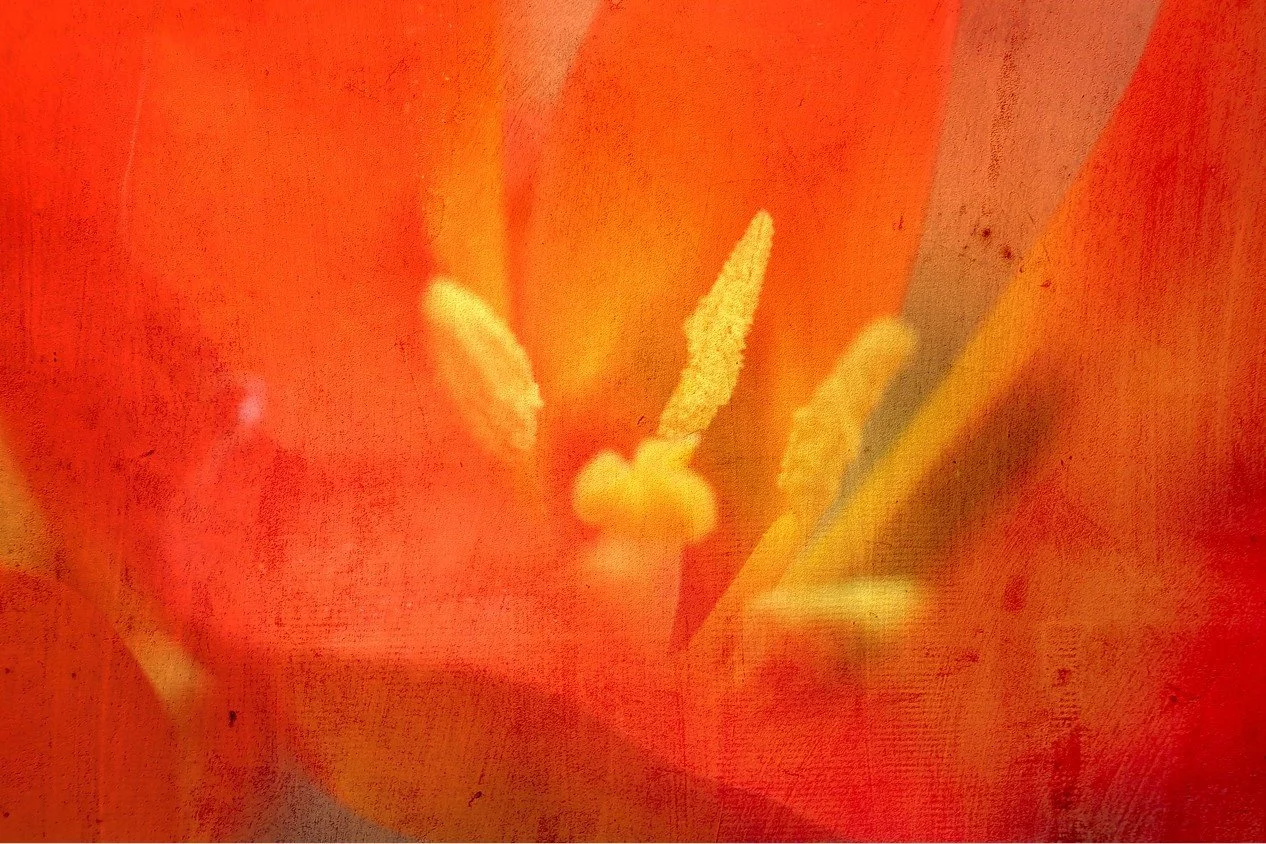
A Multiple Exposure Image inspired by Georgia O’Keeffe
Looking Beyond Photography
I think one of the best things any photographer can do is spend time looking at art outside of photography. Visit galleries, read books and poetry, study paintings and explore different creative disciplines.
Painters often think about colour differently. Sculptors think about shape differently. Installation artists think about immersion differently. All of those perspectives can influence the way we use a camera.
For me, these artists have not inspired me to recreate their work literally. Instead, they have shaped the way I approach creativity itself. They have encouraged experimentation, abstraction, layering and emotional storytelling.
And perhaps most importantly, they have reminded me that developing a personal style takes time.
Photography is not just about technical skill. It is about curiosity. The more influences we allow ourselves to absorb, the richer our creative voice becomes.
So next time you feel creatively stuck, perhaps step away from photography for a little while. Visit an exhibition, open an art book or simply spend time studying colour and composition in other forms of creativity.
You never know where the next spark of inspiration might come from.
Please do comment if you have enjoyed this blog!
And to keep you on track join one of the Inspirations courses (just click on the name for the link)
Inspiration from Artists course 7 months £345 (start June 2026)
Inspiration from Photographers course 7 months £345 (start October 2026)
Inspiration from Poetry course 7 months £345 (start November 2026)